
By Abdussamad Umar Jibia
On May 15, 2026, 39 school children and seven teachers were abducted from three schools in Oyo State. Since then, the incidence has been the major headline in Nigerian traditional and social media.
This is not the first time criminals have stormed a school and abducted school children and teachers. The first known mass abduction of school children in Nigeria occurred in 2014 at Government Girls Secondary School, Chibok, in Borno state. It was followed by a series of similar abductions in different states of the North. This is the first time such a mass abduction has taken place in Southern Nigeria. Hence, the storm.
One piece of information that has been circulated is that the bandits have demanded the implementation of Shariah in the South West as a condition for the release of the children and their teachers. This is something I have found difficult to believe from my knowledge of bandits and their operations.
First and foremost, we have to distinguish among the different types of criminals who operate in Northern Nigeria. Boko Haram, which originated from the North East and later integrated with ISWAP (Islamic State of West Africa), claims to be fighting for Islam and has religion as part of its agenda, just like similar groups around the globe. Boko Haram/ISWAP mainly operates in the North East.
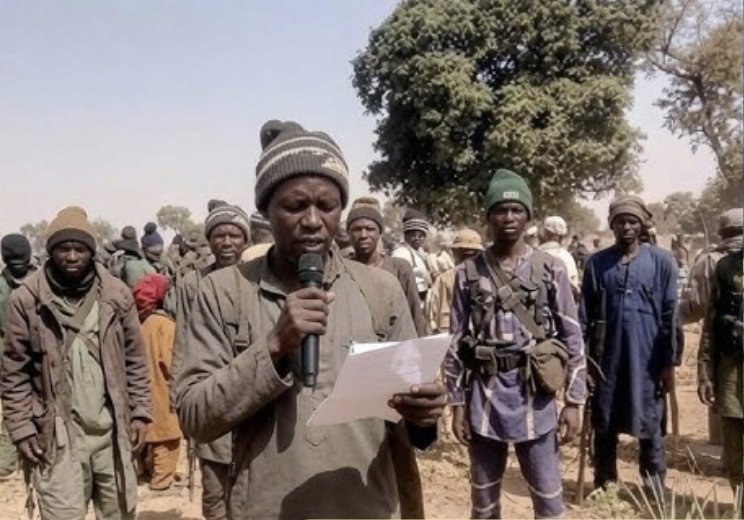
However, the bandits, as they are popularly called, who originated from the North West and are mainly of Fulani extraction, have nothing to do with religion, do not advocate it, and, in fact, most of them do not pray five times a day like Muslims do and cannot even recite the opening chapter of the Qur’an. This group, sometimes referred to as Fulani herdsmen to avoid ethnic profiling, is the group said to have abducted the Oyo pupils.
The bandits are not a single group. They are different groups, each with its leader, who live in the forest and are believed to have their informants in townships. The informants gather detailed information about their potential victims before striking. This is well known to anyone living in Northern Nigeria.
As a person who hails from the western part of Katsina State, I am one of the earliest victims of banditry. For example, in August 2016, my maternal uncle, who is the Imam of his village, was killed by bandits who shot him 11 times, injured his 10-year-old son and raped two of his daughters. In addition, more than 300 cows were rustled from the village. We reported the matter to the Katsina State Commissioner of Police, but nothing was done.
Two months later, the government announced amnesty for all the bandits in Katsina State. The suspects were brought to the village with Police escort, and the villagers were told they must forgive them because they were “their brothers”. In all of these, religion was not mentioned. It was never an issue because the bandits were not a religious people.
After the amnesty, banditry continued as usual until 2019, when the Federal Government under Buhari asked all the state Governors to enter into peace agreements with the bandits in their states. The vividly uncomfortable Katsina State Governor held meetings with bandit leaders across the affected local governments of Sabuwa, Dandume, Faskari, Safana, Dan Musa, Kankara, Batsari and Jibia. The meetings took place in the forest under heavy security and before press cameras. The military support in the escort of the Governor was enough to crush all the bandits. Ironically, the Government decided to beg them. Videos of some of the meetings are still available online.
It is noteworthy that all the bandit leaders who attended those meetings were Fulani; they were all Nigerians, and none of them was religious. No one talked about religion, and the only complaint from most of them was that some of their gang members were in police custody and should be released.
It is also not a Hausa-versus-Fulani affair. Some of the early victims of banditry were Fulani who refused to join banditry and refused to give their support to it. There are still many rural Fulani communities in the North West who are against banditry and do not harbour bandits.
Now, at what point did banditry begin to be associated with religion? Different possibilities.
The Zionist entity
One of the biggest mistakes made by the General Ibrahim Babangida administration was normalising diplomatic ties with the Zionist occupation called Israel. Zionists are believed to be behind some of the crimes committed in the Northern part of Nigeria.
The former deputy speaker of the House of Reps, Alhaji Abdullahi Wase, alleged that 300 youths from the Christian majority state of Plateau were given training in Israel and that four containers of arms were brought in by an Israeli security company to a politician’s house in Plateau state.
Alhaji Abdullahi Wase called for an investigation by the government. The investigation was not conducted. It is thus not out of place if Zionists, through some hirelings, introduced religion into the discussion of banditry in order to cause further internal crisis or use their American boys to attack innocent Muslims in Nigeria.
Sheikh Ahmad Gummi
The involvement of Dr Ahmad Gummi with bandits leaves more questions than answers. Gummi is an Islamic scholar who views issues from an Islamic perspective. Did he ever tell the bandits to shift their focus to religion rather than remain common criminals? I have no answer to this question. Only the Government and Sheikh Gummi have.
Elements in the Tinubu administration
A young Islamic scholar, Sheikh Munir Koza, once claimed that he was among the many influential young Islamic scholars invited to a meeting by some defence officials of the Tinubu government not long after the Government took over. With a financial reward, they were asked to emphasise three things in their preaching.
One. That banditry by Fulani groups is justified because Fulani have been subjected to neglect and injustice over a long period.
Two. Call on the government to engage in dialogue with bandits and offer them political appointments.
Three. The Governors of Zamfara and Katsina are wrong to have set up security outfits to confront bandits.
According to Sheikh Koza, he was the only person who expressed his disagreement at the first meeting and was thus not invited to subsequent meetings.
If Sheikh Koza’s claim is true, it means there are bandits’ sympathisers in the Tinubu Government. One would ask, is Mr President not aware? Did he appoint them because he believes insecurity is a Northern Nigerian affair, and he has thus appointed Northerners to go and eat themselves? Now that it has spread to the South, is he ready to make amendments?
Or, who actually introduced religion into it?
Professor Abdussamad Umar Jibia wrote from the Department of Mechatronics Engineering, Bayero University, Kano. He can be reached via aujibia@gmail.com.