
By Misbahu Muhammad
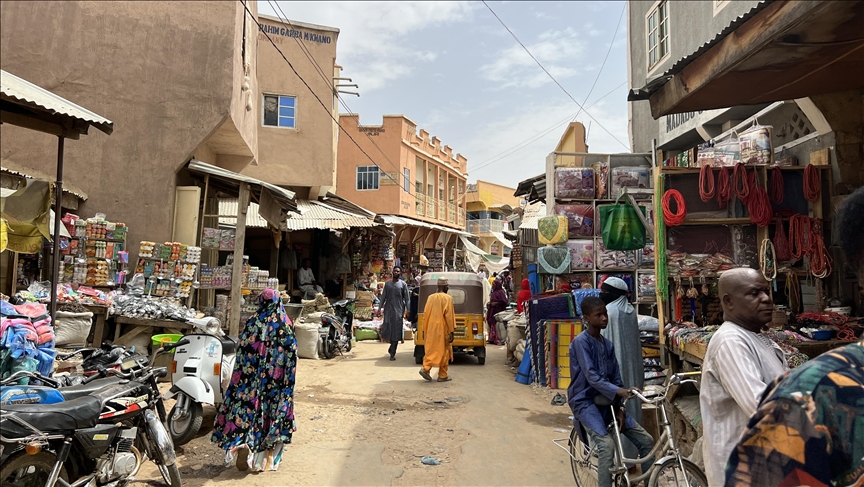
For decades, the bustling Gyaɗi-Gyaɗi Market has been more than a commercial hub; it is a community cornerstone, a source of livelihood, and for many, a family heritage. Today, that heritage is under threat as the Tarauni Local Government Council pushes forward a redevelopment plan that has left the very owners of the land feeling sidelined, silenced, and strong-armed.
The council’s vision for a modern market is not, in itself, contentious. Traders and landowners alike acknowledge the need for improved facilities, better sanitation, and enhanced security. The conflict lies not in the what, but in the how.
Landowners and stakeholders are excluded from the planning process. The architectural designs, the project scope, and the financial model were reportedly finalised without their meaningful consultation. The community, whose assets and futures are directly implicated, was reduced to mere spectators in a decision that reshapes their property and prosperity.
“They came with a completed plan and said, ‘This is what we are doing,’” recounted shop owners, whose families have owned plots/shops in the market for five decades “Our suggestions, our concerns about access, shop sizes, or temporary relocation were not entertained. It was presented as a take-it-or-leave-it decree, not a joint venture or partnership.”
The council’s proposed framework is a Joint Venture (JV) arrangement. While JVs can be equitable, landowners report having no alternative models to consider—no option for self-redevelopment through a cooperative society or banks, build-operate-transfer (BOT), no fair buy-out offer, and no room to negotiate the terms of the partnership. The proposed JV terms remain opaque, with fears that they heavily favour the government or its private partners, potentially leaving original owners with diminished stakes and control over their own land.
This singular, non-negotiable pathway has been widely interpreted not as an offer, but as an ultimatum.
The most alarming allegation from the developers is the use of coercive pressure. They claim government officials have insinuated or explicitly stated that failure to consent to the JV could lead to the revocation of their rights or the outright seizure of their land under the guise of “public interest” or “development control.”
“The message is clear: sign on our terms or lose everything. “This isn’t negotiation; it feels like legalised land grabbing. We are being forced to surrender our property rights under threat.” Currently, many landowners are panicking and have started selling their shops at giveaway prices to these rent seekers, willing to go to any lengths to grab the land.
This approach raises significant legal and ethical questions. The Land Use Act, which vests land administration with the state government, mandates due process and equitable treatment. Experts argue that excluding landowners from a process that affects their fundamental proprietary interests may violate principles of fair hearing and natural justice.
Redevelopment must be inclusive and transparent, presenting a single, non-negotiable contract under the implied threat of revocation; crossing that line. It undermines the trust essential to public-private collaboration and sets a dangerous precedent for urban development.
The Tarauni Local Government Chairman has been advocating for a one-for-one shop. This slogan in itself is ill-conceived, as it lacks an appropriate valuation of shops and a compensation mechanism. He always argued that the redevelopment is “for the greater good of all” and will “transform the area into a modern commercial zone and must be done even after his tenure.
As tensions rise, the path to a peaceful and prosperous Gyaɗi-Gyaɗi Market lies in genuine dialogue. Stakeholders are calling for:
- An immediate halt to the current coercive process.
- Full, transparent disclosure of the JV terms, partners, and financial projections.
- The creation of a truly representative committee of landowners to re-negotiate the redevelopment framework.
- Exploration of multiple development models, allowing landowners to choose the option that best secures their legacy and livelihood.
The soul of Gyaɗi-Gyaɗi Market is its people. Any redevelopment that severs that connection is no development at all. The Tarauni Local Government has an opportunity to correct course—to build not just a new market, but a renewed covenant of trust with the community it serves. The alternative is a legacy of conflict and resentment that no new building can ever hide.