
By Ibrahiym A. El-Caleel
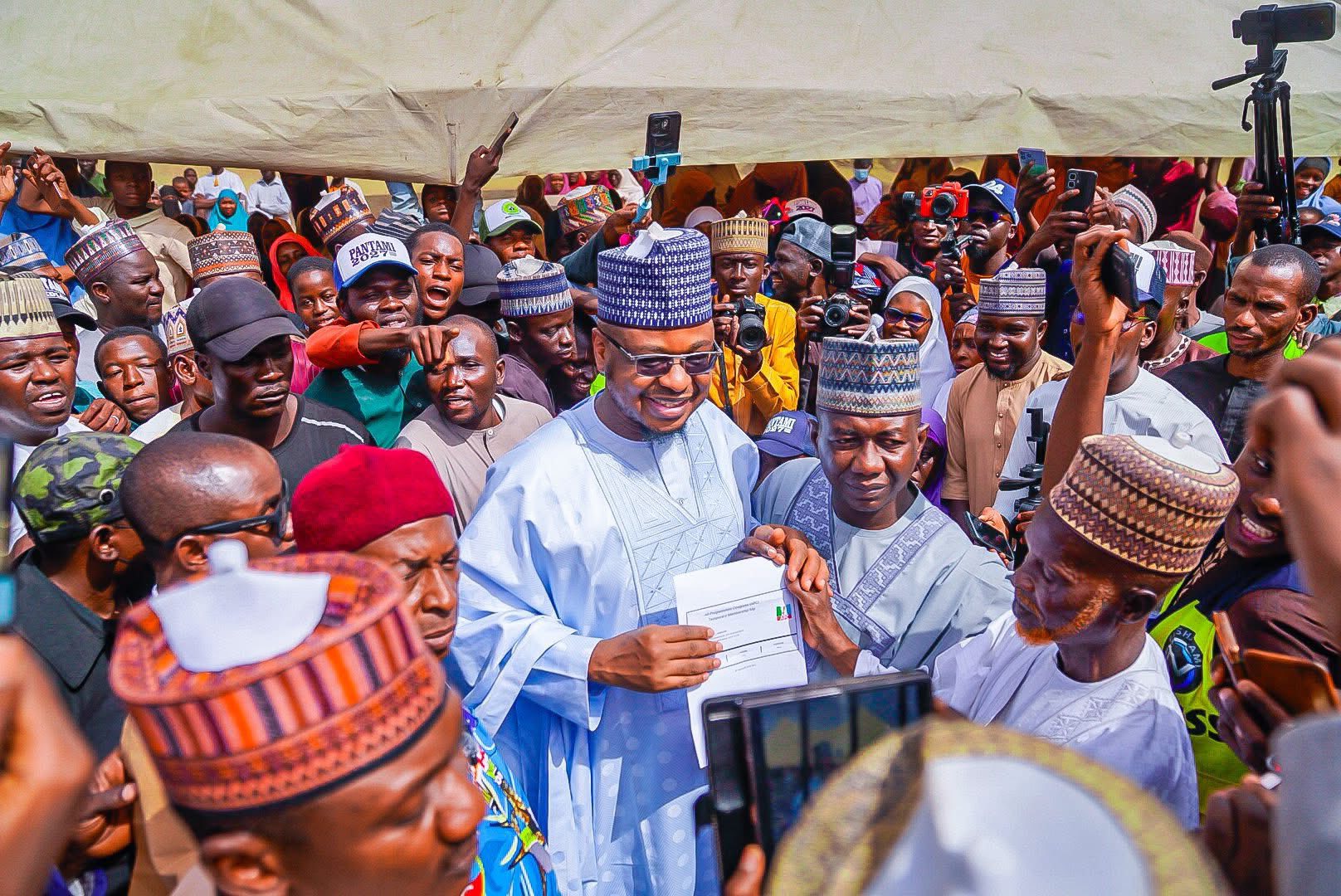
Given his profile as an Islamic scholar and public servant, Imam Dr Isa Pantami’s aspiration for the Gombe State governorship continues to attract attention from multiple quarters. What caught my attention yesterday were the closing lines of Jaafar Jaafar, the publisher and editor of Daily Nigerian, in a brief social media post on the candidature. Jaafar remarked:
“Nigerian politics is grimy. You cannot work in a sewer line and expect to come out clean. Mallam (Pantami) should prepare to mudsling, dip his paws in a cookie jar, dance to the tune of Rarara songs, shake hands with female foreign investors and diplomats, visit churches, steal some billions from security vote, divert public funds for political activities, hire thugs during rallies, lie during campaign, rig during election, take kickbacks after contract award, etc.”
Jaafar is clearly not endorsing these practices; he is only highlighting the grime and immorality that dominate Nigerian politics. Yet I disagree with the implicit suggestion that Mallam Pantami must get his hands dirty simply because he is now in frontline politics. No, he does not.
Pantami does not need to embrace corruption to win elections, nor must he compromise his morals to win or govern successfully after victory. These practices do not constitute the winning formula for elections even in Nigeria. Their dominance in our politics are symptoms that our political system has been hijacked by the morally bankrupt over the years.
Unfortunately, many Western philosophers and some Eastern philosophers have theorised a political thought that sidelines morality. They present it as if power must always be ruthless and corrupt. Niccolò Machiavelli, in his famous work The Prince, famously separated politics from conventional morality. He argued that the end justifies the means and that a ruler should be prepared to use deception, force, or cruelty to consolidate power. Better to be feared than loved, he asserted, if both cannot be achieved.
We see the same philosophy from the likes of Friedrich Nietzsche, Max Weber, Henry Kissinger and even the famous Robert Greene of our age. Their common premise is that politics is about power and domination; that stability and the balance of power matter more than moral ideals; that leaders may employ force, deception, and unethical means to maintain authority; and that some, like Nietzsche, even suggest that morality is a human invention of the weak.
The consequences are visible across the globe. Leaders who internalise these philosophies often govern through ruthlessness, corruption, and moral compromise. In so doing, they have soiled their hands in blood, sex scandals, human rights abuses, economic sabotage, and corruption. This is why, for example, several prominent world leaders have skeletons in Jeffrey Epstein’s wardrobe. They have abandoned morality in their pursuit of power. Today, they are prisoners of their actions.
In contrast, Islamic political philosophy teaches that a ruler must be powerful yet morally accountable, serving as a role model for society. Consider Umar ibn al-Khattab (Umar I), the rightly guided caliph, whose governance was a masterclass in combining justice, authority, and compassion. Umar I punished governors publicly, enforced the law even on the elites, maintained military discipline, and ensured state stability. Yet he was profoundly compassionate: during a famine, he refused to eat butter or meat until the people were fed, and he personally delivered food to the hungry. This was not a democracy; it was a caliphate, yet moral leadership reinforced his authority rather than undermined it.
Umar ibn Abdulaziz (Umar II), the Umayyad Caliph, provides another striking example. Before his ascension to power, the Khutbah (Friday sermons) were often laden with political propaganda, and some rulers ordered preachers to insult and curse Caliph Ali bn Abi Talib from the pulpit in political rivalry. They turned the khutbah into a tool for political rivalry rather than moral guidance. Umar II stopped this vile practice immediately he became the Caliph. He banned curses and political abuses from the revered pulpit of sermons and replaced them with Qur’anic verses. This was exemplary moral courage.
However, Umar II returned the stolen wealth of his predecessors and officials to the national treasury. He reformed corrupt systems gradually because he believes moral change is institutional, not emotional. He abolished oppressive taxes and unjust land confiscations, redistributed state wealth to reduce inequality, and institutionalised meritocracy. Under this meritocracy, he appointed governors and officials based on competence rather than family or tribal loyalty. He removed corrupt and incompetent officials even from his own Umayyad family. Therefore, he revived Islamic ethics in governance.
The last example I will cite here is the famous Abbasid Caliph Harun al-Rashid, who was cited by Chinua Achebe in his book, The Trouble with Nigeria. Harun al-Rashid is another classic example of a leader who combined political power with moral conscience. He was known to travel incognito at night among Baghdad’s citizens to hear complaints directly and make amends where needed. Despite his moral inclinations, the Abbasid dynasty reached its political and cultural peak under Harun al-Rashid. His reign kicked off what later became known as the “Islamic Golden Age”, which gave the world an intellectual gift, the Baytul Hikmah (House of Wisdom).
These examples make one point crystal clear: moral corruption is a choice, not a prerequisite for leadership. The more the world internalises Machiavellian philosophies, the more it empowers the ruthless and morally bankrupt. For Imam Dr Isa Pantami, his candidature is a litmus test. Should he compromise his ethical standards, he risks tarnishing decades of personal integrity. Yet he also has the opportunity to carve out a niche in Nigerian politics by leveraging his clean record, focus, and moral credibility. If he can win ethically and govern without succumbing to corrupt pressures, he could make history, embodying the same fusion of power and moral conscience exemplified by Umar ibn al-Khattab, Umar ibn Abdulaziz, and Harun al-Rashid.
I wish him success and look forward to observing whether he can translate his reputation into leadership that blends authority with moral responsibility, setting a new standard for governance in Nigeria. He is a specimen we should observe; let us see how morally upright people swim against the black tides of our politics. If he succeeds, more morally upright people need to enter politics and help us fix this broken country as early as possible, before it’s too late.
Ibrahiym A. El-Caleel wrote from Zaria, Kaduna State, via caleel2009@gmail.com.