
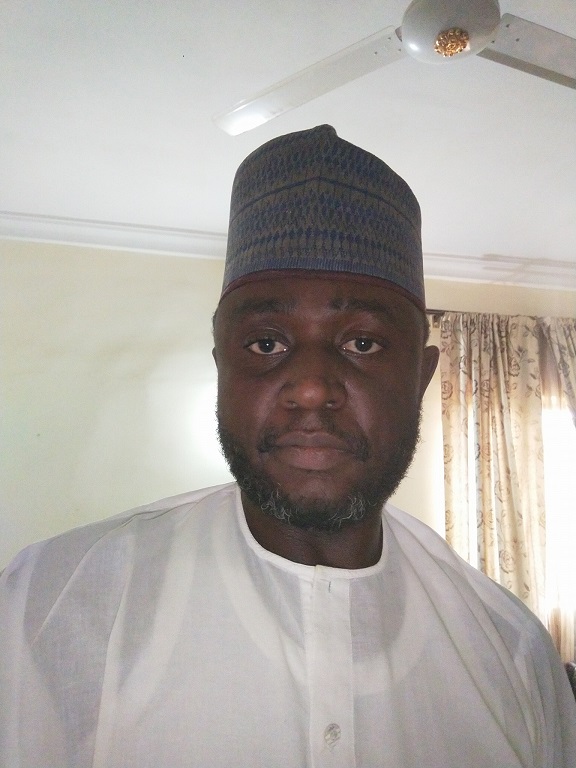
By Ibraheem A. Waziri
Artificial Intelligence has arrived, and in many ways, it is already surpassing humankind in numerous tasks – frominformation retrieval and decision-making to writing essays, diagnosing illnesses, and simulating human conversations.
The rapid advancement of AI over the past decade is no longer a marvel; it is a living reality. With its relentless progress, we are standing on the cusp of a new era, an age in which the human mind and artificial intelligence may become intimately intertwined, both physically and cognitively.
Over the next ten to twenty years, we can expect to witness the rise of brain-chip implants, neural devices capable of recording thoughts and memories, and integrating them with external data in real-time. This development, already underway in advanced laboratories, will redefine the limits of human cognition. Learning may no longer require years of study. Instead, information could be uploaded directly into the brain, rendering traditional education models obsolete or significantly transformed.
The barriers to knowledge acquisition—once dependent on time, resources, and access—would essentially vanish. Everyone might stand on equal ground when it comes to information. In this sense, AI could appear to be the long-awaited solution to humanity’s historic struggle with ignorance. A world where information is no longer hoarded but instantly shared would mark a fundamental shift in human civilisation.
Yet, in this possible future, one thing remains uniquely human: our conscience. The power of choice, the intention behind our actions, and the moral compass guiding our decisions stay beyond the reach of AI. The Islamic prophetic saying “Innamal a’malu binniyat”- “intentions judge actions” -takes on renewed weight. When knowledge becomes universally accessible, what will distinguish one person from another is no longer what they know, but how and why they use it.
AI may provide the tools, but only our conscience can determine their application. In this new world, the essence of being human —the power to choose, to discern, and to act with purpose —becomes our most valuable trait.
In writing and speech, large language models (LLMs) have dramatically reduced the burden of expression. AI tools can correct grammar, enhance clarity, and structure arguments. In this way, AI handles the “form,” allowing humans to focus more on “substance”: the meaning, purpose, and ethical significance of their message.
Yet the human mind’s natural tendency to ask questions, to imagine, and to critique will not diminish. If anything, it will deepen. Humans are not passive recipients of knowledge; we are also its interpreters, critics, and re-creators. Far from becoming complacent in the presence of AI, people will begin to question it, reshape it, and rise above it.
The reason is simple: the human mind cannot stagnate. It searches for meaning and thrives in ambiguity. Our ability to reflect, imagine, and dwell on abstract ideas remains unmatched. AI can mimic patterns and predict outcomes, but it cannot experience wonder, nor can it feel regret, nor grapple with moral ambiguity.
Creativity itself arises from three essential human components: conscience, emotions, and environment. AI may support this triad; it may even challenge or stimulate it, but it cannot generate it. AI is a product of creativity, not its source. And it cannot be the source of what it did not create.
By automating routine tasks, AI liberates the human mind to think more deeply and act more boldly. It frees us from mechanical repetition, allowing for higher-order thinking, innovation, and artistry. Writers, thinkers, inventors, and designers now have more time for exploration and imagination, which remain the core of human advancement.
This evolving relationship mirrors humanity’s relationship with the Divine. Just as no human can rival the wisdom or creative force of God, AI can never match the core of our humanity. It cannot outfeel us. It cannot outdo us. It cannot outvalue us. It cannot possess conscience, consciousness, or emotion; the divine triad that defines who we are.
When AI becomes fully integrated into daily life, at work, in education, healthcare, governance, and homes, we won’t become less human. In fact, we will become more human. We will have to let go of much of the mechanical and embrace the reflective. We will have more space to think, more time to connect, and more clarity to imagine.
And in this space, we may at last pursue what has always eluded us, even in our most extraordinary scientific and industrial feats: wisdom. While AI may provide us with access to vast amounts of information, only the human soul, guided by conscience, can discern what is just, what is meaningful, and what is beautiful.
AI does not represent the end of humanity. It is the beginning of a new chapter, one filled with tools of immense potential. But as with all tools, their value depends on the hands that use them. In the age of AI, the accurate measure of a person will no longer be what they know, but why they act and how they choose to use what they have.
AI may become the great equaliser of knowledge, but it is only the human conscience that can give that knowledge direction, purpose, and value. And that is a gift no machine can replicate.