
By Dr Raji Bello
Nigerians are not known for their ability to figure out the long-term consequences of their actions. This is a major national handicap since some choices which produce short-term gain could lead to long-term pain. For instance, in 1999, the governor of Zamfara state introduced a new social order in the state in defiance of the authority of the Federal Government of Nigeria. The new order spread across the northern states along with a strong wave of triumphalism.
In the years that followed, groups of non-state actors across the country learnt something from what happened in Zamfara – that a group of determined people within a defined geographical area could defy the Federal Government and impose their will without any consequences. Inspired by this knowledge, a new Islamic militant group soon appeared somewhere in Yobe state, which later grew into Boko Haram – and the rest is now history.
Militants in the Niger Delta, who were also observing developments in the North, concluded that the Federal Government was indeed weak and its authority could be challenged without consequences. An insurgency soon took firm roots in the area. Many years later, young herdsmen around the country and secessionists in the Southeast also decided that it was time to take on the government and Nigerian society. Over 20 years later, long after the triumph of 1999/2000 has faded, we are still living with the pain of the chain of developments that it had sparked.
Once again, there is palpable triumphalism in the land. Our newly-elected Muslim-Muslim presidency has elicited exuberance in the Muslim community and foreboding on the Christian side. Prominent Muslims are already lining up to claim ownership of the president-elect and his religious identity. The Muslims are glad that the apparent consolidated Christian vote for Mr Obi has failed to achieve its aim. Christians, on the other hand, see their voting preference as justified because of the sheer brazenness of the APC in coming up with a Muslim-Muslim ticket right at the end of the two terms of a Muslim president who was not even known for respecting diversity in his appointments.
The 2023 elections will mark the time when the religious cleavage in Nigeria deepened to dangerous levels. In fact, the frontlines of the religious battle have already shifted to some upcoming gubernatorial contests. In Taraba state, the CAN has allegedly circulated a statement alerting Christians in the state of the impending battle while Muslim clerics all over the North have united in charging Taraba Muslims for the solemn task ahead.
Also, in Nasarawa state, there is a fear that the Labour Party could repeat its earlier presidential election feat and elect a Christian governor for the state. Other states like Plateau, Gombe, Adamawa, Kaduna, Niger etc, may also witness more hardening of intercommunal attitudes going forward.
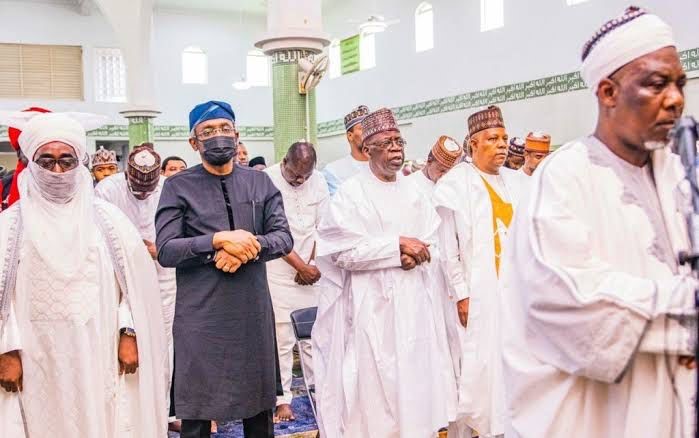
There will be even more foreboding on the Christian side when the practical elements of the Muslim-Muslim presidency begin to manifest. For example, media coverage will show both the president and vice-president of Nigeria at Eid prayer grounds while only the SGF or senate president will be left to lead the celebrations of Christmas and Easter.
The other multiplier effects of this new paradigm can’t even be fully imagined now. I expect that in the fullness of time when all the predictable consequences are playing out, the few discerning ones among us will ask, was Bola Tinubu’s Muslim-Muslim ticket really worth it in the long run?
Raji Bello writes from Yola, Adamawa State.