By Sabiu Abdullahi
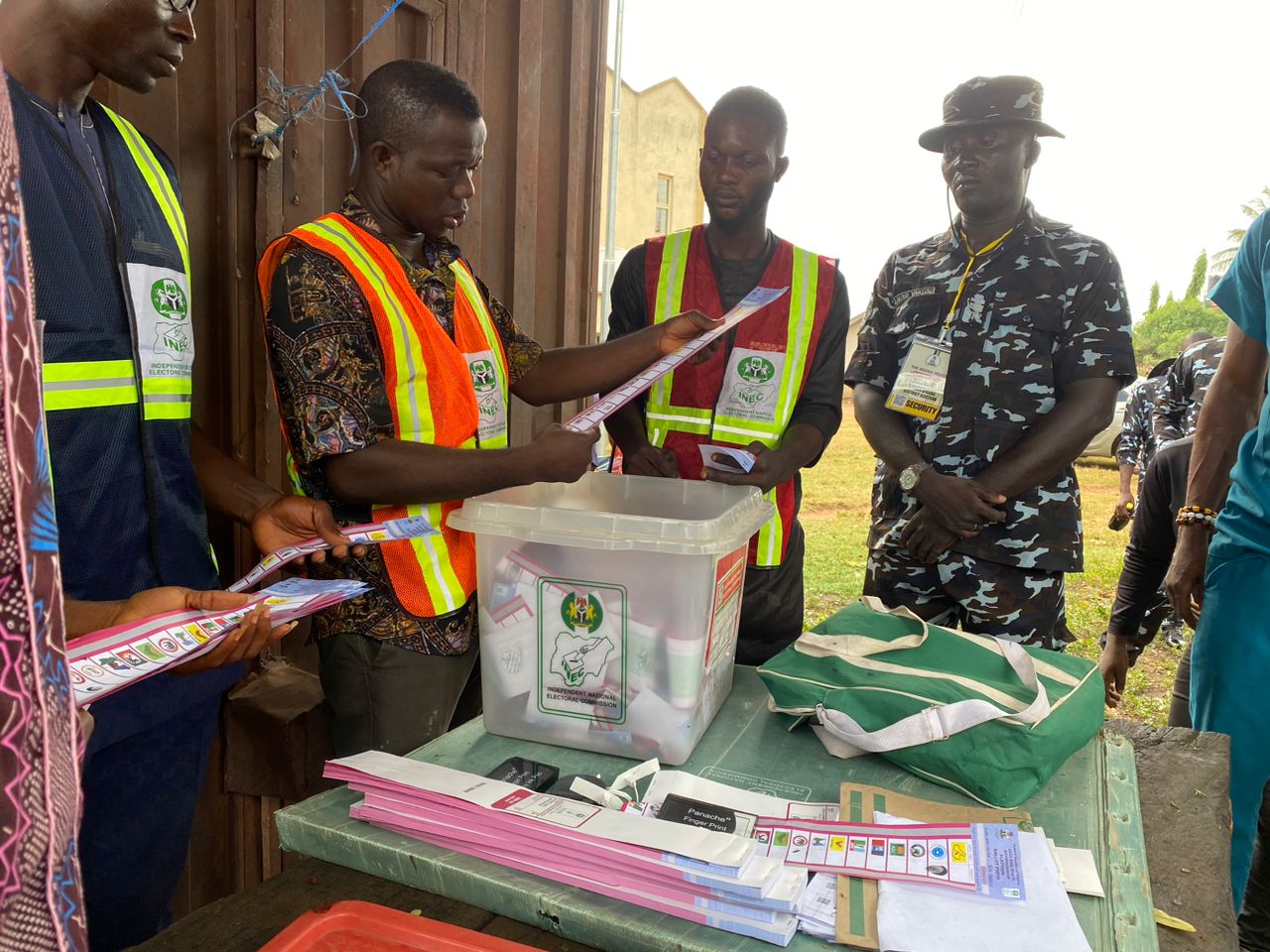
The Independent National Electoral Commission (INEC) has announced plans to deploy about 1.4 million ad hoc personnel for the 2027 general elections.
The commission disclosed this on Tuesday in Abuja when it hosted a delegation from the International Republican Institute (IRI), led by its president, Dan Twining.
The IRI team is in Nigeria from August 11 to 21 as part of a pre-election assessment aimed at reviewing INEC’s preparations and identifying areas where international technical assistance could support the electoral process.
INEC Chairman, Joash Amupitan, said the planned personnel would be deployed across more than 176,000 polling units nationwide.
He said the commission was also improving its logistics arrangements, expanding early deployment of personnel and materials, and strengthening cooperation with transport unions to facilitate the movement of election officials and election materials.
Amupitan described the IRI visit as timely, particularly after the recent Osun governorship election and ahead of the 2027 campaign season.
He said recent off-cycle governorship elections and legislative by-elections had provided opportunities for INEC to test its technology, logistics and security arrangements.
According to him, the Bimodal Voter Accreditation System (BVAS) and INEC Result Viewing (IReV) portal have continued to perform reliably, with more than 98 per cent of results uploaded in recent elections.
The INEC chairman also disclosed that the commission was introducing measures to improve voter registration. The measures include online registration, continuous updating of the voters’ register and efforts to ensure that voter information remains accurate.
He said additional measures would be introduced to make the electoral process more accessible to persons with disabilities, pregnant women, nursing mothers and elderly voters.
Amupitan identified misinformation, disinformation and the misuse of artificial intelligence as some of the emerging challenges that could threaten the credibility of the 2027 elections.
He said INEC had established a unit focused on artificial intelligence to develop guidelines for responsible technology use and tackle false information capable of undermining confidence in the electoral process.
The chairman reaffirmed the commission’s neutrality, stating that INEC would not favour any political party or candidate.
He said the commission’s primary duty was to conduct elections that represent the wishes of Nigerians, with the recent Osun governorship election cited as part of efforts to promote credible and peaceful elections.
Amupitan also acknowledged the need for the commission to take further steps to increase voter participation in future elections.
Speaking on the purpose of the IRI mission, Twining said the organisation wanted to support a competitive, peaceful and credible electoral process in Nigeria.
He said the delegation would examine INEC’s preparations, identify possible challenges and consider ways the international community could assist Nigeria’s democratic development.
“We know how committed Nigerians are to exercising their democratic rights,” Twining said.
“Our interest is a competitive, peaceful and credible election in Nigeria, and we look forward to learning how we can support that objective.”