By Abdullahi Mukhtar Algasgaini
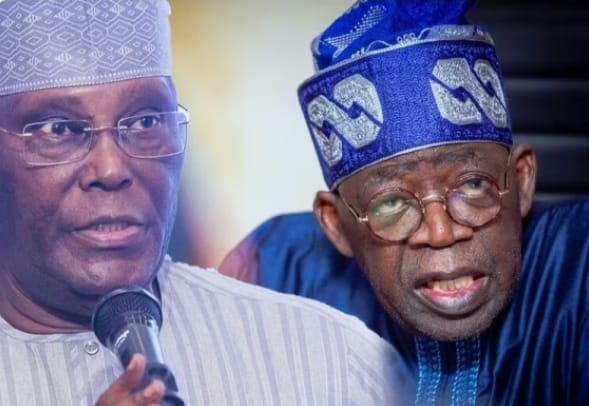
Former Vice President and presidential candidate of the African Democratic Congress, Atiku Abubakar, has condemned the Federal Government’s reported approval of a uniform ₦50,000 examination fee for WAEC and NECO candidates from 2027, describing the policy as a barrier that would deny millions of Nigerian children access to education.
In a statement issued Sunday by his Senior Special Assistant on Public Communication, Phrank Shaibu, Atiku also criticised the recent fee increases in Federal Unity Colleges, arguing that both measures are economically insensitive and inconsistent with the government’s constitutional obligation to make education accessible to every Nigerian child.
The former Vice President said the policies impose additional financial burdens on families already struggling with record inflation, rising food prices, high transportation costs, electricity tariff increases and widespread unemployment.
“It is unconscionable that at a time when Nigerian families are battling record inflation, soaring food prices, rising transportation costs, crippling electricity tariffs, stagnant incomes and widespread unemployment, the Tinubu administration has chosen to make education even more expensive,” Atiku said.
He argued that education remains the most effective instrument for breaking the cycle of poverty, warning that increasing the cost of schooling would further widen inequality.
“A government that genuinely believes in the future of its people does not erect financial barriers between children and education. It removes them. Education is not a privilege reserved for the wealthy; it is the birthright of every Nigerian child and the foundation upon which prosperous nations are built,” he stated.
The ADC chieftain noted that the proposed examination fee and higher Unity School charges come at a time when Nigeria is grappling with one of the world’s largest out-of-school children populations, estimated at between 10.5 million and 15 million.
“Nigeria already bears the painful distinction of having one of the largest populations of out-of-school children in the world. Any government confronted with such a national emergency should be investing aggressively to bring these children back into school. Instead, this administration is choosing policies that will inevitably swell those numbers,” he said.
Atiku warned that higher examination fees would disproportionately affect children from poor and middle-income households, many of whose parents are already forced to choose between meeting basic needs and paying school-related expenses.
“The consequences of these policies extend far beyond school gates. Every child priced out of education today becomes tomorrow’s victim of unemployment, poverty, child labour, criminal exploitation, drug abuse or insecurity. Nations do not become prosperous by making education more expensive; they prosper by making education more accessible,” he added.
The former Vice President also questioned the government’s emphasis on the Nigerian Education Loan Fund (NELFUND), arguing that student loans cannot compensate for policies that make it difficult for children to complete secondary education or sit qualifying examinations.
“A university loan offers little comfort to a child who has already been priced out of secondary education or cannot afford the qualifying examination required to secure admission. A government cannot credibly claim to be expanding access to higher education while simultaneously erecting financial barriers that prevent millions of young Nigerians from ever reaching the university gates,” he noted.
Atiku called on President Bola Tinubu to reverse the increase in Unity School fees and shelve the proposed ₦50,000 WAEC and NECO examination fee, while convening a stakeholders’ dialogue on sustainable financing of public education.
He also urged the Federal Government to invest more in public schools, recruit additional teachers, expand the capacity of tertiary institutions and ensure that no Nigerian child is denied education because of financial hardship.
“No nation has ever taxed its way into educational excellence. Countries that aspire to economic greatness invest more—not less—in education during difficult times because they understand that human capital is the engine of sustainable development,” he stressed.
The statement comes amid growing public debate over the affordability of education following recent increases in school-related charges and concerns about the rising cost of living.
While the Federal Government has introduced NELFUND to improve access to tertiary education, critics argue that affordability challenges begin much earlier in the education value chain, particularly at the secondary school level where students must complete qualifying examinations before seeking university admission.
The plan to introduce a uniform ₦50,000 examination fee for WAEC and NECO candidates from 2027 has sparked widespread public reactions, with stakeholders calling for clarity from the relevant authorities on the policy.