
By Abdulhamid Abdullahi Aliyu
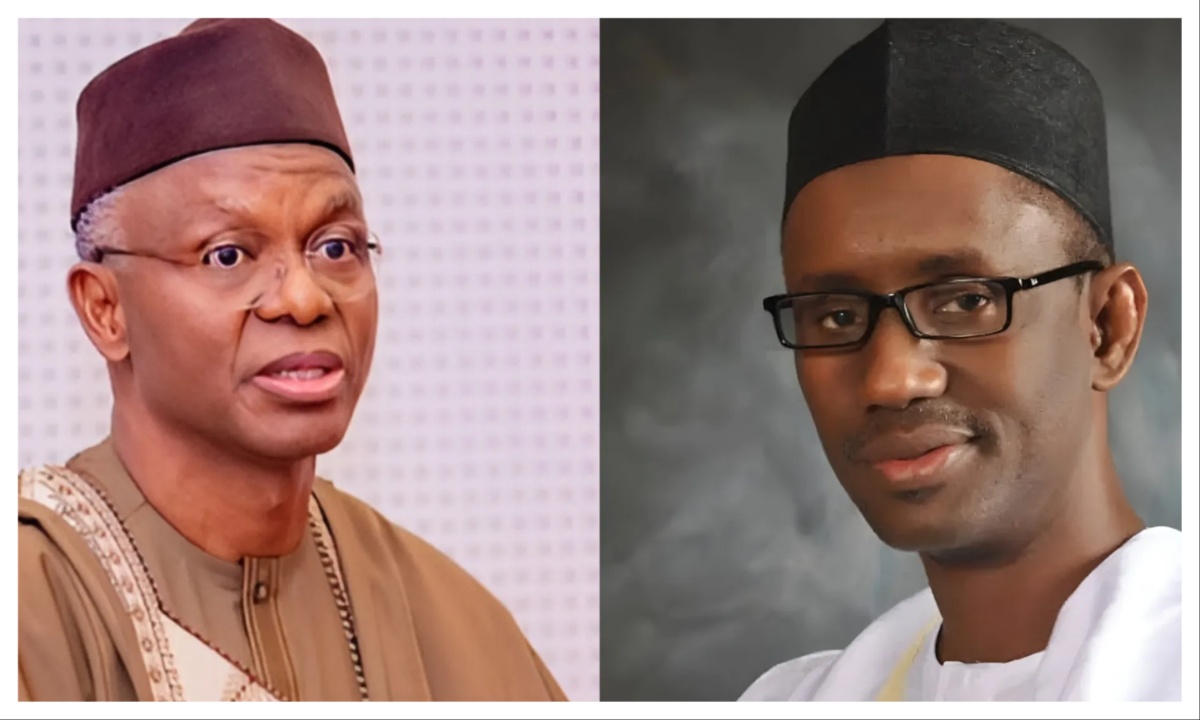
Nigeria has seen political fallouts before, but few are as unsettling as the growing public rupture between Nasir El‑Rufai and Nuhu Ribadu. What makes the moment troubling is not merely the personalities involved, but what their dispute threatens to do to national cohesion, public trust and the already fragile boundary between politics and security.
If two men who once symbolised reformist zeal and institutional courage now choose a path of mutual destruction, they should pause and reflect—on their faith, their region, and the national interest. Because stripped of rhetoric and television soundbites, this is no longer about governance, security reform or leadership ethics. It is the bare-knuckle politics of succession, alignment and survival ahead of the next election cycle.
There was a time when this clash would have been unthinkable. Both men emerged from the same political generation shaped by the reformist moment of the early 2000s under Olusegun Obasanjo. El-Rufai, the outspoken technocrat as Minister of the Federal Capital Territory, and Ribadu, the dogged anti-corruption crusader as Chairman of the Economic and Financial Crimes Commission, were once celebrated as “Obasanjo’s boys”—symbols of a new order that promised discipline, accountability and institutional renewal.
They shared proximity to power, similar access to the president, and a reputation for fearlessness. Their friendship appeared not only political but personal—jolly, confident, mutually reinforcing. That such men could become open adversaries a decade later is not just strange; it is genuinely shocking.
What, then, went wrong? Part of the answer lies in the nature of Nigerian elite politics, where alliances are often forged by circumstance rather than conviction. Power rearranges loyalties. Ambition redraws friendships. And as the political terrain shifts, yesterday’s allies can quickly become today’s obstacles.
But there is a deeper, more consequential problem. When elite rivalries migrate into the realm of security narratives and intelligence insinuations, the damage goes far beyond the individuals involved. Allegations and counter-allegations—especially those touching on surveillance, coercion or misuse of state power—can corrode public confidence in institutions that should remain above partisan struggle.
This is why the current El-Rufai–Ribadu episode deserves sober national reflection, not cheering from partisan sidelines. Nigeria is a country where trust in institutions is already thin. Security agencies operate in an environment of suspicion, insurgency and widespread fear. When senior political actors publicly weaponise security claims—whether substantiated or not—they risk weakening the very structures holding the state together.
It is also important to situate this dispute within the broader northern political landscape. Both men command followings. Both are seen, rightly or wrongly, as voices of influence in the region’s political future. Their feud therefore does not remain personal for long; it reverberates across communities, factions and aspirations. In a region already grappling with insecurity, poverty and political fragmentation, elite infighting of this nature sends the wrong signal.
Faith, too, imposes restraint. Public officials who openly profess moral and religious values must recognise that conduct matters, not just intent. Politics may be a rough trade, but there are lines that, once crossed, are difficult to redraw. The public expects elders of the political class to rise above personal grievances when national stability is at stake.
None of this is to deny that grievances can be real, or that power can be abused. Whistleblowing has its place. Accountability is essential. But there is a difference between principled dissent and public escalation that inflames tension, invites speculation and drags sensitive institutions into political theatre. Mature democracies resolve such disputes through discreet inquiry and institutional processes, not media duels.
Perhaps the most sobering lesson here is how quickly reformist legacies can be overshadowed by personal wars. History is rarely kind to public figures who allow ambition to consume perspective. Nigerians may forget policy details, but they remember conduct—especially when it appears reckless or self-serving.
As the country edges closer to another election cycle, the temptation to settle scores early and loudly will grow. That is precisely why restraint is needed now. The question is not who wins this clash, but what Nigeria loses if it continues.
El-Rufai and Ribadu have both served the Nigerian state at critical moments. Their names are etched into recent political history. They owe the country—and perhaps themselves—something better than mutual ruin. Because when elephants fight, it is not the elephants that suffer most, but the grass beneath them.
Nigeria cannot afford to be that grass.
Abdulhamid Abdullahi Aliyu is a journalist and syndicate writer based in Abuja.