
By Ibrahiym A. El-Caleel
Senator Rabiu Musa Kwankwaso should be competing on the national stage with contemporaries such as Senator Bola Tinubu, Alhaji Atiku Abubakar, and other Class of 1999 political actors. By pedigree, experience, and longevity, Kwankwaso has clearly outgrown Kano politics, and he does not need to prove it again in 2027. However, he appears stuck in state-level politics.
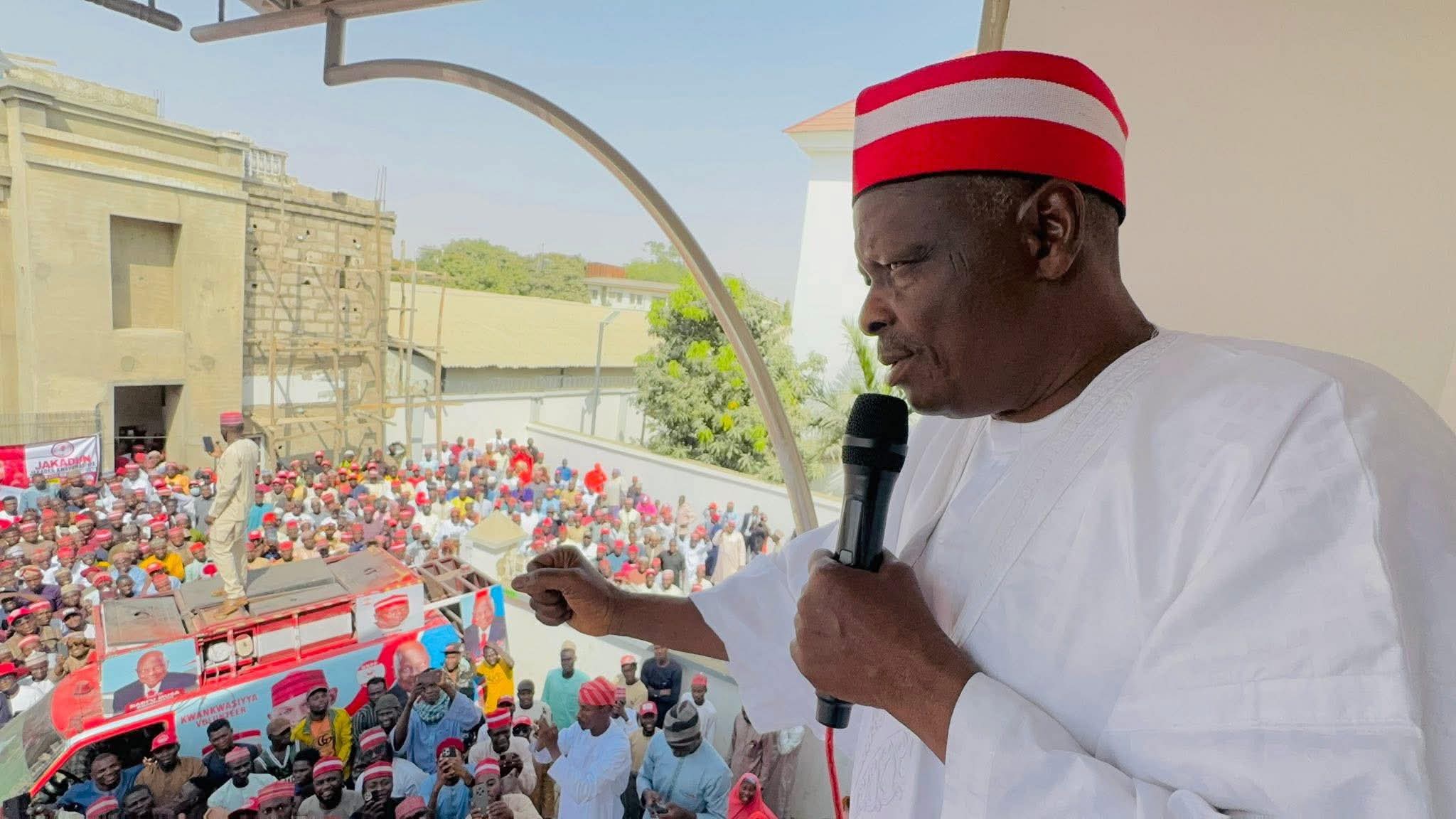
Kwankwaso is at odds with the two successive Kano governors after him, both of whom are his protégés: Dr Abdullahi Ganduje and the incumbent, Engr Abba Kabir Yusuf. He says they have “betrayed” him. There was a show of electoral force at his residence in Kano this afternoon. A large number of people trooped into his Miller Road residence in what he later called a “solidarity visit”.
These developments indicate that Senator Kwankwaso is once again positioning himself for state-level dominance rather than advancing a national ambition in 2027. Ideally, Kwankwaso should defeat Governor Abba through a candidate he anoints for #KanoDecides2027. But a deeper question remains: should the 2027 ambition of a politician of Kwankwaso’s stature be focused on unseating a “betraying” godson at the state level, when Kwankwaso’s contemporaries have either honourably retired from politics or are positioning themselves for the presidency?
Who exactly would Kwankwaso replace Abba with, and what assurance does he have that a newly installed godson would not eventually “betray” him, just as Ganduje and Abba did? At this point, there is little reason to believe the outcome would be different. The current godsons around him are likely to use his influence to rise and then assert their independence once in office. There is no clear indication that they would be more submissive than their two elder political siblings, Ganduje and Abba. How do you keep doing the same thing repeatedly while expecting a different result?
There is also a genuine political risk. What if Abba Yusuf, like Ganduje before him, survives the onslaught and secures a second term? This is not an endorsement of electoral malpractice, but a recognition of Nigeria’s political realities. Kano’s 2019 gubernatorial election demonstrated how powerful interests can intervene decisively; Dr Ganduje ultimately retained office despite glaring indications that he lost at the polls.
If a similar outcome were to occur in 2027 and Governor Yusuf were to proceed to a second tenure, would that not constitute a second public humiliation for the godfather? What explanation would suffice then? That yet another protégé has matured enough to build political alliances strong enough to neutralise Kwankwaso’s influence? At that point, the narrative shifts decisively: from betrayed mentor to diminishing power broker.
On the other hand, if Senator Kwankwaso succeeds in unseating Governor Yusuf and installing another loyalist, what exactly would he be celebrating at the end of the day? That Kwankwasiyya has simply replaced Kwankwasiyya? That a godfather has prevailed over his own godson? Such victories may satisfy the logic of control, but they do little to expand political influence, strengthen institutions, or advance democratic culture. At best, they amount to an internal power rotation within the same political family, offering no clear gain to the broader society.
Ultimately, this debate goes beyond personalities. Do we really need a political model anchored on godfathers, covenants, and lifelong loyalty to patrons? Has Buhari’s repeated endorsement of anointed candidates meaningfully improved governance or political culture in the North? Has Tinubu’s entrenched godfatherism in the South West translated into measurable social or institutional progress? Until we seriously examine the long-term costs of political baptism, loyalty tests, and patronage politics, it remains difficult to argue that godfatherism is the most viable model for a modern democratic society.
Ibrahiym A. El-Caleel wrote via caleel2009@gmail.com.