
By Bilyamin Abdulmumin
One of the major issues that is increasingly capturing global attention is climate change. Since 1992, the United Nations Framework Convention on Climate Change (UNFCCC) has been committed to mitigating the repercussions of this phenomenon. The Conference of Parties (COP) convenes every year to discuss the progress of their commitment.
The last summit, COP27, was held in November 2022 in Egypt, with 190 countries attending. The summit’s focus was the establishment of a “loss and damage fund” to provide funding from significant climate change contributors to countries that are least responsible for climate change but are the most vulnerable to its impacts.
Our planet Earth receives energy from the Sun in the form of sunlight, then radiates it back in the form of infrared; some of this heat reflects into space, while some get absorbed by Green House Gass (GHGs) in a process called Greenhouse Effect, this process stabilises our climate. Without these gases, the Earth could be considerably colder, well below freezing point. On the other hand, an increase in the concentration of these gases leads to a warmer planet. The consequences of interfering with this natural phenomenon are unimaginable. However, modern human activities are believed to be depleting this natural balance; we are increasing the concentration of greenhouse gases, resulting in a rise in global atmospheric temperatures.
Whenever fossil fuels (coal, oil, and gas) are burned to generate energy for various needs such as industrial activities, transportation, and cooking, CO2 is produced as a major by-product (CO2 emission). This CO2 is one of the greenhouse gases (GHGs) and plays a significant role in the greenhouse effect. The emissions of CO2 and other GHGs increase heat absorption, resulting in global warming. Glaciers and ice caps melt due to global warming, leading to rising sea levels. This phenomenon poses a significant threat to coastal areas, as increased water volume can cause flooding and other existential hazards.
Another big threat is that global warming causes heat waves. A heatwave is a period of scorching weather, typically lasting several days or even weeks; the temperature of some European countries (due to heat waves) is currently reported to soar up to 40 degrees Celsius.
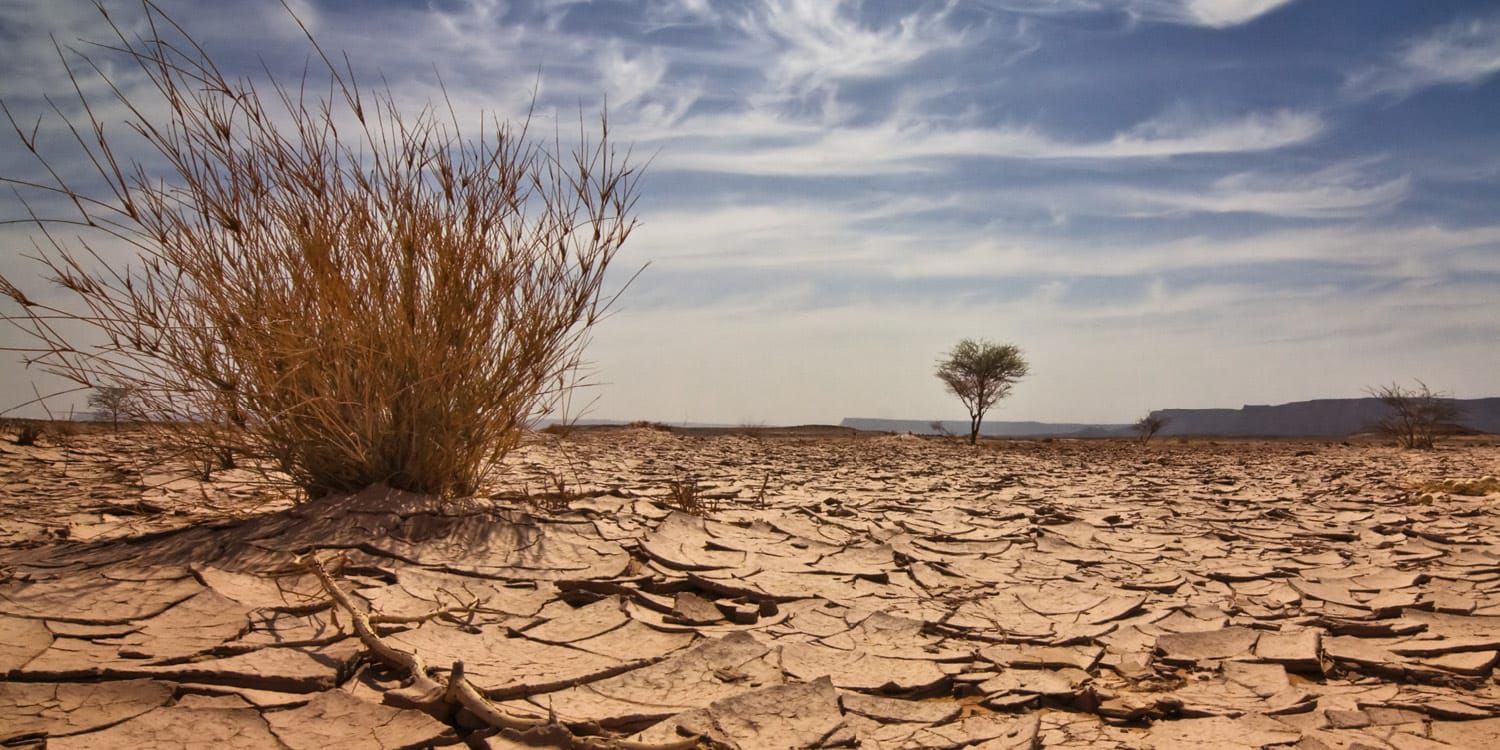
In broader terms, while the global North (North America and Europe) mostly experiences heatwaves, glacier melting, and increased rainfall, the global South counterpart (South America, Africa, and Asia) mostly experiences flooding, drought, and forest fires. It is clear here that the latter is worst affected by global warming.
The overall global warming is currently measured at 1.2°C and is projected to reach 1.5°C by 2025. The Earth will be in real danger if global warming reaches 2.0°C (as forecast, at least by 2040). At this level, it will cause the acceleration and exacerbation of all the threats mentioned above. Drought will impact the majority of global farmland, while flooding will submerge a significant number of homes. Unquenchable forest fires will also reign, creating a sort of doomsday scenario for humanity.
It was against this foreseeable bleak future that the COP members, through the Paris Agreement, agreed to reduce CO2 emissions by 50% by 2030. This commitment means that the countries involved will restrict the usage of fossil fuels such as coal, oil, and gas and instead transition to green and clean energy alternatives like solar, wind, hydro, geothermal, and biofuels.
But one major obstacle hinders this promising energy transition, especially in developing countries: the glaring affordability of fossil fuels compared to all renewable sources. Due to the low cost of fossil fuels, all developed countries relied on them to propel their advancement. This is why transitioning to renewable energy poses more difficulties for developing countries like Nigeria. When Africa struggles to find its footing, this ugly scenario rears its head. The beneficiaries of fossil fuel’s abundance now advocate for cleaner energy solutions left, right, and centre. This situation is like campaigning to a malnourished person about routine medical check-ups when they primarily need proper nutrition. The person has to eat well before considering a longer life campaign.
The intriguing part of the global warming scenario is the unequal contribution of CO2 between developing and developed countries. The latter are far more culpable, with their giant machines releasing CO2 into the air ‘like tomorrow no de’. For instance, the US and China contribute more than 20% of the global CO2 emissions each, while the entire African continent contributes below 4%.
Nevertheless, these should not be discouraging for Africa, or a reason for kicking against climate commitment, since climate change is a long-term issue; in the future, when Africa’s economy snowballs, it will significantly contribute to global warming.
Instead, this should serve as an opportunity for Africa to embark on development while committing to climate action. Imagine if, a few centuries ago, Europe and America had received support to consider climate change mitigation while advancing their technology. We might not be where we are today, facing the current threat of global warming.
Among all the renewable energy sources, biofuel remains the most suitable option for African countries or any developing nations to adopt in their fight against climate change because it can promise simultaneous infrastructure development while combating climate change.
Agriculture is both a boon and a bane for development in many African countries since most citizens are farmers. Therefore, investing in the development of the agriculture sector through the energy sector by adopting biofuels can significantly contribute to the overall progress and development of a nation.
With COP’s commitment to supporting developing countries and the potential of biofuels to transform the agriculture sector, there is no better time for Nigeria to transition to cleaner energy.
Bilyamin Abdulmumin is a doctoral candidate in Chemical Engineering at ABU Zaria, a public affair commentator, and a science writer.