
By Lawal Dahiru Mamman
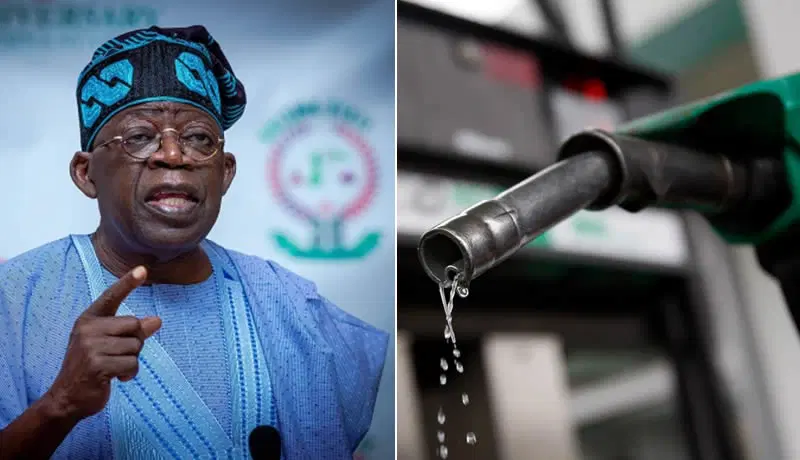
On 29 May 2023, President Bola Ahmed Tinubu used his inaugural address to sever Nigeria’s decades-long dependence on fuel subsidies. It was a definitive end to a fiscal drain that had consumed trillions of naira annually, a broken system that long benefited smugglers, middlemen, and the elite far more than ordinary citizens.
Three years into this economic regime change, the ledger presents a duality. While the policy has successfully unlocked unprecedented nominal revenues for the Federation Account, its real-world impact remains polarising.
As the nation reflects on the administration’s third anniversary in 2026, the question changes from whether the subsidy needed to go to who is actually winning from its absence.
In reality, the elimination of the subsidy did not result in a dedicated, untouchable savings account. Instead, it stopped a bleeding artery by wiping out the ₦4–5 trillion annual “under-recovery” losses previously absorbed by the Nigerian National Petroleum Company Limited (NNPCL).
Consequently, direct remittances to the Federation Account Allocation Committee (FAAC) have increased to historic highs. In 2024, annual savings reached roughly $7.5 billion, which translates to approximately ₦12 trillion at prevailing rates. This drove a 79% jump in total FAAC disbursements, skyrocketing from ₦16.28 trillion in 2023 to ₦28.78 trillion in 2024, with sub-national governments swallowing ₦15.26 trillion of that pool.
The momentum carried firmly into 2025, yielding an estimated $7–8 billion in savings. In the first quarter of 2025 alone, federal petroleum savings surged by over 500%, leaping from ₦154 billion to ₦836 billion. State governments have been the primary beneficiaries of this windfall, utilising the massive inflows to clear ₦1.85 trillion in backlogged debts, stabilise payrolls, and kickstart stalled regional projects.
While a November 2025 National Orientation Agency (NOA) policy document claims that over $84 billion has been saved and channelled into 40 road projects, independent macroeconomic realities suggest that this cumulative figure is mathematically improbable over a two- to three-year window. The actual cumulative benefit more closely aligns with World Bank estimates ranging between ₦11 trillion and ₦20 trillion, heavily caveated by severe naira depreciation.
Because these funds flow directly into general revenue pools rather than a ring-fenced fund, precise tracking has become an administrative nightmare. This lack of transparency has triggered fierce pushback from civil society organisations such as SERAP and BudgIT, which demand that states account for their newfound wealth rather than sink it into urban aesthetics or overheads.
The federal government has defended the pain of the reform by pointing to vital interventions across key sectors. In the immediate aftermath of the announcement, an initial ₦5 billion per state and the FCT was deployed via grants and loans for food and fertiliser distribution to cushion the shock.
Social safety nets saw a modest boost, with ₦3.2 billion allocated to expand conditional cash transfers through the National Social Register.
On the human capital front, the Nigerian Education Loan Fund (NELFUND) has disbursed ₦206.29 billion to over 1.1 million student beneficiaries. While NELFUND is technically funded via the Development Levy, the subsidy removal created the fiscal breathing room necessary to establish it.
Massive shifts have also been targeted toward transit and structural development. Over ₦100 billion has been injected into the Presidential Compressed Natural Gas (CNG) Initiative to build conversion centres and roll out mass transit buses.
Increased liquidity has sustained funding for critical federal projects, including the Lagos–Calabar Coastal Highway, the Abuja–Kano Road, the Kano–Maradi rail line, and a $1 billion modernisation commitment for key seaports like Apapa, Tin Can, and Calabar.
Furthermore, a massive portion of the savings has been absorbed by debt servicing, exceeding ₦15 trillion in recent budget cycles. While this aggressive rebalancing crowds out routine capital expenditure, it narrowed the fiscal deficit from roughly 5.4% to 3.0% of GDP, effectively averting a total sovereign bankruptcy.
Despite the triumphant-looking government balance sheets, the microeconomic reality for the average Nigerian is brutal. The savings on paper feel a world away from the hardships on the ground, creating a paradox between macro-stabilisation and micro-deprivation.
The most devastating blow has been the cost-of-living crisis. Fuel prices ballooned from under ₦200 to over ₦1,300 per litre across the federation, unleashing a wave of transportation and food inflation that has left millions of households financially insecure.
At the same time, citizens watch trillions of naira being unlocked, only to see it swallowed by prior borrowing patterns and rising interest costs, while the government’s appetite for fresh debt remains stubbornly high. This problem is compounded by severe currency depreciation and inflation.
In nominal terms, FAAC allocations are setting records at ₦2–3 trillion per month. In real terms, however, rampant inflation and a weakened naira mean this money buys far less infrastructure, healthcare, and education than it would have three years ago.
Bottom Line
Three years on, the structural necessity of President Tinubu’s May 2023 declaration is undeniable; it freed Nigeria from a fiscal death trap and dismantled an unsustainable system. Yet, the victory remains largely confined to government ledgers.
For the man on the street, the benefits of the reform have been thoroughly muted by inflation, currency devaluations, and execution gaps.
The fundamental challenge of Nigerian governance remains unresolved: the inability to translate state wealth into public welfare efficiently. As the calendar turns deeper into 2026, public trust is running thin.
If this reform is to be remembered as a historic transformation rather than just a massive tax hike on the poor, the government must shift from celebrating nominal revenue milestones to delivering tangible, unmistakable improvements in its citizens’ daily lives. The sacrifices have been made; it is time for the dividends to appear.
Lawal Dahiru Mamman writes from Abuja, and he can be reached via: dahirulawal90@gmail.com.