By Sabiu Abdullahi
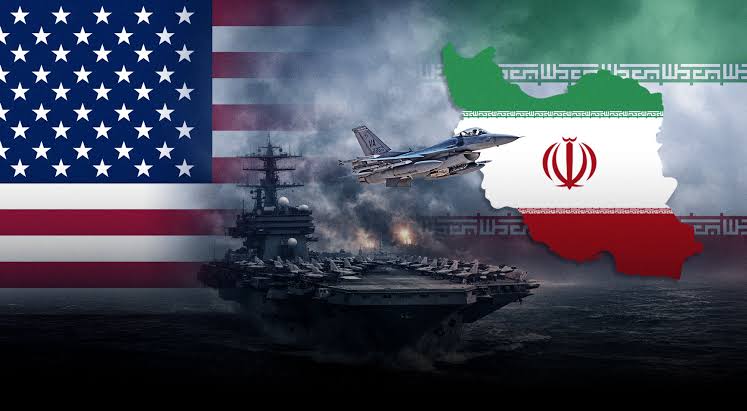
Key European countries have turned down calls by United States President Donald Trump to support military efforts aimed at securing the Strait of Hormuz, as tensions rise during the ongoing US-Israel conflict with Iran.
The position was made clear during a meeting of European Union officials in Brussels on Monday, where leaders discussed the sharp increase in global oil prices linked to the conflict. Germany stated firmly that it would not take part in any military action in the region.
German Foreign Minister Johann Wadephul said more information was needed before any further steps could be considered. “We need more clarity here,” he told reporters. “We expect from the US and Israel to inform us, to include us into what they’re doing there and to tell us if these goals are achieved.”
He added that once the situation becomes clearer, attention should shift towards broader regional security arrangements. “Once we have a clear picture of that, we believe we need to move into the next phase, namely, defining a security architecture for this entire region, together with the neighbouring states,” he said.
Germany’s Defence Minister Boris Pistorius also ruled out military involvement. He said Berlin would instead support diplomatic efforts to maintain safe passage through the strategic waterway. “This is not our war. We have not started it,” he said, while questioning the expectation for European naval forces to succeed where the US Navy already operates. “What does … Trump expect a handful or two handfuls of European frigates to do in the Strait of Hormuz that the powerful US Navy cannot do?”
A spokesperson for German Chancellor Friedrich Merz stressed that the conflict is unrelated to NATO operations. Stefan Kornelius said the alliance’s purpose is territorial defence and noted that “the mandate to deploy NATO is lacking”.
The United Kingdom echoed a similar stance. Prime Minister Keir Starmer stated that any involvement in the Strait of Hormuz would not fall under NATO. “Let me be clear: that won’t be, and it’s never been envisioned to be, a NATO mission,” he said. He also made it clear that Britain would avoid being pulled into a broader conflict, although discussions are ongoing with allies about possible support roles.
Several other European nations expressed doubts about the feasibility of a naval mission in the short term. Dutch Prime Minister Rob Jetten said it would be “very difficult to launch a successful mission there in the short term”.
Countries such as Lithuania and Estonia indicated they were open to considering a US request, but insisted on clearer details about the objectives. Estonia’s Foreign Minister Margus Tsahkna asked: “What will be the plan?” as he called for clarity on Washington’s “strategic goals”.
Greece and Italy also ruled out participation in military operations in the area, while Denmark suggested Europe should remain open to supporting safe navigation, even if it disagrees with the decision to go to war. Danish Foreign Minister Lars Lokke Rasmussen said, “We must face the world as it is, not as we want it to be,” adding that any plan should aim at de-escalation.
Poland signalled willingness to review a formal request made through NATO channels. Foreign Minister Radek Sikorski said, “If there is a request via NATO, we will, of course, out of respect and sympathy for our American allies, consider it very carefully.”
Despite the resistance, President Trump has continued to press allies to join efforts to reopen the vital shipping route. Speaking at the White House, he criticised countries that have shown little enthusiasm. “Some are very enthusiastic about it, and some aren’t,” he said, adding that “the level of enthusiasm matters to me.”
He also expressed surprise at the United Kingdom’s hesitation and said Secretary of State Marco Rubio would soon announce countries willing to support the initiative.
Within the European Union, there appears to be little support for expanding existing missions to cover the Strait of Hormuz. EU foreign policy chief Kaja Kallas said there had been “no appetite” for such a move. “Nobody wants to go actively in this war,” she said.
The Strait of Hormuz remains a critical global shipping route, with about one-fifth of the world’s oil supply passing through it. The ongoing conflict has disrupted traffic and driven oil prices above $100 per barrel, raising concerns about the wider impact on the global economy.
European leaders are now under increasing pressure from Washington to act, but many remain cautious. While discussions continue on how to ensure safe passage through the strait, there is no clear agreement on military involvement.
European Leaders reject military role in Strait of Hormuz crisis amid Iran war

ByAdmin
16 March 2026