
By Dahiru Kasimu Adamu
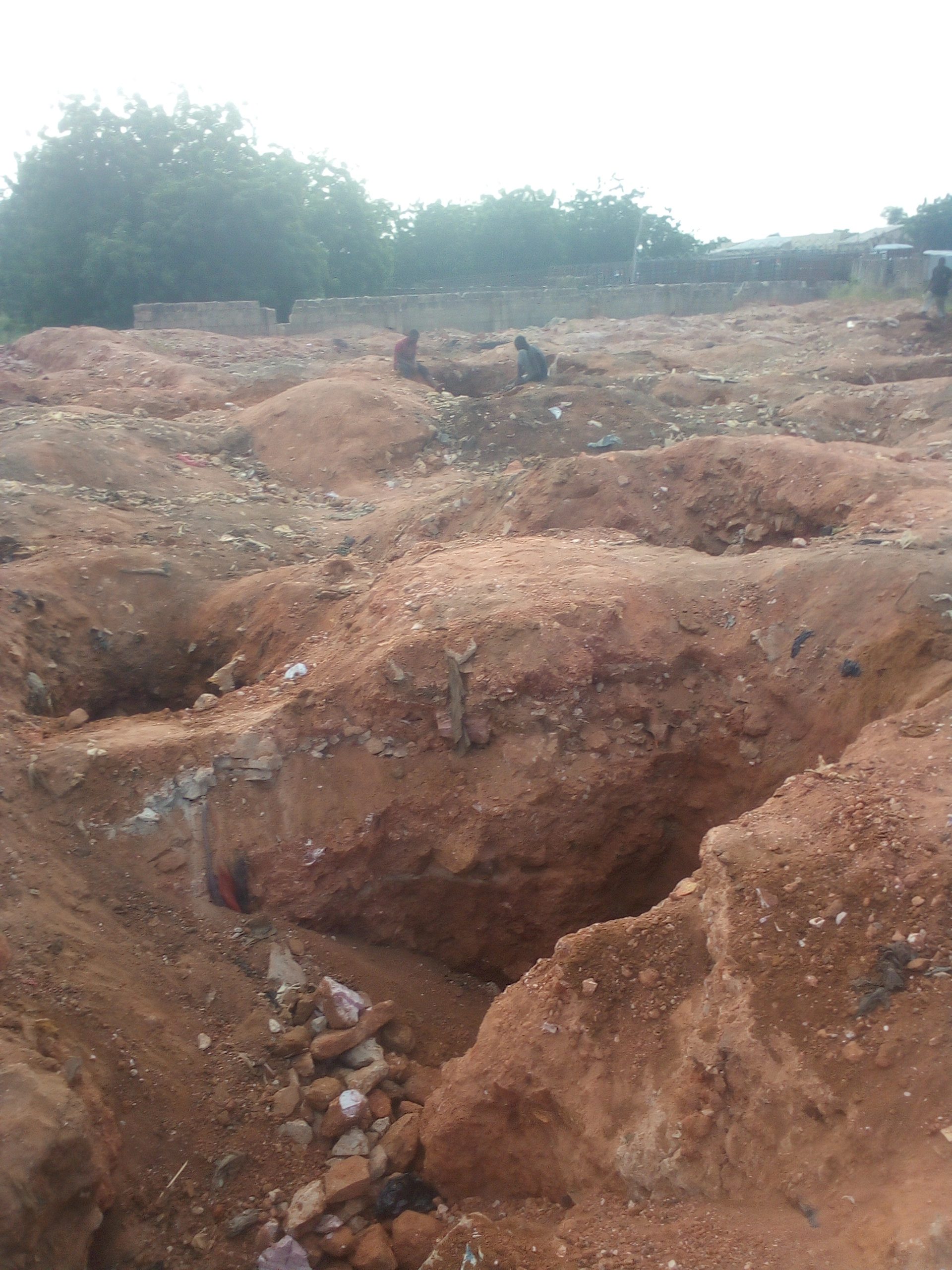
Every morning at Shantan Old Garage along Western Bypass, hundreds of young men armed with shovels and hoes descend into metre-deep pits, searching for buried treasure. But they are not hunting for gold or ancient artefacts, they are digging for scrap iron.
The abandoned garage, once a bustling hub for roadside mechanics, has become an unlikely source of livelihood for youth aged 15 to 40. As traditional labour opportunities have dwindled, these young scavengers have discovered that the ground beneath the old garage contains valuable iron scraps left behind when the site was operational.
“We thank Allah for this opportunity,” said Modi Sanusi, a scavenger in his late twenties. “Just this morning, scavenging materials worth over N125,000 were sold, all from this ground.”
The work is gruelling and dangerous, but profitable. Scavengers can earn between N20,000 and N40,000 daily, depending on their finds—a significant sum in an economy where formal employment remains scarce. Among those who have embraced this unconventional livelihood are former Tsangaya pupils who once begged for food.
Seventeen-year-old Kabiru explained how the earnings have transformed his life: “We earn income, buy food, give some to our parents, and save.”
The phenomenon is not confined to Shantan. Reports indicate that scrap metal collection has become one of Nigeria’s “millennium jobs,” with thousands of youth now reportedly earning substantial incomes from the trade.
But the work comes at a cost. Sharp objects buried in the soil cause frequent injuries, and landslides have resulted in fractures. Muhammad, another scavenger, recalled sustaining a leg fracture when earth collapsed on him. “After I recovered, I came back in the field as I can’t leave this work,” he said.
Health experts have raised alarm about additional risks. Buried iron from old vehicles could be contaminated with lead or other toxic chemicals. Open wounds from injuries risk infection, particularly given the lack of basic first aid facilities at the site.
Despite these hazards, the scavengers remain undeterred. Observers say the phenomenon highlights both the resilience of Nigerian youth and the urgent need for job creation and safety regulations. Advocates call for government intervention through new strategies and laws to regulate the business, as well as leadership within scavenging communities to organise safety campaigns.
For now, the digging continues at Shantan Old Garage. As unemployment persists and metal prices remain attractive, more youth are likely to join the ranks of those turning Sokoto’s buried past into their economic future—one shovelful at a time.