
By Oladoja M.O
“A dive into the political paralysis killing public health”
In the long and winding corridors of Nigeria’s national challenges, the health sector stands as one of the most visibly bruised, chronically neglected, and systemically under-prioritised. Yet, beyond the crumbling hospitals and overworked health workers lies a more insidious diagnosis: politics. Not politics in its ideal form, the noble art of governance, but the brand that manifests in distraction, dereliction, and dead ends. It is this politicisation, or rather, the wrong kind of political influence, that has become the biggest ailment afflicting Nigeria’s health system today. And until it is addressed, no number of policies, international partnerships, or ministerial press briefings will revive the sector to its full potential.
Let’s begin with a case study, a hopeful one that has slowly started to mirror the very problem it tried to solve.
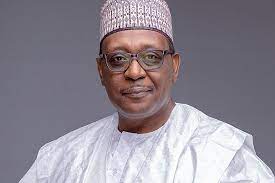
When Dr. Muhammad Ali Pate was appointed Nigeria’s Coordinating Minister of Health and Social Welfare in August 2023, many saw a breath of fresh air. He came armed with credentials, experience, and, perhaps most importantly, energy. Within months, the sector began to stir with renewed ambition.
Under his leadership, Nigeria launched its first Health Sector Renewal Investment Initiative, signed a landmark Sector-Wide Approach (SWAp) compact with states and partners, and injected ₦50 billion into the Basic Healthcare Provision Fund (BHCPF), which was double the amount released in the previous year. Over 2,400 health workers were recruited and deployed across underserved areas. Primary healthcare facilities that had long been mere consulting rooms began to see improvements in personnel and reach. Vaccination efforts soared.
A nationwide HPV rollout vaccinated nearly 5 million girls, and the long-awaited Oxford R21 malaria vaccine arrived on Nigerian soil. The government pursued a policy to unlock the healthcare value chain, drafting executive orders to encourage local pharmaceutical manufacturing and reduce import dependency. Even the National Health Insurance Authority (NHIA) was repositioned, expanding coverage through the Vulnerable Group Fund, while a national patient safety strategy was launched to bring quality and accountability into focus. All signs pointed to a government that was, finally, taking health seriously. But then, as quickly as the fire had been lit, it began to dim.
But from early 2025, a silence began to creep over the very desk that once signed reforms with urgency. Policy announcements grew fewer. Major rollouts dried up. The energy that had defined Pate’s first year slowly receded into a void of political undertones. And then came the whispers, and then confirmations of a new ambition: governorship in Bauchi State. Pate, by his own words in March 2025, declared himself “ready to serve” in his home state come 2027. From that moment on, what had been a robust health sector agenda began to take a back seat to the shifting winds of political alignment.
The problem isn’t ambition. It’s a distraction. A Coordinating Minister of Health in a country where maternal mortality is one of the highest in the world, where millions still pay out-of-pocket for even the most basic care, and where health infrastructure is crumbling under the weight of neglect, simply cannot afford to be half-present. This is the heart of the issue: politics has become both the gatekeeper and the grave-digger of Nigeria’s health potential.
For decades, well-meaning reforms have died at the altar of “lack of political will.” Budgets are approved, but rarely fully released. Policies are launched, but implementation fizzles out under new administrations. Health is often treated as a social service, rather than a critical pillar of economic development. Politicians are quicker to commission a white elephant hospital in a state capital than to strengthen the rural primary health centres where lives are quietly and daily lost.
And when leadership does finally begin to show some will, as Pate briefly did, the ever-thirsty machinery of Nigerian politics lures it away. This, perhaps, is the cruellest irony: politics that should drive public health, instead devours it.
The Nigerian public, meanwhile, remains largely unaware of how deeply entangled their health is with political decisions. Health issues are often viewed as isolated, with a bad hospital here and an unavailable drug there, rather than as symptoms of a larger systemic failure driven by poor governance, poor prioritisation, and a lack of sustained leadership.
We cannot continue to treat the health sector as an afterthought or a public relations prop. Health is not a photo opportunity. It is not a campaign gift or a once-in-a-quarter press release. It is a right, and more than that, it is the foundation for national development. No country has risen out of poverty, no economy has truly grown, without first investing heavily in the health of its people.
So, here’s the truth we must face: until Nigerian politics stops viewing health as just another item on a manifesto’s checklist and starts seeing it as a cornerstone of national survival, we will continue to spin our wheels. Ministers will come and go. Budgets will be announced and unspent. And the average Nigerian will continue to suffer preventable deaths, unaffordable care, and unattended illness.
The solution lies not only in leadership, but also in the voice of citizens, civil society, professionals, the media, and everyday people, who demand more than shallow commitments. We must demand that health be taken seriously, institutionally. That it be enshrined not just in words but in political action, protected from the cycles of campaign season, ego projects, and elective distractions. In this moment, we are witnessing a perfect case study of how even a promising leader can be lost to the lure of political pursuits.
If Dr. Ali Pate, arguably one of Nigeria’s most qualified health minds, could be drawn away from a national assignment to a regional ambition, it speaks volumes about the fragility of reform when politics remains unchecked.
This article, then, is not just a critique. It is a call to consciousness. A call for the government to return to the trenches of national responsibility. A call for health to be declared not just a service, but a strategic national priority. A call for the public to realise that the decaying hospital they see is not just a facility issue, but a political problem. And it demands a political solution.
Let us stop treating the symptoms. Let us diagnose the root. And let us finally begin to treat politics as the virus silently killing Nigeria’s health system.
Oladoja M.O writes from Abuja and can be reached at mayokunmark@gmail.com.