
By Dr. Aliyu U. Tilde
History repeats itself, they say. However, that recurrence was less frequent in the history of rulers of Northern Nigeria. While historians can remember two, we may be at a point of witnessing the third.
Sometime in December 1652, Muhammadu Kakuna, the 33rd Sultan of Kano, was ousted under the influence of the powerful Maidaki Auwa, who installed her son, Soyaki. Kakuna retreated to Zaria and, within days, fought back his way to the throne just before the year ran out. That was the only time a ruler of Kano was restored.
In 1901, the British colonialists occupied Kontagora—tudu makwantar rikici—and deposed its 3rd Emir, Ibrahim Nagwamatse, for his notorious slave expeditions. They installed his son. For some reason, after just two years, the British returned Ibrahim from exile in 1903 and made him the Sarkin Sudan, and he reigned until he died in 1929.
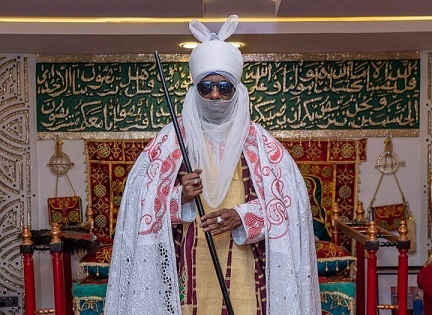
Muhammadu Sanusi II, the 14th Emir of Kano, may soon be the third. Like in the case of Kakuna, many saw his removal by Governor Abdullahi Umar Ganduje on the grounds of insubordination as a live specimen of highhandedness, intolerance, and vengeance. The Emir was arrested and banished to Loko, Nassarawa State, for confinement, an action which he successfully fought against before a federal high court in Abuja. On 30th November 2020, the court declared the internment and the Emirate Council Law under which it was undertaken unconstitutional. It restored the fundamental rights of the deposed Emir to human dignity and personal liberty.
In contrast to Maidaki Auwa of 1652, Governor Ganduje went beyond the Emir and balkanised the Emirate. He divided it into five independent emirates to prevent the emergence of any strong Emir of Kano in the future. This act of downgrading the system, the first of its kind since Bagauda founded Kano 1,025 years ago, is understandably repugnant to the Kano ruling family and many of its subjects. If the malware, they argue, had only changed the driver file—in this case, the Emir—the system could tolerate that and continue with the same speed. But corrupting the entire system files and downgrading its performance to a status of a photocopier cannot be tolerated. A ‘system restore’ is necessary.
Restoring the Kano Emirate system to its 9 March 2020 date is now on the fingers of the new administration in the State. It will undoubtedly be greeted with mixed feelings in the next few days, especially as it will portend restoring its unified disk configuration and the deleted driver file.
History is about to witness that restoration if the feelers from Kano are accurate. How the ancient city would absorb the heat of the operation and bounce back as one of the most important emirates in the region is a matter of immediate concern to its citizens. As Nigerians, we can only hope that it does so without boiling.
Dr Aliyu is a former Bauchi State Commissioner of Education. He can be reached via Twitter @Dr_AliyuTilde.