
By Hajara Shehu Esq.
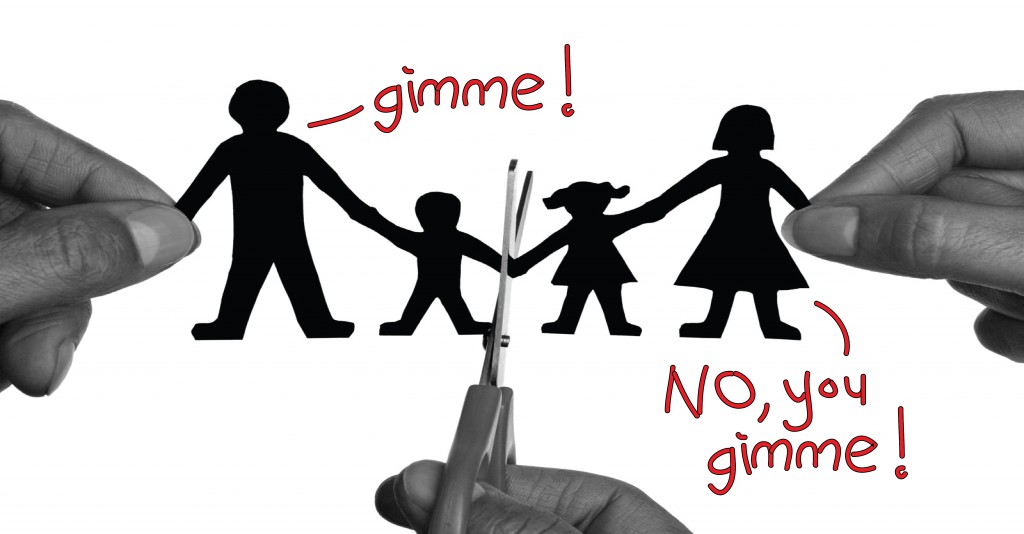
A broken marriage can have adverse effects on the custody of children. In many cases, when a marriage ends, the focus of each partner is solely on how to hurt the other, regardless of the impact on their innocent children.
Nowadays, custody of children has become a weapon of choice in this scenario. As a result, the battling parties are often blinded by fury and anger, sacrificing their children’s well-being in the process.
Unfortunately, the person fighting for custody may not have a conducive environment to raise the child/children. The primary objective is simply to separate the child/children from the other parent as a token of hatred. The main problem is that whoever wins the custody case often destroys the child/children’s lives. In most cases, the child loses the love, care, and affection of the parent who lost the case due to anger, and the parent who wins may not offer the best life for the child.
For instance, if the father wins custody, he may not be married and may live with an elderly mother. In this situation, the child/children often wander around without proper and adequate care. In another scenario, the father may be married and take the child/children to a stepmother. However, this can lead to complete abandonment from the stepmother due to the father’s attitude and behaviour, overprotectiveness, and unending interference.
Similarly, if the mother wins custody, the father may neglect the child/children and completely surrender them to the mother. Unfortunately, most mothers from less privileged families or orphans may find it difficult to meet all the financial needs of the child/children.
While credit is given where it is due, a mother always tries her best until she remarries and has other children. Then, the children will automatically suffer the same fate as above, except in favourable situations where the mother is privileged.
Leaving a child/children to their maternal/paternal grandmother is not a bad thing. However, it is not the best option considering the grandmother’s age and the need for a child to have love, closeness, and affection to be a good individual. The most disturbing circumstance is when both parents are married and have other children, and the child/children are left alone under the care of their dearest grandmother. In such cases, the child/children become hardened by circumstances and are forced to grow faster than their age.
Every child needs to be allowed to grow according to their age in love, care, and affection. Every child deserves the love, respect, and affection of both parents. It is not a privilege but a huge responsibility placed on them by Allah, the Most High, which they shall account for. The Prophet (PBUH) said we are all shepherds and shall account for it on the last day.
Many victims of broken marriages have grown up to become drug addicts, thugs, armed robbers, thieves, and engaged in many other crimes. Love, care, and affection are the foundation of a good individual. Where these are lost, most children go astray except those that Allah guides.
It is disheartening to witness parents cursing, abusing, and calling each other names while holding each other responsible. However, the truth is that these kinds of parents are equally and jointly responsible.
In conclusion, no matter how a marriage ends, Allah’s precious gifts (children) are not the reason and should be kept away from battles. Instead, parents should allow each other to play various roles in the child/children’s life. Relationships might end, but the child/children’s relationship with the ex-partner will forever remain. Children deserve a good life filled with love, care, and affection; parents should ensure they have it!
Hajara can be reached via Hbshehu301@gmail.com.
What a wonderful article
Masha Allahu Barr. Hajara, you have said it all and really. Let’s public hear the article through radio stations and other media channels. Keep it up