By Abdullahi Mukhtar Algasgaini
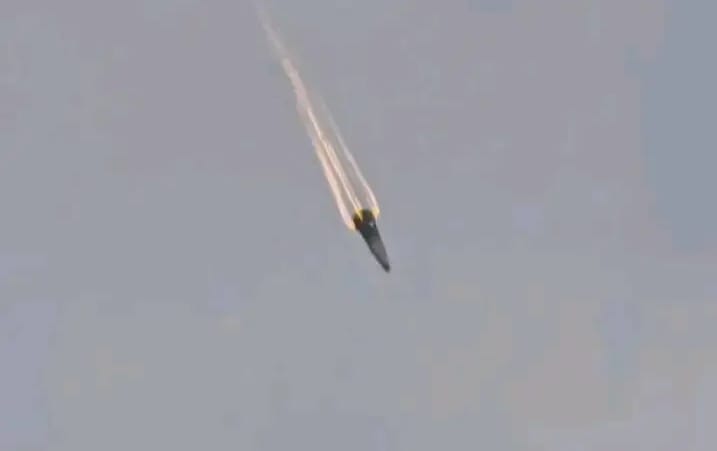
If fighting resumes between Iran, the United States and Israel, Tehran could rely on a mix of heavy ballistic missiles, solid-fuel systems and weapons designed to challenge advanced air defenses, according to an assessment of its arsenal.
Among the most closely watched systems is the Khorramshahr-4, a medium-range ballistic missile reportedly capable of carrying a warhead weighing about 1.5 tonnes over a range of roughly 2,000 kilometers. Its heavy payload makes it one of Iran’s most significant conventional strike weapons.
Another key system is the Sejjil, a two-stage ballistic missile powered by solid fuel. With a reported range of around 2,000 kilometers, it could potentially reach targets across much of the Middle East, including Israel. Solid-fuel propulsion can reduce launch preparation time compared with liquid-fueled systems.
Iran could also deploy the Fattah-1, which Tehran describes as a hypersonic missile. Iranian officials claim its maneuverability and speed could complicate interception, though its advertised capabilities and effectiveness against advanced air defenses have not been fully independently established.
Other systems, including the Kheibar Shekan, Emad and Ghadr, add further options to Iran’s missile arsenal, giving its military different combinations of range, payload and propulsion.
Iran’s missile forces could threaten military installations and other strategic targets across the region. However, the actual impact of any renewed campaign would depend on the number of operational launchers and missiles available, targeting accuracy, and the effectiveness of opposing air-defense systems.
If another war begins, Iran’s most consequential advantage may not rest on a single missile, but on its ability to launch different systems in coordinated waves.