By Sabiu Abdullahi
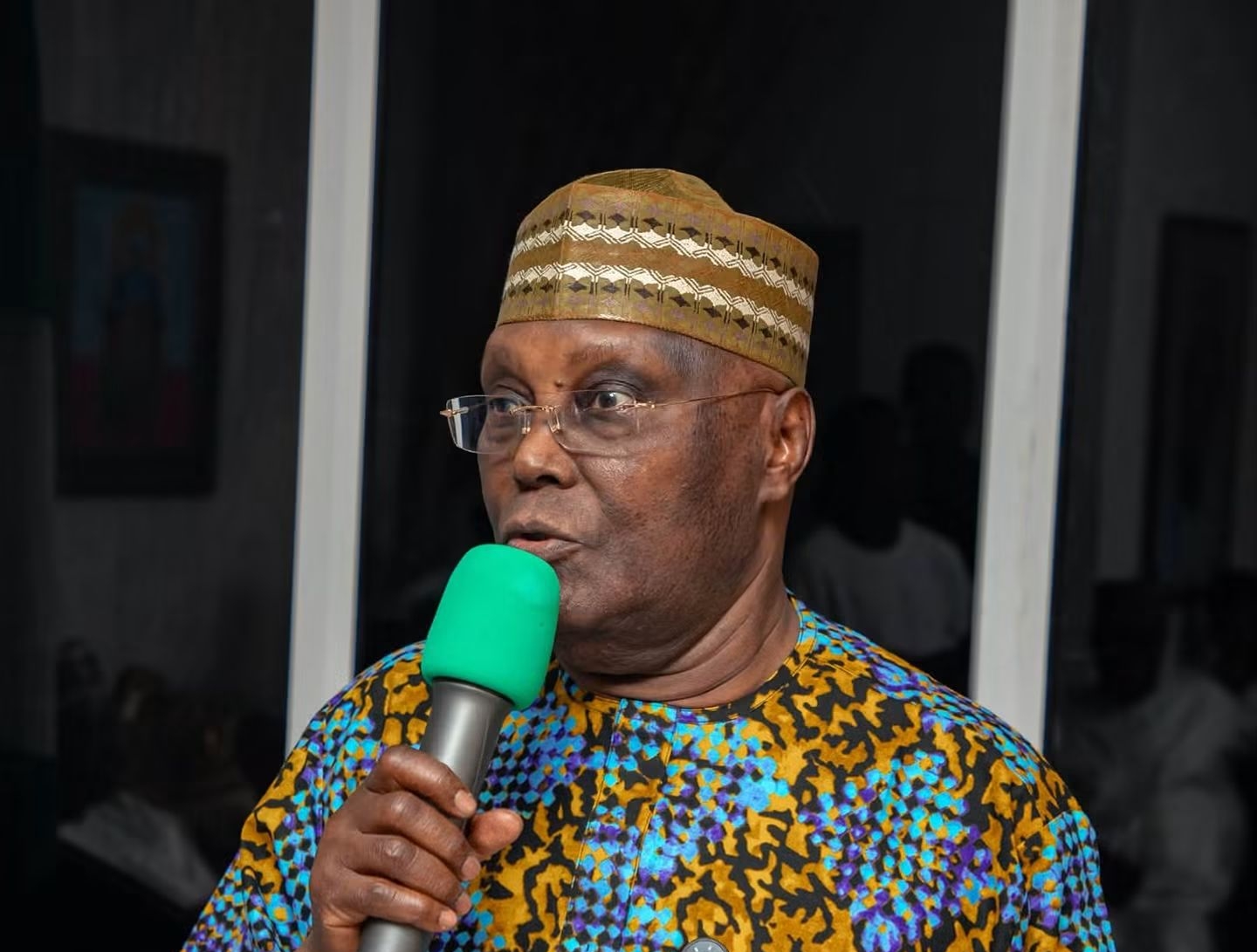
Former Vice-President Atiku Abubakar has criticised President Bola Tinubu’s administration over the state of the Nigerian economy, calling on the President to apologise to Nigerians and leave office.
Atiku made the demand in a statement issued by Phrank Shaibu, Director of Strategic Communications of the ADC Presidential Campaign Council.
The former vice-president described the Tinubu administration as one of the most ruinous governments Nigeria has experienced and accused it of making life increasingly difficult for citizens while continuing to accumulate debt.
“A government that says more money is coming in must explain why it keeps borrowing and why the people paying for its policies cannot see the promised gains.”
He cited figures from the Debt Management Office, which put Nigeria’s public debt at ₦166.79 trillion as of June 30, 2026, compared with ₦49.85 trillion in March 2023.
“After more than three years of demanded sacrifice, Nigerians are left with higher food, transport and energy bills, strained public services and a recorded public debt of ₦166.79 trillion as at 30 June 2026, according to the Debt Management Office.
“Nigeria’s recorded public debt stood at ₦49.85 trillion in March 2023 and ₦166.79 trillion by June 2026.
“I expect President Tinubu to put the full account before Nigerians. He should identify the old debt newly recorded, the foreign debt whose naira value rose with the exchange rate, and every new loan contracted since he assumed office. He should show what has been repaid and what remains outstanding. Accounting explanations must not become a hiding place for fresh borrowing,” he said.
Atiku also criticised what he described as a gap between official claims of economic recovery and the experience of ordinary Nigerians.
“The Tinubu economy is producing two Nigerias: one in which ordinary citizens are suffocating under rising food, fuel, transport, electricity, education and housing costs, and another in which those with wealth, access and privilege are far better positioned to protect and multiply their fortunes.”
“That is the fundamental contradiction at the heart of these reforms. Government celebrates macroeconomic indicators while millions of citizens struggle to translate those statistics into food on the table.
“An economy cannot be declared successful simply because government revenue is rising, reserves are improving or official statistics look better while the purchasing power of ordinary citizens is being destroyed. The true test of economic policy is whether Nigerians can afford food, transportation, housing, education, healthcare and electricity,” he said.
He further pointed to rising fuel prices, saying petrol had sold for about ₦1,400 per litre in Lagos and Abuja and as high as ₦1,500 in parts of northern Nigeria in September. He also said diesel prices had exceeded ₦2,000 per litre.
“The philosophy of an economic reform cannot be that the poor surrender more and more while those already insulated from hardship become increasingly comfortable. Nigerians were promised that today’s pain would produce tomorrow’s gain. After more than three years, they are entitled to ask: gain for whom?
“A mother cannot feed her children with a government revenue announcement. A worker cannot pay transport fare with a speech about reform. Nigerians do not eat GDP figures, FAAC allocations or PowerPoint presentations. The numbers must eventually arrive at the dinner table,” he said.
Atiku also raised concerns over the amount of government revenue being used to service Nigeria’s debt.
“BudgIT reported that by the third quarter of 2025, debt service had reached ₦12.52 trillion against ₦18.63 trillion in revenue — 67.2 per cent. In practical terms, roughly ₦67 out of every ₦100 of the revenue reflected in those figures went to debt service.”
“Money committed to debt service is money unavailable for competing public needs. Nigerians were told to endure the pain because there would be gains. Where are those gains?”
He referred to remarks made by Tinubu at the Africa Forward Summit in Nairobi in May, where the President reportedly said Nigeria expected to spend about $11.6 billion on debt servicing in 2026.
“If President Tinubu understands abroad what debt payments are taking away from Nigeria, then he must explain at home why the borrowing bill continues to grow.
“History warns us where this road can lead. Fiscal distress does not begin on the day a bailout is announced. It develops when borrowing becomes routine, debt service consumes an ever-larger share of available revenue and governments repeatedly borrow to finance gaps that previous borrowing failed to close.
“Nigerians should not have to wait for creditors to tell them what their household budgets already reveal.”
Atiku also called for greater disclosure of the country’s external debt-service obligations for the second quarter of 2026.
He said the President and the All Progressives Congress (APC) should apologise to Nigerians over the hardship he attributed to the administration’s economic policies since 2023.
“President Tinubu should apologise to the families who can no longer afford decent meals; to workers whose wages disappear on transportation before the month has properly begun; to parents struggling to pay school fees; to pensioners whose incomes have been destroyed by inflation; and to businesses fighting daily to keep their doors open.
“Nigerians were asked to sacrifice. Fuel subsidy was removed. The naira was allowed to depreciate sharply. Electricity and transportation costs rose. Government revenues increased, yet borrowing continued. After all of this, the Nigerian people are entitled to ask one simple question: what exactly did our sacrifice buy?
“An apology is not too much to ask from a government under whose watch millions of Nigerians have been pushed into deeper economic distress. Leadership must have the humility to admit when policies have inflicted enormous pain on the people they were supposed to serve.
“Good economics must ultimately improve human life. If government revenue rises while families become poorer; if debt rises while public services remain inadequate; if citizens surrender subsidies, pay higher prices and endure declining purchasing power while government continues borrowing, then Nigerians have every right to demand a full account of where their sacrifice has gone.
“President Tinubu and the APC owe Nigerians that account and they owe them an apology. Apologise to Nigerians. Account for the money collected. Reconcile the borrowing. Explain the charges. Show the people what their sacrifice bought. Then make a solemn pledge to step away from governance rather than ask Nigerians for another mandate to endure this suffering.
“The real test of this economy is not whether the numbers look good in government presentations. It is whether ordinary Nigerians can afford to live.
“Reconcile the borrowing. Explain the charges. Show Nigerians what their sacrifice bought. Apologise for the hardship. And leave governance to those prepared to make life affordable again.”
Atiku Calls On Tinubu To Apologise, Quit Office Over Economic Hardship

ByAdmin
27 September 2026