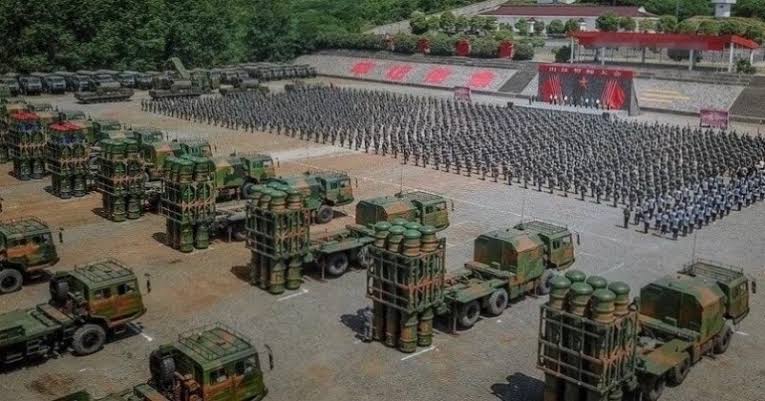
Fresh US intelligence assessments indicate that China could be preparing to supply Iran with new air defense systems in the coming weeks, according to three individuals familiar with the findings, as reported by Cable News Network (CNN).
The development comes shortly after Beijing played a role in brokering a fragile ceasefire that halted recent hostilities between Iran and the United States. The timing is sensitive as President Donald Trump is expected to travel to China next month for talks with President Xi Jinping.
Officials say the intelligence points to possible efforts by Iran to use the pause in fighting to rebuild parts of its military capability with assistance from foreign partners.
Two sources said there are signs that China may attempt to route the weapons through third-party countries in order to conceal their origin.
The weapons in question are believed to be shoulder-fired anti-aircraft systems known as MANPADS. According to the sources, such systems posed a threat to low-flying US military aircraft during the recent five-week conflict and could do so again if fighting resumes.
China has denied the claims. A spokesperson for its embassy in Washington said, “China has never provided weapons to any party to the conflict; the information in question is untrue.”
The spokesperson added, “As a responsible major country, China consistently fulfills its international obligations. We urge the U.S. side to refrain from making baseless allegations, maliciously drawing connections, and engaging in sensationalism; we hope that relevant parties will do more to help de-escalate tensions.”
Earlier, the embassy maintained that Beijing had “been working to help bring about a ceasefire and end to the conflict” since the outbreak of the US-Israel-Iran war.
President Trump said earlier this week that a US F-15 fighter jet downed over Iran was struck by a “handheld shoulder missile, [a] heat-seeking missile.” Iran had earlier claimed it used a “new” air defense system, though it did not disclose details. It remains unclear whether the system was of Chinese origin.
Analysts say any transfer of MANPADS would signal a shift in China’s level of support for Iran since the US and Israel began joint military operations in February. While Chinese firms have continued supplying dual-use technologies to Iran, direct involvement by the Chinese government in weapons transfers would represent a significant escalation.
High-level engagements between Washington and Beijing have continued alongside ceasefire discussions, and Trump’s planned visit is expected to address several of these concerns.
One source familiar with the intelligence said China appears to be balancing its interests. Beijing is seen as avoiding direct involvement in the conflict while maintaining ties with Iran, a key supplier of oil, and preserving plausible deniability.
Sources also noted that China could frame any support as defensive in nature. This position could distinguish its actions from Russia, which has reportedly supported Iran with intelligence sharing during the conflict.
Iran maintains long-standing military and economic ties with both China and Russia. It has also supported Moscow in its war in Ukraine, including the supply of Shahed drones, while continuing to export much of its sanctioned oil to China.
Us Intelligence Suggests China May Send Air Defense Weapons To Iran Despite Ceasefire

ByAdmin
11 April 2026