
By Isma’il Hashim Abubakar
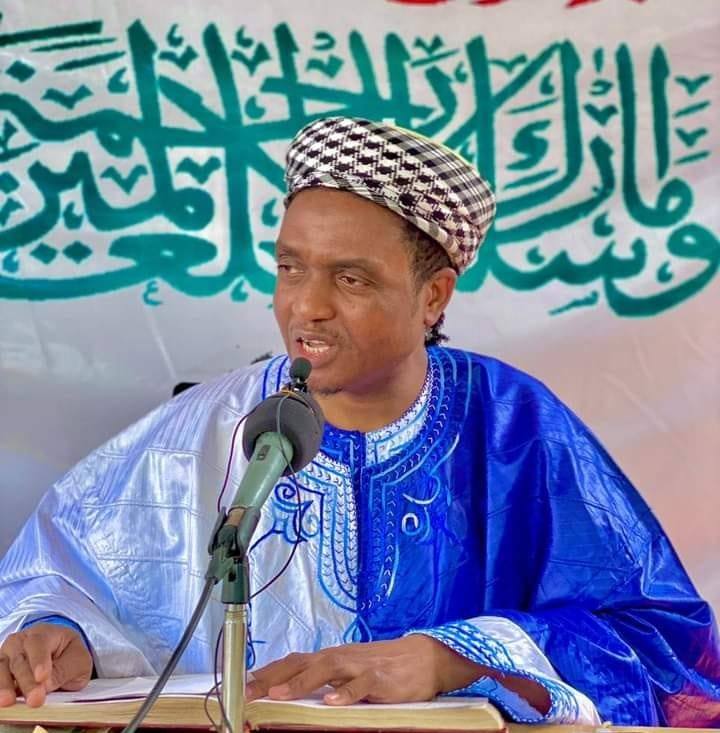
Shaykh Musal Qasiyuni was the third among the scholars whose lessons I listened to throughout Ramadan. I was attracted to his lessons almost two decades ago, much by the accent and the tone of the hymns with which he and his audience opened and closed the lessons, and they were, to me, at the start, more of an esoteric language.
Qasiyuni’s zeal for the preservation of norms and values, the eradication of vices and immoral ventures, and his expression of concern toward the plight of the masses are evident in his lamentation of how things have turned in Muslim societies, which portrays him in the same reformist and activist light that Salafis are often depicted.
Malam Qasiyuni condemned the attempt to incorporate medical tests among legal requirements that must be presented before marriages are contracted. However, he acknowledged that the tests are essential, safer, and more sustaining for the marital union and the future of the couple’s family. The scholar’s point is if leaders are encouraged to pad new legislations into injunctions of marriages, which are already comprehensively sanctioned by Islam, a time would come when leaders would smuggle harmful laws which would only strangle legitimate marriages and pave the way as well as promote promiscuous associations between men and women as it has been normalised in not only western but also many Muslim countries.
In this year’s Ramadan, like the previous years, Qasiyuni had painstakingly treated sensitive themes that have remained the bonds of sectarian contention among the major Sunni Muslims, particularly between Sufi brotherhoods to which he belongs and their Salafi counterparts. These include the concept of bid’a and the central thematic components that revolve around it, such as litanies, liturgical actions, and performances like maulud anniversary and awrad. Qasiyuni offered an extremely polemical and revisionist interpretation of these themes while seeking to legitimise them in line with his Sufi conception and practice.
The hallmark and motive of all these elucidations are an attempt to arrive at a conclusion on which among the many strands of Sunni Islam is on the right path and, hence, most deserving of salvation. In this case, Qasiyuni was more flexible and accommodating as he expanded on the prophetic report, foretelling and warning about the sectarian fragmentation that Muslims would experience. He argued the report has all it takes to be exploited by each of the strands of Sunni Muslims, and going by the letter and spirit of the Hadith, which points to the vast majority as one of the yardsticks for identifying the most authentic and righteous group which merits salvation, according to Qasiyuni, Sufis would have more legitimate claims that conform with what obtains in reality.
Interestingly, however, Qasiyuni dismissed this sectarian conclusion favourable to his theological understanding of Islam and appraised that rather than interpret the Hadith from a creedal point of view, which of course has been the dominant method of scholars for centuries, the Hadith should better be seen from the viewpoint of meritorious virtues, conducts and manners such as kindness, truth, selflessness, humility, resilience, which the Prophet (SAW) and his companions had exhibited throughout their lifetimes. In this way, members of each sect and Islamic societies, including not only the Salafi competitors but peripheral and marginal sects like Shia, can be regarded as a salvaged group in Qasiyuni’s opinion.
Although this view sounds too malleable and points to the degree of Qasiyuni’s broad-mindedness and tolerance, it shall remain problematic and challenging to accept for several reasons, one of which is the consensus among Muslims that creed and beliefs take precedence over all actions and since even non-Muslims could exhibit the virtues outlined by Qasiyuni, downplaying the creedal substances and theological aspects as prime barometers for assuming the status of righteousness and uprightness as far as Islam is concerned, is unacceptable.
The love and affection of Muslims toward the Prophet SAW are meeting points which, according to Qasiyuni, should be the basis for Muslim unity and common solidarity, but also the mirror which shall reflect in the relations among Muslims and have common solidarities irrespective of their sectarian differences. Moreover, Qasiyuni stressed that Muslims must respect and love anyone or anything that connects to the Prophet, no matter to what small degree and anyone who hates it is condemned and wretched.
One point that shall remain problematic in Qasiyuni’s unification theory is the Shiite doctrine of hatred toward the Prophet’s companions would automatically disqualify them and remove them from the umbrella of unity which the great Qadiri Shaykh is advocating.
Like Dr Rijiyar Lemo, Qasiyuni also vehemently challenged those who cast doubt on Hadith and accused some of the Prophet’s companions and famous collectors of Prophetic traditions. Qasiyuni’s reaction to this issue seems to be a rejoinder against his brother Abduljabbar, who is still languishing in jail for stirring loud controversy about this issue. Interestingly, Qasiyuni himself mentioned Mustafa al-Sibā’ī’s masterpiece, al-Sunnah wa Makānatuhā fī al-Tashrī’ al-Islāmī as a concerted response and healing answers to all those who nurture any scepticism around the Sunnah or the process of its compilation and transmission.
Although still having a few issues to disagree with the Ahlussunnah proper, like the fate of the Prophet’s uncle, Abū Tālib, the Kabara cleric used this year’s Ramadan season to repeatedly stress his loyalty to Sunni Islam and refute Shiism, which then debunks the widespread rumour that the man had gravitated to the Shiite camps.
Even if on sectarian grounds one disagrees or even refuses to listen to Qasiyuni, one cannot deny that the text he teaches during Ramadan, which is unanimously accepted by the Sunni Muslim world, is a robust inspirational source of reverence to Prophet Muhammad (SAW).
Northern Nigeria is indeed blessed with so many scholars; the ones highlighted in this article (parts 1, 2 & 3) are just a drop from the ocean. They offer a significant representation of how the Ramadan season is made distinct and unique through disseminating Islamic knowledge. I highly regret not getting the opportunity to closely and regularly listen to more scholars such as Shaykh Umar Sani Fagge, Shaykh Isa Ali Pantami, Shaykh Ibrahim Maqary, Shaykh Muhammad bin Usman, Professor Salisu Shehu, and above all, my teacher Professor Muhammad Kabiru Yunus. But while I was too lethargic to listen to them all, I still wished Professor M.K Yunus’s tafsir recordings were available for public consumption.
May Allah reward these scholars abundantly and elongate their lives to keep benefitting the Ummah.
Isma’il writes from Rabat and is reachable via ismailiiit18@gmail.com.
To me and to any rational being the real fact has been dipicted in this literary article,it yeils to be well understood by the examplery figures and their countparts, indeed the provision reaches to the target reader.
Dr. Wishing you all the best