
By Amir Abdulazeez
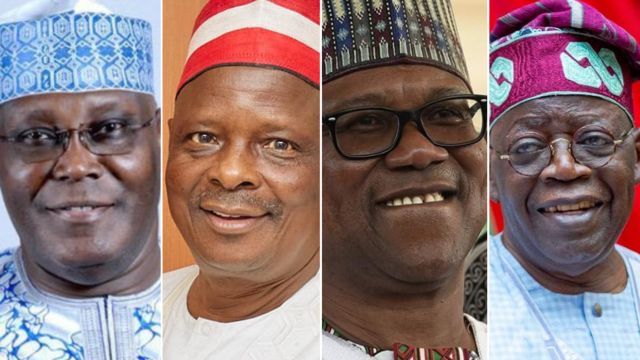
The primary elections of the two leading political parties, APC and PDP, had come and gone. However, the dust raised by the exercises across various states of the federation is yet to settle. As things are going, it is unlikely that both parties’ primary election appeal committees will adequately or significantly settle the dust to the extent of amounting to a major change of the status quo. After all, everything was clear; the contests were majorly a measure of financial power.
As usual, our attempts to digest the intrigues and expectations of the upcoming grand 2023 event have once again resulted in endless debates that often lead to more confusion than clarifications. Certain political dynamics cannot be adequately explained by simple analysis or even complex ones. This is truer for cases like Nigeria, where deep insight is considered old-fashioned, authentic information is always scarce, and genuine narratives are always twisted.
Ahead of the just concluded APC Primaries, many accused Yemi Osinbajo of being a traitor and betrayer by contesting against his benefactor Tinubu. However, few people will understand that only one out of a million people will go so close to the presidency as Osinbajo did without succumbing to the temptation of taking a shot at it. The cabal theory notwithstanding, he is perhaps the Nigerian Vice President who was closest to the full privileges of the presidency in recent history. At a time, the Professor himself appeared like the next President in waiting. In sincere terms, Osinbajo may feel that running for the Presidency is more of an attempt to fulfil a destiny than betraying a godfather whose help he may not need any longer.
Maybe, many have forgotten that the Vice President had at a time been an Acting President with virtually full Presidential powers. He is aware of people’s confidence in his competence and knows that many factors are against Tinubu’s candidacy. With the Southwest as the default region where APC will likely have its next candidate, it is only natural he (the second default candidate) tries his luck in case Tinubu (the default candidate) does not get the nod. How can he cash in on a Tinubu collapse if he doesn’t contest? If he hadn’t competed, his promoters would never have forgiven him. Now that he had competed, he knows the extents and limits of his political strengths, which might have been hitherto exaggerated.
Some analysts have accused Tinubu of trying to become President at all costs despite being sick and unstable. We have forgotten that he had, since 1998, invested almost 25 years of his life (and health) trying to reach this point, and we all know he will need an ultimate reward at the end of it all. Now that the prize is within reach, only one out of a million people will back off over health challenges that are yet to prevent him from managing a public appearance. When he made all those sacrifices and concessions, many of us did not bother to understand the larger picture of where he was heading. If not for democracy, one will suggest that the APC ticket should’ve been handed over to him unopposed.
Therefore, Tinubu has fought for long. He has been in the opposition all his life. He has helped build a new political order in Nigeria. Without him, power will still likely be with the PDP and maybe forever. It’s not his making that his health appears to be failing him at this moment of near fulfilment, but as a human, he will continue believing his condition is good enough to manage him to the finish line. The late President Ƴaradua’s situation in 2010 should teach us some lessons, that of Buhari in 2017 too. Tinubu is undoubtedly not the best APC had on offer capacity-wise, but he is the most formidable. His political structure is out of this world. Win or lose, at least they have repaid a significant part of the debt they owe him.
In the build-up to the primaries, we all thought everyone was an enemy of the Southeast since the rest of Nigeria had refused to zone the presidency to the region exclusively. In his speech at the APC convention, Ogbonnaya Onu emotionally shouted for justice against the Igbo marginalization. If not for the APC and PDP Southeast delegates who proved the Igbos’ unpreparedness by refusing to vote for any of their kinsmen, everyone would simply be emotionally blackmailed. Besides, we have all seen how disorganized the Southeast aspirants were across both parties.
From 2003 to 2010, the Southeast was considered a formidable political bloc, but they wasted opportunity after opportunity to consolidate. Instead, they focused on ethnic and religious politics. Conceding the Presidency to the Southwest in 1999 was basically a military arrangement executed against democratic principles. The Southeast demanding the same in a maturing democracy is quite tricky. In this era, no one will gift you the Presidency; you have to earn it.
Another aspirant is NNPP’s Rabi’u Kwankwaso. His critics accuse him of being a local champion. However, his supporters insist on rating him higher than Atiku and Tinubu based on a tangible track record. However, the debate is not as simple as it seems. The same scale cannot be used to measure Tinubu, Kwankwaso and especially Atiku, as their political career paths are distinctively different. The truth is that Kwankwaso is a national figure who has invested too much energy in local politics, which was why he achieved what he has achieved. However, this has come with a price because he has dominated and taken away all the local relevance he could’ve easily allowed his subordinates to coordinate, a feat that would’ve given him a Tinubu-like aura. In the end, he ends up fighting for crumbs with local people, making him unavoidably local.
What of Peter Obi? He appears to have more packaging than substance, but he is yet another litmus test for the Southeast. They feel denied, marginalized and short-changed. Their response should be a massive vote for him. Even if he may not win, they will succeed in sending a strong message ahead of 2027. However, there is a wiser option. They can use Petr Obi as a bargaining tool with someone like Kwankwaso for example; form an alliance, challenge the red-cap man to deliver the Northwest zone while offering Southeast and see whether something will come out of it.
The bottom line is that we don’t need to be too upset or over-obsessed with anybody’s ambition, any region’s miscalculations or any party’s misdirection. There are so many choices in the political landscape that our myopia hinders us from utilizing. For example, if you genuinely want an Igbo president, the Labour Party has fielded Peter Obi. If you want somebody whose hands are not shaking, NNPP has fielded Kwankwaso, etc. So quietly do the needful and urge others to do the same. Give it a try. The strong parties and candidates are only front liners because you and I made them so.
Nigerian public discourse often makes complex political analysis look simple and simple political analysis look complex. And finally, we end up achieving no political analysis at all.
Twitter: @AmirAbdulazeez.