By Anwar Usman
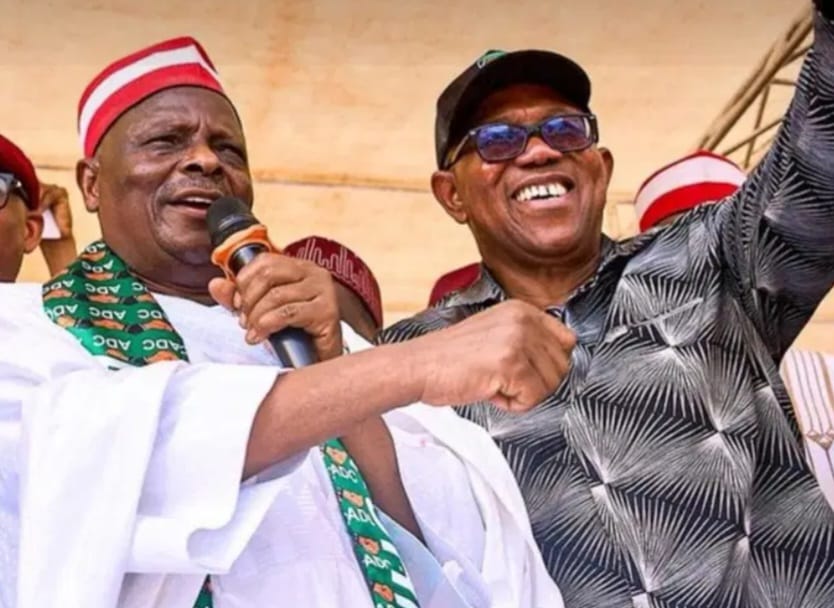
Former Kano State governor and the Vice Presidential candidate of the Nigeria Democratic Congress (NDC), Rabiu Kwankwaso, has said a government led by the party’s candidate, Peter Obi, would reintroduce fuel subsidy, but through a different approach.
Kwankwaso, made this known during an interview with Arise News while discussing fuel pricing and the economic policies of President Bola Tinubu’s administration.
He said the NDC would look for other alternatives to reduce the cost of petrol for Nigerians, including increased investment in domestic refining.
“No, no, no, look. We are bringing subsidy in our own way,” Kwankwaso said when asked whether the party’s position on subsidy would affect its campaign in the North-West.
Explaining how that could be achieved Kwankwaso said government could establish more refineries to boost local production and reduce dependence on imported petroleum products.
He further stated that, the expansion of domestic refining capacity would help ensure that Nigerians can purchase petrol at what he described as a reasonable price.
“Now, if individuals in this country could build refineries, I see no reason why government, under certain circumstances, will not build a refinery or refineries to the extent that we achieve the minimum requirement,” he said.
Kwankwaso said the NDC would prioritise measures aimed at lowering fuel prices.
“What is the minimum requirement? The minimum requirement is for the people across the country to go to the filling stations and buy fuel at a reasonable price,” he added.
“We, in the NDC, will do whatever it takes, really, to put the price of oil down.”
The NDC chieftain also criticised how Tinubu removed the petrol subsidy shortly after assuming office in 2023.
He noted that the major presidential candidates in the 2023 election had supported subsidy removal as the major way of reviving the country’s economy but accused the current government for implementing the policy withoutproper consultation.
According to him, the decision was taken without adequately addressing the consequences associated with subsidy removal.
“And not only he decided to remove the subsidy, what he did was to remove it immediately — in fact, day one — without looking at all those possible issues that were associated with that,” Kwankwaso said.