By Sabiu Abdullahi
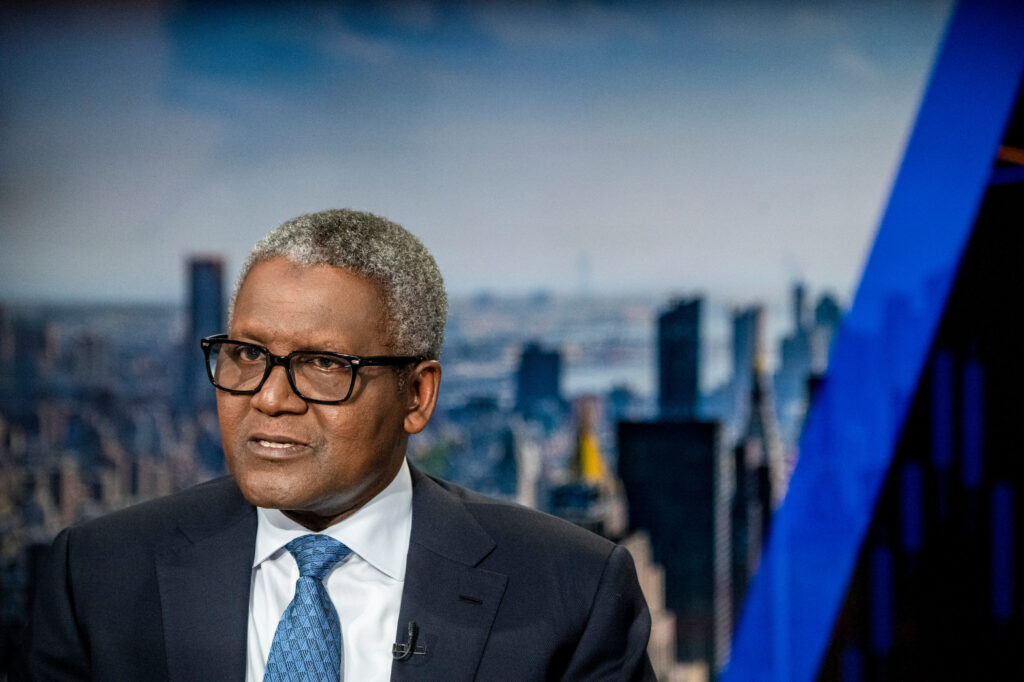
Aliko Dangote, President of Dangote Group, has disclosed plans by his conglomerate to invest more than $10bn in the power sector over the next few years as part of efforts to address Africa’s electricity deficit and support industrial growth.
Dangote made the disclosure during an interview with Al Jazeera, where he identified unreliable electricity supply and frequent changes in government policies as major obstacles to investment across the continent.
He said the group was considering shifting funds from some planned ventures, including steel, into electricity generation and other power projects.
“And I’m telling you in the next three to four years, there will be a major transformation in Africa, and that’s why we’re looking at power. We are going to invest in power. There are one or two businesses that we might cancel, like steel, and we will put the money in power. We want to invest over $10bn alone in power.”
The businessman also expressed concern over the number of Africans without access to electricity, saying the continent could not afford to leave hundreds of millions of people without reliable power.
“We Africans should not really allow over 600 million of our people to remain in darkness.”
Dangote described electricity as a major driver of economic expansion and said effective power supply could also influence how citizens assess the performance of political leaders.
“You know, if some politicians work hard and have a plan, when you deliver power, you don’t need to go for a campaign when you’re going for an election. Power is key; we will never create growth without power. That’s why they say power is growth. When I say power, I mean electricity is growth.”
He said Africa must expand its industrial base if it hopes to create enough jobs and achieve sustained economic development. He also called for a reduction in the continent’s dependence on imported products.
Addressing concerns about investment in Africa, Dangote attributed some of the challenges to inconsistent government policies and inadequate electricity supply.
“The problem really is, it takes two to tango. I think in the past, there’s been a lot of flip-flops in government policies. Government policies were changing every day, and then, the lack of electricity is also there.
“So, these two issues haven’t gone away. They are still there. But for some of us that really mean business, we are here, and we know that yes, without our intervention, Africa will never be able to create jobs. If there’s no industrialisation, how do you create jobs? You can’t,” he said.
Dangote warned that Africa could eventually face difficulties financing the goods it imports if it fails to strengthen local production.
“One day we will not have money to import what we are consuming. So how can we remain an import continent? It has to change. But that change can only happen when Africans believe in Africa, and they invest in Africa,” he stated.
He said more investors were becoming interested in African businesses because of the opportunities on the continent. According to him, his investment philosophy also focuses on wider participation in business and stronger corporate governance.
“We want to make sure it’s about spreading the wealth. It’s about getting more people in the business. It’s also about corporate governance. So that’s the direction.”
On allegations that his expanding business interests were creating a monopoly, Dangote said he remained focused on his objectives.
“Well, you know, if I’m going to listen to that, have you ever seen a footballer looking at the audience? He has to continue looking at the ball. If I’m Messi, for example, I’m kicking the ball, and I’m looking at the audience, do you think I won’t miss the ball? I will miss the ball,” he stated.
He argued that accusations of monopoly would not deter his investment plans, insisting that his businesses had not been given exclusive rights by the government.
“If I’m going to make my continent great and people want to call me a monopoly for no reason, so be it. I mean, it’s not going to reduce the colour of my face or whatever. You can call me whatever you want to call me; I didn’t stop anybody; it is an opportunity given to everybody, every one of us has that opportunity whether Africans, foreigners or whoever,” he stressed.
Dangote said government policies created opportunities for investors across various sectors rather than reserving them exclusively for his companies.
“There’s nothing that the government gave us and say, ‘this is only for Dangote ’. The government will create a policy around a sector, and they will blow a whistle and say, ‘ Yes, this is it,” he noted.
He compared investment to a 100-metre race, saying those who chose not to participate should not blame investors who took the opportunity.
“If there’s a 100-metre race, some people were on the bench while I’m on the track, and I agreed to run that race, and I won that race alone, are you going to blame me or are you going to blame people who just sat on the bench?” he asked.
He also rejected claims that his business expansion resulted from a lack of opportunities for others.
“They’re not ready, they’re not prepared, they don’t even believe in Africa itself. If you don’t invest, you are not going to get fruit of that labour,” he replied to those accusing him of monopoly.
Dangote acknowledged that criticism would continue but said his businesses would remain focused on their long-term objectives.
“The distraction will continue. But we have what you call a very thick skin. No matter what you do, even if you take bullets, you are hitting our body with it; we’re not going to stop. We have a target, and we’re getting to our target.
“And if we don’t do it, believe me honestly, Africa will be in trouble. And I would rather save my continent at the expense of even my life. This continent must get to the promised land,” he declared.
He further advocated greater processing of African raw materials within the continent before export, saying local value addition could strengthen industries and retain more economic benefits.
Dangote said governments could eventually introduce stronger measures to encourage local processing once the economic benefits became more evident.
“Eventually they (foreigners) will stop taking our raw materials. They must produce on our own continent.
“You see, once we show people how to do all these, even the governments themselves will start saying, no, you can’t take our cocoa, process it here and add value, then you take it out,” he stated.
Dangote Targets Over $10bn Power Investment To Boost Africa’s Industrial Growth

ByAdmin
22 September 2026