By Sabiu Abdullahi
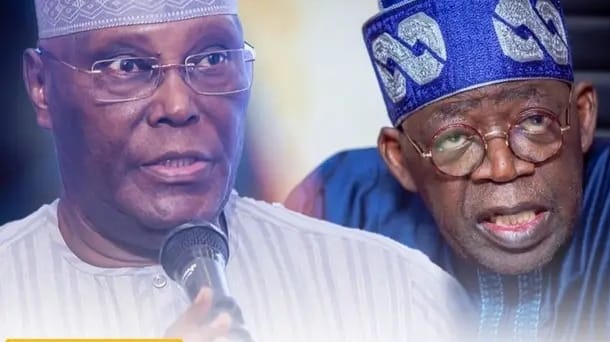
The Federal Government and the All Progressives Congress (APC) have rejected former Vice President Atiku Abubakar’s proposal to restore petrol subsidy, warning that such a move could reverse the economic reforms introduced by President Bola Tinubu’s administration.
The renewed disagreement followed Atiku’s declaration that he would introduce a targeted and transparent petrol subsidy if elected president in 2027.
Atiku, who is the presidential candidate of the African Democratic Congress, argued that Nigerians had yet to benefit sufficiently from the funds said to have been saved after the removal of petrol subsidy.
He also demanded greater transparency over the use of the savings, saying the resources should have supported poverty reduction, education, security and opportunities for young Nigerians.
His Economic Recovery Plan 2027 proposes a production-based subsidy system that would differ from the pre-2023 arrangement. Under the proposal, qualifying Nigerian refineries would receive crude oil at preferential prices under strict conditions, with the aim of lowering petrol prices and encouraging domestic refining.
The Federal Government, however, said returning to subsidy would recreate the fiscal challenges that prompted its removal.
Tinubu announced the end of the petrol subsidy regime during his inaugural address on May 29, 2023. He said the policy had become unsustainable and that the resources previously spent on it would be redirected to infrastructure, education, healthcare and job creation.
Responding to Atiku’s proposal on Sunday, APC National Chairman, Prof Nentawe Yilwatda, described it as a “deeply troubling policy U-turn.”
Yilwatda questioned how the opposition would finance the proposed subsidy and warned against introducing a major economic policy as an election promise without explaining its long-term financial implications.
“Economic policy cannot be reduced to election-season promises. Nigerians deserve to know precisely where the money will come from, what sectors will bear the cost and whether such a policy can be sustained without reopening the fiscal pressures that necessitated reform in the first place,” Yilwatda said.
The APC chairman spoke during a visit to the headquarters of the City Boy Movement in Abuja.
He maintained that subsidy removal, despite the hardship associated with it, was necessary. He said the government should strengthen social interventions and productive sectors instead of returning to the former subsidy system.
Yilwatda also urged Nigerians to assess the economic records and policy proposals of the various presidential contenders before the 2027 election.
He said the APC would continue to defend the Tinubu administration’s economic reforms while remaining open to credible alternatives.
FG Says Subsidy Removal Released N15.8tn
The Minister of Information and National Orientation, Mohammed Idris, also defended the subsidy removal, saying the reform had created additional fiscal resources for the three tiers of government.
Idris said figures contained in the Federal Government’s Reform Scorecard showed that subsidy savings generated N15.8tn for the federation between June 2023 and December 2025.
According to him, the Federal Government received about N5.43tn, while states and local governments received approximately N6.52tn and N3.88tn respectively.
The minister clarified that the N15.8tn was not money kept in a separate government account. He said the figure represented resources released into the wider fiscal system and made available to the three levels of government.
He added that the additional funds had strengthened the capacity of state and local governments to pay salaries and pensions as well as finance infrastructure and essential services.
At the federal level, Idris said the additional fiscal space had supported infrastructure, human capital development and social programmes.
He put additional expenditure on strategic infrastructure at about N6.47tn. The projects, he said, covered areas such as transport, housing, agriculture and security.
The minister also disclosed that more than 10 million households had benefited from social transfers. He said more than N400bn had been committed to programmes such as the Nigerian Education Loan Fund, the MOFI Real Estate Investment Fund and the Nigerian Consumer Credit Corporation.
Idris warned that reversing the subsidy reform could also undermine developments in the petroleum sector at a time when domestic refining capacity was expanding.
Atiku Accuses FG Of Double Standards
Atiku, in a statement issued by his Senior Special Assistant on Public Communication, Phrank Shaibu, criticised the Federal Government’s defence of subsidy removal.
He described the administration’s celebration of the policy as “one of the biggest economic frauds being sold to Nigerians.”
The former vice president argued that the government could not oppose intervention aimed at reducing hardship for ordinary citizens while granting tax credits and other fiscal incentives to major investors in the petroleum sector.
Atiku summarised his position by declaring, “You cannot subsidise capital and criminalise relief for citizens. You cannot offer cushions upstairs and call suffering downstairs.”
He also questioned the incentives available under the government’s Deep Offshore Oil and Gas Projects framework.
“Under Tinubu’s own Deep Offshore Oil and Gas Projects Incentives framework, qualifying petroleum developments can receive production tax credits beginning at $3 and $4.50 per barrel, with supplementary credits capable, in qualifying circumstances, of taking the combined benefit to as much as $11.50 per barrel,” he said.
Atiku asked why government intervention could be considered appropriate when it reduced investment risks for major petroleum operators but was rejected when aimed at reducing the burden on households.
“So, what exactly is Tinubu’s objection: government intervention itself, or government intervention for Nigerians?” he asked.
He also raised questions about petroleum-related expenditures recorded after subsidy removal.
Atiku cited financial statements of the Nigerian National Petroleum Company Limited, claiming that the company recorded about N4.84tn in energy-security expenses and related shortfalls in 2023 and approximately N7.13tn in 2024.
He said NNPCL had linked part of the expenditure to the difference between the exchange rate used to determine regulated PMS ex-coastal prices and the prevailing exchange rate at the time import obligations were settled.
“Where exactly did the subsidy go? If Nigerians were paying market prices because ‘subsidy is gone,’ why was the federation still carrying trillions of naira in under-recovery and energy-security costs?” he said.
Atiku argued that changing the terminology for such expenditures did not alter their economic effect.
“Nigerians do not eat semantics. Whether government calls it subsidy, under-recovery, shortfall or energy security, public resources were being used to bridge a gap between economic cost and the price at which petrol was sold,” he added.
The ADC candidate said the removal of subsidy had increased transportation, food, production and household costs.
He accused the administration of applying “brutally savage capitalism” to poor Nigerians while pursuing “compassionate capitalism for big oil money operators.”
He continued, “The government can protect a multibillion-dollar oil investment from risk, yet it says protecting the Nigerian worker from crushing hardship is bad economics,” Atiku said.
He added that the government could not “roll out the red carpet for rich oil operators while leaving its citizens to walk barefoot through hardship.”
Lawmaker Rejects Subsidy Restoration
The member representing Agege Federal Constituency of Lagos State in the House of Representatives, Dr Wale Ahmed, also rejected Atiku’s proposal.
Ahmed described the proposed policy as economically unsustainable and politically expedient. He warned that reversing the subsidy removal could disrupt the country’s economic recovery.
“Nigeria cannot afford to return to the subsidy era. What we need is to consolidate reforms and ensure their benefits reach ordinary Nigerians,” Ahmed said.
The lawmaker said the subsidy removal had increased government revenue by freeing funds previously used to keep petrol prices artificially low.
“The question should be how these additional resources are deployed to improve infrastructure, healthcare, education, transportation and security, not how we recreate an unsustainable subsidy regime,” he said.
Ahmed also asked Atiku to explain how the proposed subsidy arrangement would be financed without putting additional pressure on government finances.
“Where will the money come from? Will government borrow again to finance subsidy? Will allocations to states and local governments be reduced? Nigerians deserve clear answers,” he said.
He said the savings were not kept in a government vault but increased the revenue available to the federation.
“The savings were not money kept in a vault by the Federal Government. They increased revenues available to the federation and were shared among the three tiers of government,” he said.
Ahmed acknowledged the hardship caused by the reforms but argued that returning to the previous system would not resolve the underlying problems.
“Nobody is denying the hardship. It is real. But returning to the policies that contributed to our fiscal problems cannot be the solution,” he said.
He urged the Federal Government to accelerate measures aimed at reducing production and transportation costs through improved electricity supply and investment in agriculture.
ADC Leaders Back Atiku
Meanwhile, ADC chieftains have supported Atiku’s proposal, with former Edo State governorship aspirant Kenneth Imasuagbon describing criticism from the Presidency and APC as “misplaced and politically motivated.”
Imasuagbon said subsidy removal had worsened the economic situation of Nigerians through increased inflation and higher costs of living.
“The removal of fuel subsidy has not translated into a better life for Nigerians. Instead, it has pauperised millions of citizens, destroyed the purchasing power of workers, increased the cost of transportation, food, healthcare and education, while businesses continue to shut down under the weight of unbearable operating costs.”
He argued that Atiku’s willingness to reconsider the policy showed his readiness to review measures that had failed to deliver the expected benefits.
“Atiku should not be attacked simply because he is prepared to reconsider a position he held in 2023. That is the mark of a compassionate and people-oriented leader,” he said.
Imasuagbon also questioned the Federal Government’s account of the savings from subsidy removal.
“Where are the trillions reportedly saved? Nigerians deserve transparent answers.
“We still have collapsing infrastructure, worsening insecurity, failing hospitals, underfunded schools, mass unemployment and deepening poverty.
“If these enormous resources were truly invested in the people’s welfare, the ordinary Nigerian should have felt the impact by now,” he stated.
He said the debate should focus on whether the policy had improved the living conditions of ordinary Nigerians.
The former governorship aspirant expressed confidence in Atiku’s ability to tackle what he described as Nigeria’s “economic quagmire.”
Also backing Atiku was the ADC governorship candidate in Sokoto State, Manir Dan’Iya.
Dan’Iya said a targeted and accountable subsidy system could reduce the pressure caused by rising transportation, food and other essential costs.
In a statement issued on Sunday by his Media Aide, Aminu Abdullahi, he said the economic situation required measures that would cushion the impact of rising living costs.
“At a time when Nigerian families are struggling to afford transportation, food and necessities, any credible policy capable of reducing the cost of living deserves serious consideration,” Dan’Iya said.
He stressed, however, that any future subsidy arrangement should be targeted, transparent and accountable to prevent corruption and waste.
Dan’Iya said Atiku’s proposal should also support domestic refining and reduce the country’s dependence on imported petroleum products.
“The 2027 election is an opportunity for Nigerians to choose a government that understands their hardship and is prepared to act.
“We must support policies that reduce the burden on our people, restore hope, strengthen institutions and put Nigeria back on the path of sustainable development,” he said.
The subsidy debate is expected to remain a major issue ahead of the 2027 presidential election, with the Tinubu administration defending its removal as necessary for fiscal stability while opposition politicians continue to argue that the policy has imposed severe hardship on households and businesses.
Despite Acute Hardship in Nigeria, FG, APC Reject Atiku’s Call For Petrol Subsidy Return

ByAdmin
24 August 2026