
By Sabiu Abdullahi
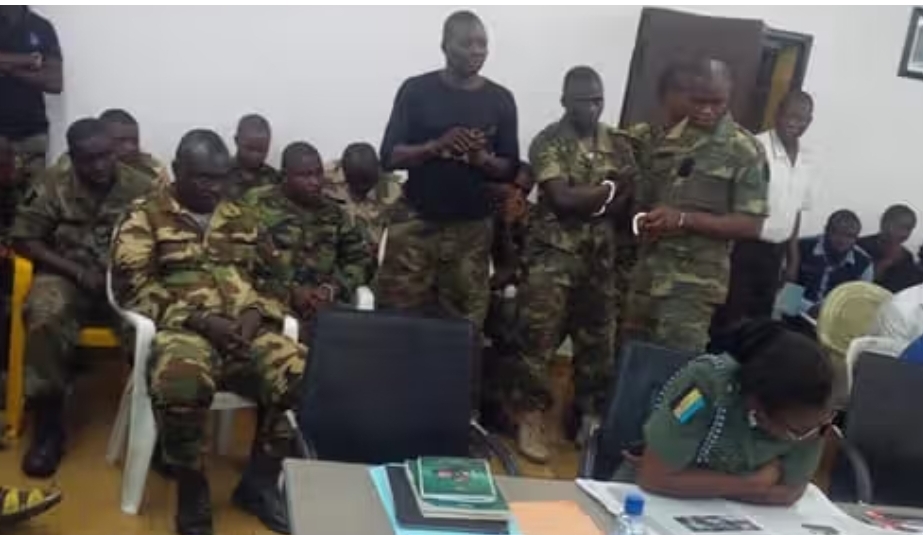
The National Industrial Court (NIC) in Lagos has directed the Nigerian Army to reinstate 70 soldiers who were convicted by courts-martial in 2014 but later received an unconditional presidential pardon from the late former President Muhammadu Buhari.
Justice Sanda Yelwa delivered the judgment on July 20. The court held that the presidential pardon granted under Section 175 of the 1999 Constitution nullified the soldiers’ convictions, prison sentences and dismissals from service. The ruling stated that the pardon restored their legal status and entitled them to return to the Nigerian Army.
The judgment followed a suit filed by the 70 soldiers against the Attorney-General of the Federation (AGF) and the Chief of Army Staff (COAS). The case, marked NICN/LA/54/2023, challenged the military authorities’ failure to reinstate them despite the presidential pardon.
A statement issued on Monday by Tayo Soyemi of Falana & Falana Chambers, counsel to the claimants, said the soldiers sought declarations that the pardon invalidated their convictions and dismissals. They also asked the court to compel the Nigerian Army to reinstate them and pay their outstanding salaries and allowances from December 17, 2014.
The soldiers had faced trial before different courts-martial in 2014 over allegations of conspiracy and mutiny. They were initially sentenced to death, but the sentences were later reduced to 10 years’ imprisonment.
After completing their prison terms, Buhari granted them an unconditional presidential pardon through the Instrument of Grant of Pardon, 2022, which appeared in the Federal Republic of Nigeria Official Gazette dated July 29, 2022.
According to the statement, Falana & Falana Chambers wrote to the Chief of Army Staff on November 7, 2022, to request the soldiers’ reinstatement and payment of their entitlements. The legal firm said the letter was acknowledged, but the Army did not act on the request.
Funmi Falana, a Senior Advocate of Nigeria (SAN), argued on behalf of the claimants that the presidential pardon removed every legal consequence of the convictions, including their dismissal from service.
The Federal Government, represented by Omobolanle Aina, opposed the suit. It argued that although a presidential pardon forgives an offence and restores civil rights, it does not erase the fact that a conviction occurred or automatically qualify a beneficiary for reinstatement.
The statement also noted that the Chief of Army Staff neither entered an appearance nor filed a defence before the court.
In his judgment, Justice Yelwa held that the official gazette was sufficient proof that all 70 soldiers benefited from the presidential pardon. He also ruled that the Nigerian Army failed to challenge the evidence presented or explain why the request for reinstatement was ignored.
The court found that the soldiers’ dismissal resulted directly from their convictions by the courts-martial. It held that the dismissals could no longer stand after the presidential pardon.
Justice Yelwa stated that although the process of reinstatement remained an administrative responsibility of the Nigerian Army, the soldiers had acquired an enforceable legal right to return to service because the constitutional obstacle to their employment no longer existed.
However, the court rejected the claim for salaries covering the period between December 17, 2014, and July 17, 2022. It ruled that the soldiers could not claim salaries for the period they were imprisoned because they did not perform official duties. The judge also noted that the instrument granting the presidential pardon did not provide for retrospective salary payments.
The court subsequently ordered the immediate reinstatement of the 70 soldiers with effect from July 18, 2022. It also directed the defendants to pay all salaries, allowances and other entitlements due to the soldiers from that date until they are formally reinstated.