
By Sabiu Abdullahi
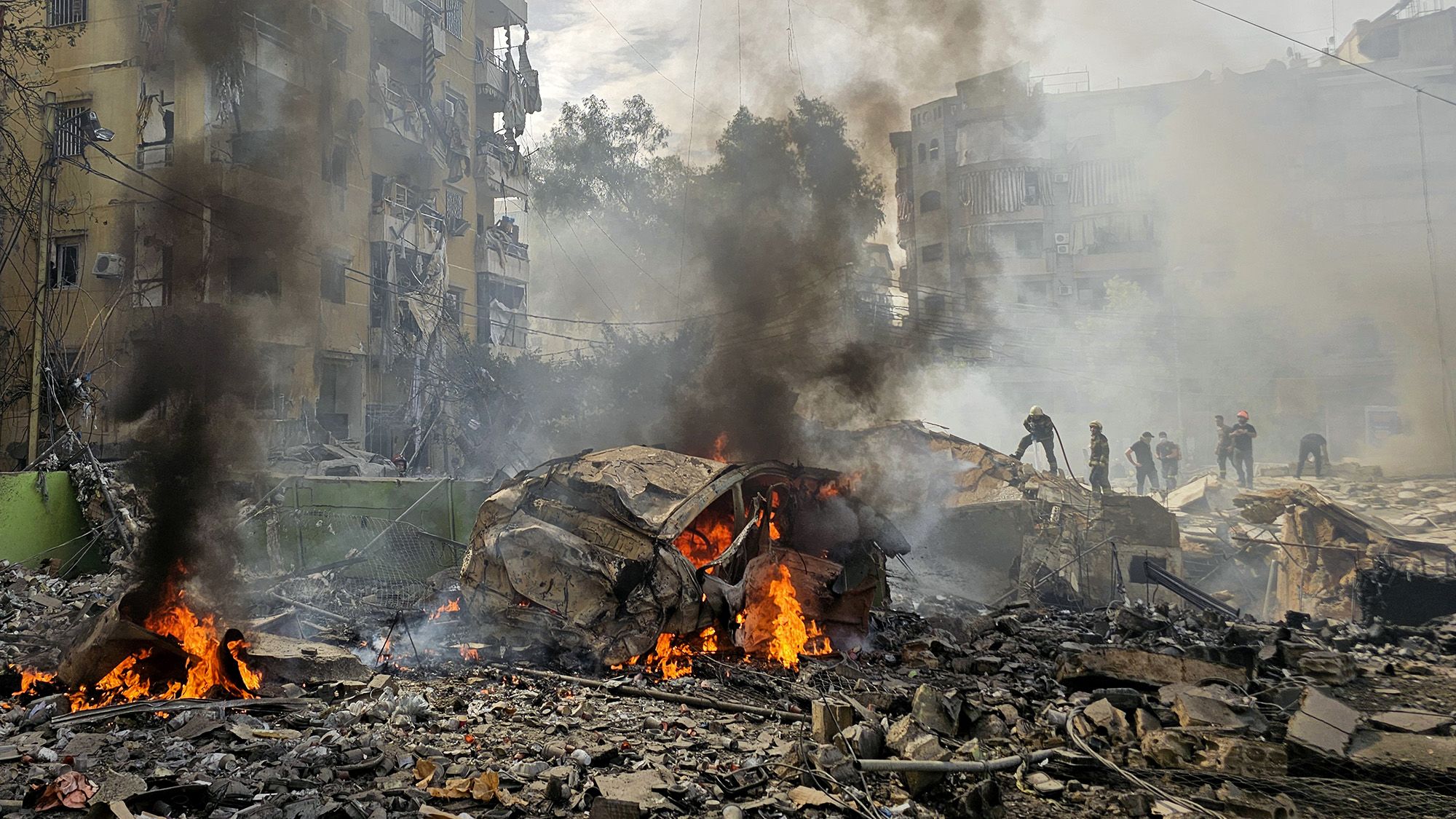
At least three journalists and nine paramedics have lost their lives following a series of Israeli airstrikes in southern Lebanon, as tensions continue to rise in the broader regional conflict linked to the ongoing U.S.-Israel-Iran war.
The deceased journalists were identified as Fatima Ftouni and her brother, Mohammed Ftouni, who both worked with Al Mayadeen, as well as Ali Shuaib of Al-Manar.
Reports indicate that the journalists were travelling in a clearly marked press vehicle along Jezzine Road when it was struck by multiple precision missiles. The vehicle was reportedly hit four times within a short span, leaving no survivors. Other journalists sustained injuries in the attack.
Emergency responders who arrived at the scene were also targeted. In separate incidents across southern Lebanon, ambulances and medical teams came under fire, raising concerns among humanitarian organisations and health authorities.
The World Health Organisation confirmed that several healthcare workers were affected in five different attacks on medical operations. According to the agency, eight paramedics were killed while seven others were injured.
Although the Israeli military acknowledged carrying out the strike that killed the journalists, it alleged that Ali Shuaib had been working alongside a Hezbollah intelligence unit and was monitoring troop movements. It also accused him of spreading propaganda.
Al-Manar dismissed the claim. The organisation described Shuaib as a seasoned war correspondent with decades of experience covering Israeli military activities in Lebanon. Both Al-Manar and Al Mayadeen rejected Israel’s explanation. They insisted that those killed were civilians carrying out their professional duties.
Israel has faced repeated criticism over strikes involving journalists, especially in Gaza, where hundreds of media workers have reportedly died. In many cases, authorities have alleged links between victims and armed groups but have not presented clear public evidence.
Lebanese President Joseph Aoun condemned the attack. He described it as “a blatant crime that violates all norms and treaties under which journalists are granted international protection during armed conflicts.”
Prime Minister Nawaf Salam also criticised the incident. He called it “a flagrant violation of international humanitarian law.”
A journalist reporting from the southern city of Tyre said media workers in the area remain determined despite the dangers. “All the journalists that I’m speaking to here today say that they were just doing their job, and that the journalists that are still here are going to continue to carry out their work despite the obvious dangers,” he said.
The WHO Director-General confirmed the scale of the attacks on healthcare workers and facilities. He detailed multiple incidents across different المناطق, saying:
“In Zoutar al-Sharqiya, five health workers were killed in a strike, and two were injured, one critically.
“Two more health workers were killed and three wounded in Kfar Tibnit; one paramedic died in an attack at a health facility in Ghandouriyeh, while another was killed in a strike in Jezzine. Two were wounded in an attack on Kfar Dajjal,” Ghebreyesus said.
He warned that repeated attacks on medical personnel and infrastructure have severely disrupted healthcare delivery in the region. Several hospitals and dozens of primary healthcare centres have been forced to shut down, while others struggle to operate.
Fatima Ftouni had earlier reported on an Israeli strike that killed her uncle and his entire family earlier in the month. Her death brings the number of Al Mayadeen journalists killed since the conflict began to six.
Figures from Lebanon’s Ministry of Health show that more than 1,100 people have been killed and over 3,300 injured since early March as the conflict intensifies.
Meanwhile, Israeli ground troops are said to have advanced further into southern Lebanon, approaching the Litani River. Hezbollah claims it has carried out multiple retaliatory attacks against Israeli forces within the past day.
In a separate incident, an Israeli airstrike in Deir al-Zahrani reportedly killed a Lebanese soldier, according to official sources.
Describing conditions in the region, a correspondent noted that explosions could still be heard across the الجنوب as bombardments continued. He referred to areas south of the Litani River as effectively a “no-go zone,” adding that while many residents have fled, about 20 per cent remain.
He said those who stayed were taking what he described as a “very deadly gamble.”
Press freedom organisations have expressed concern over the rising number of journalist deaths worldwide. A recent report recorded 129 journalist fatalities in 2025, the highest in more than three decades, with Israel accounting for a significant portion of the cases.
Earlier in the month, another Israeli strike in central Beirut killed Mohammad Sherri, a senior official at Al-Manar, highlighting the increasing risks faced by media professionals in the region.