By Sabiu Abdullahi
More than 300 pupils at Community Primary School in Ayama, located in Auyo Local Government Area of Jigawa State, are reportedly learning under hazardous conditions due to years of neglect.
The situation came to light after a recent inspection by Tracka, a civic accountability organisation, which described the state of the school as alarming and unsafe for both pupils and teachers.
The report highlighted the poor condition of the school facilities. It blamed the situation on prolonged neglect and what it described as a failure of the education system under the administration of Governor Umar Namadi, despite repeated appeals from the host community.
“During a recent field visit by the Tracka team to Community Primary School in Ayama, Auyo LGA of Jigawa State, the reality on ground was both shocking and heartbreaking,” the report read.
Further details in the report painted a grim picture of the learning environment.
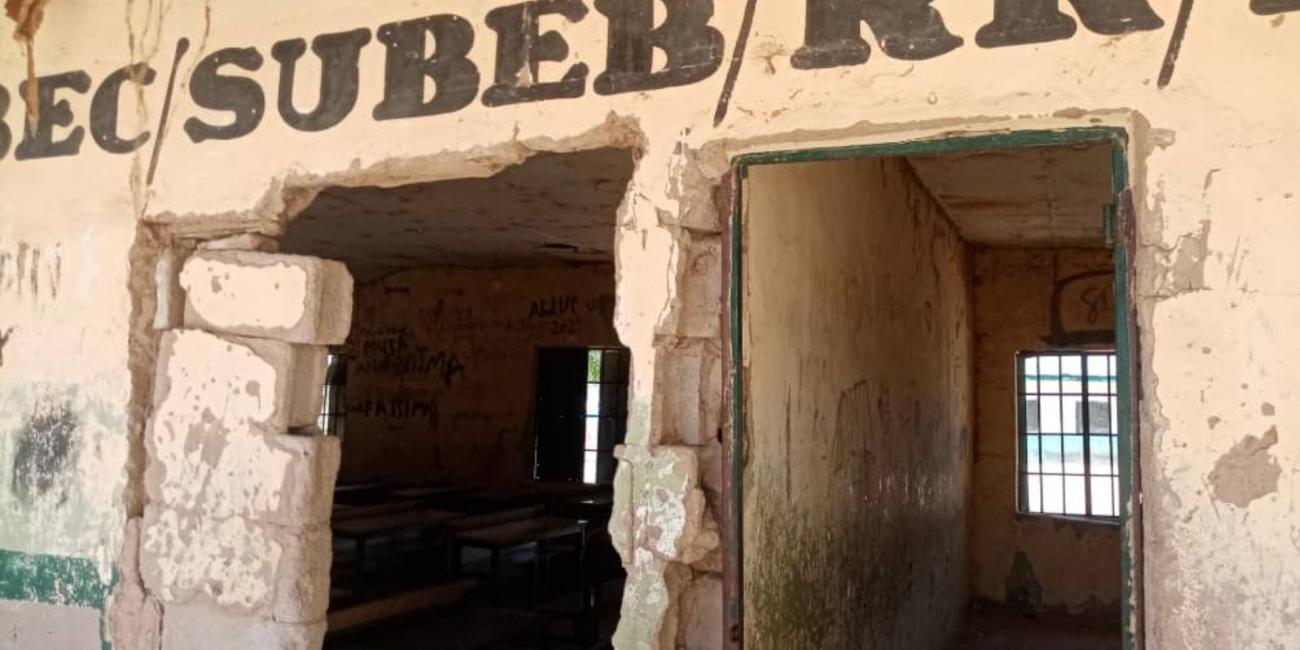
“This single primary school, which serves more than 300 pupils from the community, is in a deplorable and dangerous condition that should never be associated with a place of learning.
“Many of the classrooms are severely dilapidated, with cracked walls, weak and damaged floors, and roofs that have partially collapsed.
“Ventilation is extremely poor, and some structures are so unsafe that they can only be described as death traps.
“Yet, these are the spaces where innocent children are expected to sit every day in pursuit of an education and a better future.”
Findings from the visit showed that several classroom structures have lost their strength. This has exposed both pupils and teachers to danger, especially during periods of harsh weather.
The report stated that the condition of the school has remained unchanged for years. It added that government response has been minimal despite several appeals.
“For more than three years, the community and school authorities have made repeated appeals for help.
“With little or no government response, residents have tried to carry out minor repairs using their limited resources just to keep the school functioning.
“Unfortunately, these temporary efforts have not been enough to address the scale of the problem,” the report added.
Residents of Ayama community have attempted to fix parts of the school by contributing what they can. They repaired leaking roofs and supported weak structures. However, these efforts have not solved the larger problem of decay.
The report also pointed to overcrowding as a major concern. It noted that the shortage of desks and chairs has forced many pupils to sit on bare floors during lessons.
“Overcrowding has also become a major challenge. With very few desks and chairs available, many pupils are forced to sit directly on the bare floor during lessons,” the report noted.
Education stakeholders have warned that such conditions can harm pupils physically and also affect their learning ability over time.
The situation has raised fresh concerns about the state of public education infrastructure, especially in rural communities across Nigeria.
Reacting to the findings, civic technology group MonITNG expressed worry over the development. The organisation linked the poor learning conditions to declining school attendance and increasing dropout rates in the state.
“Unsurprisingly, this terrible learning environment has contributed to declining attendance, with some children eventually dropping out of school altogether,” the organisation said.
It also questioned the gap between government spending on education and the reality in schools like the one in Ayama.
“This situation is particularly troubling considering that billions of naira are allocated to education annually.
“The contrast between budget figures and the conditions seen in schools like this raises serious concerns that must be addressed.”
MonITNG called for urgent intervention to address the situation. It urged authorities to rebuild damaged classrooms and provide essential facilities.
“We call on the relevant authorities to urgently intervene by reconstructing the damaged classrooms, providing adequate furniture, and ensuring access to clean water and proper sanitation facilities.
“Every child deserves a safe and dignified place to learn.
“Our children’s education should never be a gamble with their lives. It is time to fix our schools and secure their future.”
The situation in Ayama reflects wider challenges facing many public schools in rural parts of the country. Poor infrastructure, inadequate funding, and weak oversight continue to affect the quality of education, leaving many children at risk.
Report Shows How Hundreds Of Pupils Study In ‘Death Trap School’ In Jigawa Amid Prolonged Neglect

ByAdmin
28 March 2026