By Sabiu Abdullahi
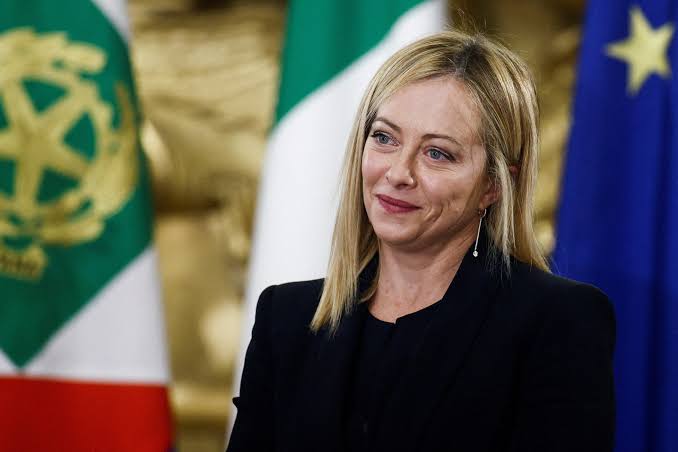
Italian Prime Minister Giorgia Meloni has criticised the United States and Israel over their military campaign against Iran. She said their actions fall outside international law and insisted that Italy will not join the conflict.
Meloni made the remarks on Wednesday during an address to the Italian Senate. Her comments marked her strongest criticism of the war so far.
She said the military campaign launched by Washington and Israel violated international legal norms. The Italian leader also called for a full investigation into the missile strike on the Shajareh Tayyebeh girls’ school in Minab, southern Iran.
The attack occurred on February 28, the first day of the war. More than 160 people died in the strike. Most of the victims were children.
Meloni described the incident as a “massacre”. She told lawmakers that responsibility for the strike must be determined.
“Responsibility must be ascertained for the massacre of girls in southern Iran. The safety of civilians and children must be protected,” she said.
Her position could create tension with U.S. President Donald Trump. Both leaders have previously appeared to maintain a close relationship.
Despite the criticism, Meloni stressed that Italy has no intention of joining the war. She told the Senate that the conflict was “an intervention that Italy is not part of and does not intend to take part in”.
The prime minister also addressed speculation that the United States might seek access to Italian military facilities. She said Washington has not asked to use Italian air bases for military operations. However, she explained that any such request would require approval from the Italian parliament.
Meloni warned that the conflict reflects a deeper crisis in the global order.
She said the war must be viewed within the context of a “structural crisis in the international system”. According to her, threats around the world are becoming more dangerous. She also warned that unilateral military actions are increasing.
At the same time, Meloni emphasised that Iran must not develop nuclear weapons. She said such a development would pose a serious threat to Europe.
“We cannot afford a regime of ayatollahs in possession of nuclear weapons, combined with a missile capability that could soon be able to directly strike Italy and Europe,” she said.
Questions have also emerged over the missile strike on the school in Minab. President Trump said earlier that the incident was under investigation. He also suggested that Iran might have fired the missile.
However, analysis by several experts indicates the school may have been struck by a U.S. Tomahawk missile. Neither Iran nor Israel is known to possess such weapons.
Preliminary findings from a military inquiry suggest the strike may have resulted from outdated targeting information. Officials said the investigation remains at an early stage.
If U.S. forces are confirmed to be responsible, the attack could rank among the most serious incidents involving American troops killing civilians in the Middle East in recent decades.
Meloni said the United States must establish who carried out the strike.
Meanwhile, the Italian government has taken steps to protect its citizens in the Gulf region. Meloni told parliament that Italy is providing air defence assets to allied Gulf countries facing missile and drone attacks from Iran.
She explained that thousands of Italians live and work in the region. Italy also maintains a military presence there.
“This is not only because these are friendly nations and strategic partners of Italy, but also because there are tens of thousands of Italian citizens in that area whom we must protect, not to mention the fact that there are about 2,000 Italian soldiers stationed in the Gulf,” she said.
Meloni delivered her remarks as an Italian naval frigate arrived in Cyprus. The vessel, Federico Martinengo, joined German, French and Greek warships already deployed near the island.
European countries have increased their military presence in the area after an Iranian-made drone struck RAF Akrotiri, a British air base in Cyprus, last week.
Britain has also sent a warship to the eastern Mediterranean. HMS Dragon left Portsmouth on Tuesday, although British authorities have faced criticism over the time it took to deploy the vessel.
In a separate development, Spain has formally withdrawn its ambassador to Israel, Ana María Salomón Pérez. She had earlier been recalled from Tel Aviv by Spanish Prime Minister Pedro Sánchez.
Sánchez took the step after banning the United States from sending weapons to Israel. He said the move was intended to stop what he described as “genocide” in Gaza.