
By Mallam Tawfiq
The scaffold that sturdily supports the pillar of success in everything is “unity”, without which we will somberly watch every beautiful thing in our everyday life running into a complete fiasco.
In healthcare settings, unity and peaceful coexistence among healthcare professionals are of paramount importance and a necessity for ensuring the delivery of effective, high-quality healthcare services.
To easily fathom the significance of that, should we reflect and ponder on the biological level of organisation of life? It succinctly and holistically depicted that the degree of unity among various cells leads to the formation of “body tissues”, and that the harmonious agreement among these tissues leads to the formation of “organs”.
Organs, however, organise to form a system, and thus the effective functioning of the respective systems yields a healthy life. Snags created by pathological factors deflect the spirit of harmonious union at different levels of this organisation, resulting in abnormality and disruption of robust, sound well-being.
The milieu of the hospital/healthcare settings comprises various health specialities from different professional backgrounds. This includes Medical Laboratory Science, Medical Radiography, Physiotherapy, Pharmacy, Nursing Science, Dentistry and Medicine, among others. The aims and objectives of each and every profession can only be appraised by rendering its best to the prime concern, and that is the patients.
As interdependent social animals tightly bound by the strong bond of humanity, we must interact, socialise, and, above all, reciprocate love and respect everywhere, be it in worship places, hospitals, banks, medical schools, and so on. The essence of so doing is to set our hearts and souls free from the bondage of emotional malice, attain optimum peace and maintain both physical and emotional well-being within ourselves. Unfortunately, the hostility, ranging from an exaggerated self-compliment and a show of self-worth and superiority to contempt for other professions in the name of rivalry amongst medical students and, to some extent, healthcare professionals, is worrisome and indeed condemnable.
Under whose tutelage in the medical school are students being mischievously taught that the six years of MBBS discipline should make them condescend and disregard other professions from being part of the healthcare system? Or the greater dispersion in the juxtaposition of the tense and heinous atmosphere under the five years of Radiography training with that of Medical Laboratory Science or Nursing renders the significance of the former and the insignificance of the latter. This is absolutely puerility of the highest degree. Each profession is worthwhile, and its ethics are centred on meeting the needs of patients.
Can we patiently have a proper dekko at how the systems of our body unite to execute their functions and maintain an equilibrium conducive to survival? What will happen if, for instance, the neural tissue says it is superior and appears to boss other systems, while the circulatory system, in response, denies it sufficient oxygen to meet its basic metabolic demand? Or what do we think is going to happen when the renal system quarrels with the immune system, whose function serves the body best, and both react so that one can predominate over the other and effectively carry out both the functions concurrently? Will this ever happen!? Capital NO.
Conspicuously, the hospital/healthcare environment is analogous to our biological level of organisation and how bodily systems work.
Togetherness leads to the existence of all sorts of misunderstandings; this is inevitably true, and the ripple effect of us not allying with one another is directed towards our subject of interest, which is the patient, because a medical doctor alone cannot efficiently run a whole hospital, nor can pharmacists or physiotherapists. As such, we need to come close, close enough together, thus respect our differences and welcome each other to specialise in one skill or the other and benefit from each other’s knowledge. Only by doing so can we render our best compassion to our patients.
There is a saying, “united we stand, divided we fall.”
Service to humanity is service to the Lord. May everything we do be solely for the sake of God and to attain the reward of God. Ameen.
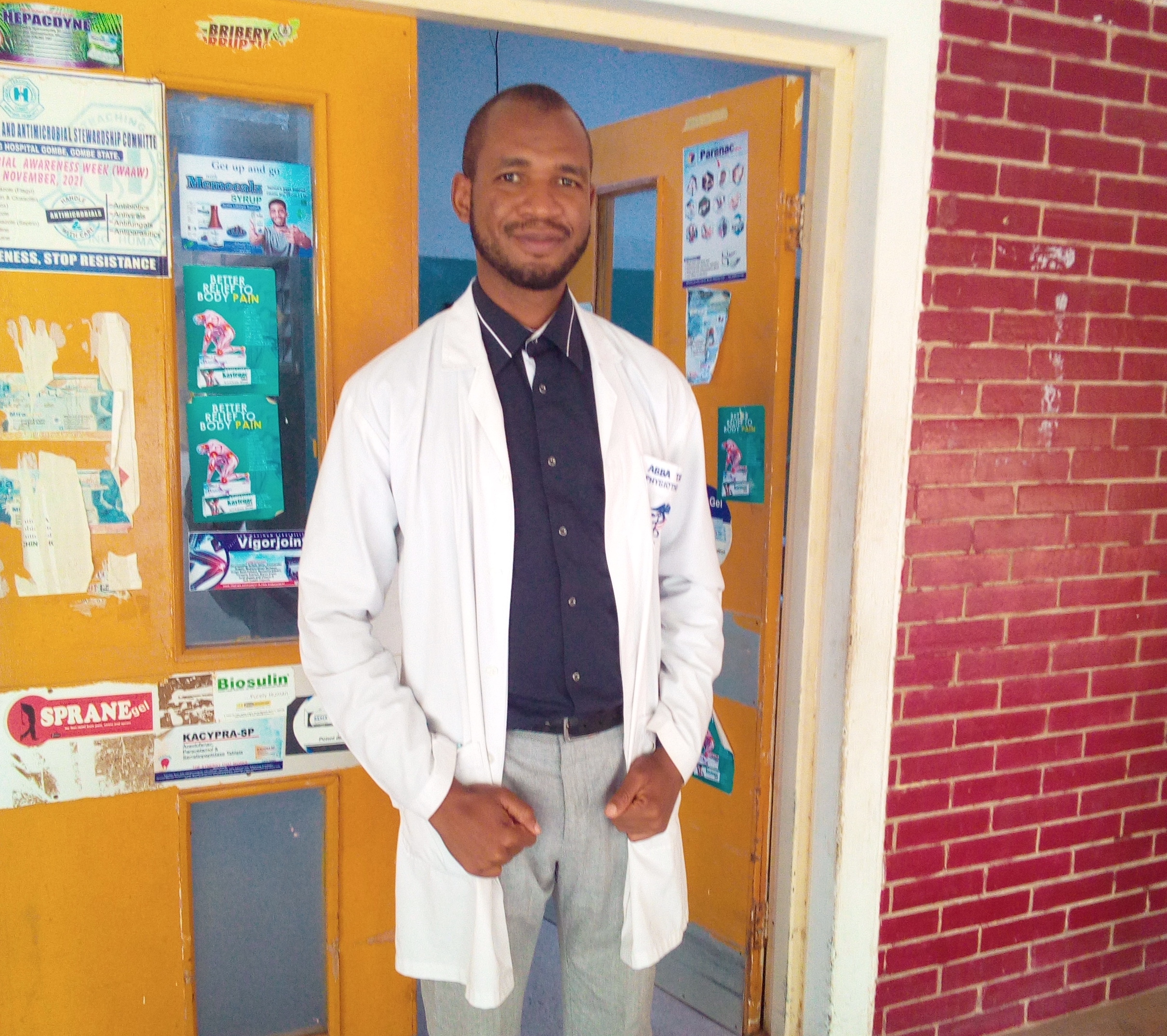
Mallam Tawfiq, Physiotherapist, writes from Federal Teaching Hospital, Gombe.