
By Muhammad Isyaku
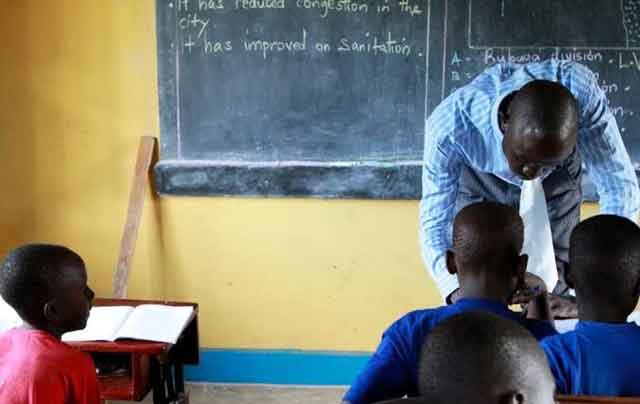
The challenges faced by private school teachers in Nigeria are weighty. Many feel undervalued and disrespected by school proprietors, who often fail to treat them as equals. Despite their qualifications, teachers find themselves in dehumanising situations where their salaries are insufficient to meet their basic needs.
In Nigeria, private school teachers, particularly those working at the crèche, nursery, primary, and secondary levels of education, are akin to pumpkins in deserted homesteads because most school proprietors don’t treat them as fellow humans.
Imagine someone who has never paid your school fees; they just met you as a graduate with your qualifications, but because you are working under them, it would be dehumanising to you as if what they pay you could cater to your life demands.
Private school teachers are going through tough situations, and some of them contribute to their misfortunes because they are stuck in monster schools where they are not respected and dignified. If not for weaklings and silly-minded teachers, how could you choose to continue working with a proprietor who doesn’t respect your persona?
Some proprietors would shout at teachers in front of the students or their parents, giving students much higher priority than teachers in some schools. Some proprietors would prefer losing a teacher to losing a student, and the only excuse they have is that they might use the money to employ another teacher to replace the one they lost but could not use the funds to bring in students to their school, which is a terrible idea to me.
Furthermore, private school students are often disrespectful. Most of them don’t exhibit good manners in school, and their reason for misbehaving toward teachers or other school personnel is that their parents pay for their school fees, so they should be exempted from discipline. In contrast, students in public schools behave better because the government pays for them and provides everything for them for free.
In my experience, the most annoying place for a graduate to work is a private school. Though not all private school students are hellish or mannerless, some respect us as our younger siblings do at home. I won’t fail to admit that but the majority are not well-mannered.
Most of the management in those schools doesn’t respect the welfare of their staff, but they want teachers to do a donkey job for them in the school. Some even have the manner of owing salaries; some would pay but not complete; some would pay, but teachers have to buy all the textbooks needed for their subjects.
I don’t want to be on record saying all proprietors are bad. Some are good and nice to work with, but others are pharaohs in human skins. My only candid advice for young graduates of either NCE or degree programs to work for private schools is for experience’s sake, nothing more or less.
Suppose one works in a private school before getting employment by the government or any private sector. In that case, he will learn much more, especially by being contemptuous and modest, because the salary can never be enough. Though nothing can be reached in this life, patience is the key.
However, in a private school, if one is to calculate what he is earning, even a pure water hawker could be earning more than he does in a month if all the daily earnings are to be calculated at the end of the month.
I advise graduates to look for alternatives to teaching in private schools because those proprietors would exploit them and get richer through their sweat while they are getting poorer. The annoying part is that they don’t appreciate your effort. If they did, they should have found a token or incentive to offer you or pay while on vacation, but they won’t. All they do is let the month end before they pay you the salary.
People, especially young graduates, should go and learn skills or other business because teaching in private schools is not for them and can never contain their needs, especially in this hard-hit Nigeria. I am saying this from experience and as a private school teacher presently.
Moreover, for those who might be stricken or hurt by my words, I want to categorically state that I owe nobody an apology whatsoever. If you are unhappy with my submission, you can write a rejoinder and counter-argue.
Muhammad Isyaku wrote via muhammadisyakumalumfashi@gmail.com.