
By Salihi Adamu Takai
Democracy is the system of government that allows room for participation by all people, and it’s the “government of the people for the people and by the people”. This means a thriving democracy always considers the interest of the masses, not the governors. In a democratic society, the governors become the subjects while the masses become the superior. This is proved in the definition of politics given by the late Aminu Kano ( the former Kano State Governor), Nigeria: “Politics is man management.”
The rule of law is one of the characteristics of a successful democracy. So, does it mean there is no existence of democracy if the rule of law is not fully implemented in applying democracy? Yes, it’s not a successful democracy. Professor A. V. Diecy defines the rule of law as the “absolute supremacy or predominance of the regular law as opposed to the influence of arbitrary power and excludes the existence of arbitrariness or even of wide discretionary”.
Based on the definition given by Professor A. V. Diecy, the rule of law is all about “equality before the law”, and fundamental human rights also ensure this. Therefore, all the characteristics of the democracy are connected. When there is no one, it would be disconnected.
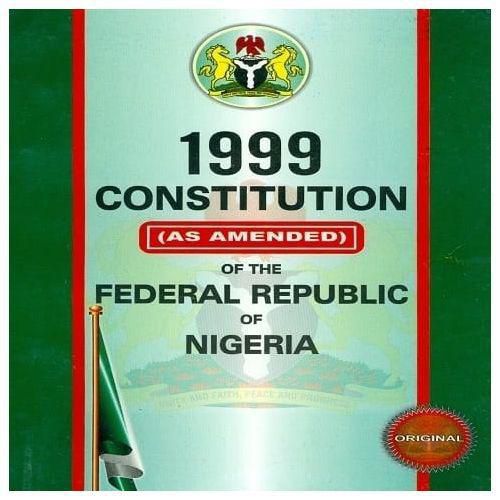
The rule of law propagates “equality before the law” and makes it mandatory for all the affairs of the democratic government. In Nigeria, the 1999 Constitution of the Federal Republic of Nigeria ensures fundamental human rights under Chapter 4. Section 42 (1) ensures the “right to freedom from discrimination”, and this includes “equality before the law”. In accordance with Nigeria’s question, all the citizens of Nigeria are equal before the law. But, in the same Constitution by section 6, the power of the Judiciary to hear any matter is limited. Section 6 (6)(c)(d) limits Judicial power for hearing or questioning any matters related to Chapter 2 of the Constitution ( Fundamental Objectives). Also, the same Constitution immunise some authorities from legal proceedings (criminal) by section 308 (1) ( 3).
Nigeria and all other democratic States apply almost the same principles. In Uganda, the 1995 Constitution of the Republic of Uganda also ensures “equality before the law” under Chapter 4 by Article 21 (1). Clause (3) defines ” discrimination” as “to give different treatment to different persons attributable only or mainly to their respective descriptions by sex, race, colour, ethnic origin, tribe, birth, creed or religion, social or economic standing, political opinion or disability”. Thus, the above definition of the word used, ” discrimination” applies to all. However, the same Constitution by Article 98 (4) excludes the President of Uganda from legal proceedings in any court.
Therefore, considering the conflicting laws of the Constitutions applied in the democratic governments of all the democratic states, I can still say that with the discrimination, there shouldn’t be a successful democracy today.
Salihi Adamu Takai wrote via salihiadamu5555@gmail.com.