By Uzair Adam
The Livestock Productivity and Resilience Support Project (L-PRES) says it is working to bridge the financing gap in Nigeria’s livestock agribusiness sector by connecting small businesses with financial institutions through capacity-building programmes.
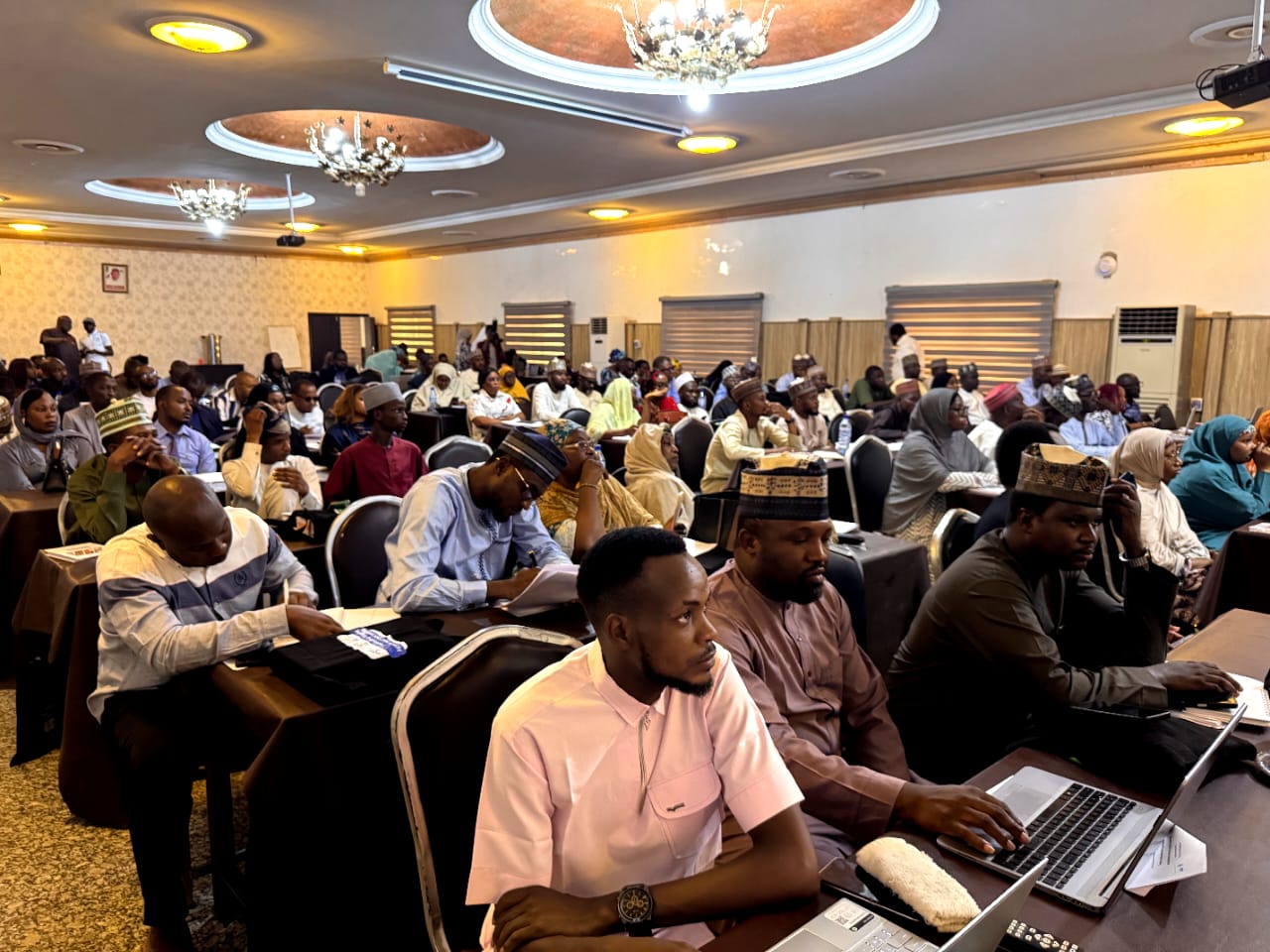
Officials of the project disclosed this on Wednesday at the ongoing Regional SMEs/PFIs Capacity Building Programme on “Bridging the Livestock Agribusiness Finance Gap: Building Capacity for Inclusive Growth,” which started on Monday in Kano.
The programme, supported by the World Bank and the Development Bank of Nigeria (DBN) brought together participating financial institutions (PFIs), livestock-based small and medium enterprises (SMEs), insurance firms and other stakeholders from Kano, Kaduna, Sokoto and Zamfara states.
Speaking at the event, the National Project Coordinator of L-PRES, Dr. Sanusi Abubakar, represented by the Value Chain Consultant, Heather Ronke Akanni, said the initiative was designed to expose financial institutions to opportunities in the livestock sector and help SMEs become investment-ready.
She explained that the livestock sector had long faced financing constraints due to limited documentation, weak business structures and perceived risks by financial institutions.
“Before now, the livestock sector has not been looked into so much, so banks and financial institutions were reluctant to finance livestock farmers,” Akanni said.
According to her, the programme provides a platform for SMEs and PFIs to engage directly, exchange ideas and better understand opportunities across livestock value chains, including production, processing, packaging, input supply and advisory services.
She added that similar regional engagements had already been held in the South-East, South-West and North-East, while the North-Central programme would be concluded in Kwara State.
Akanni stressed the need for SMEs to maintain proper financial records and separate personal and business accounts to improve access to credit.
“Some SMEs mix their private accounts with business accounts, making it difficult for banks to assess their businesses properly. Now they understand that business transactions should be clearly documented,” she said.
She further noted that some financial institutions had begun to show renewed interest in livestock financing after direct engagement with farmers under the programme.
“In Enugu, a pig farmer who had struggled for years to secure a loan eventually attracted the interest of banks after they visited his farm during the programme,” she added.
The State Project Coordinator of L-PRES in Zamfara State, Nasiru Muhammad, represented by the Animal Health Officer, Dr. Muktar Salihu Anka, said the project had made steady progress despite starting later than other participating states.
He explained that L-PRES had supported livestock farmers through capacity building, veterinary interventions, poultry development and infrastructure projects aimed at improving production systems.
“This workshop is going to bridge the gap between farmers and the PFIs because many livestock farmers have been asking questions about access to loans,” he said.
Also speaking, the Kaduna State L-PRES Coordinator, Dr. Shitu Salisu Hashim, described the training as essential in addressing concerns from financial institutions regarding livestock lending risks.
He said banks often worry about disease outbreaks, lack of collateral and weak cooperative structures among farmers.
“The importance of this training cannot be overemphasized because it balances the relationship between farmers and PFIs,” Hashim said.
He added that the programme introduced an Impact Credit Guarantee mechanism to reduce collateral challenges faced by farmers.
“If the collateral requirement is 100 per cent, the Impact Credit Guarantee can provide up to 70 per cent, while the farmer provides the remaining 30 per cent,” he explained.
Hashim also noted that the inclusion of non-interest financial institutions was expanding access to finance for livestock farmers in Northern Nigeria.
Representing the Kano State Project Coordinator, Dr. Salisu Muhammad Inuwa, Abubakar Muhammad Kabiru, Animal Husbandry Officer of L-PRES, said participants were taken on a field visit to key livestock value chain facilities in Kano State.
He said the team visited L&Z Company in Kumbotso Local Government Area, Milk Collection Centre in Kadawa, Garun Malam Local Government Area, Dawakin Kudu Cooperative Society Limited, and the International Cattle Market.
Kabiru explained that the visits were designed to expose participating financial institutions to real-life livestock business operations.
“We wanted the PFIs to see the opportunities available and understand how these businesses operate so they can confidently support beneficiaries with loans,” he said.
He added that SMEs from Kano, Kaduna, Sokoto and Zamfara participated in the programme to improve their capacity to access and manage financing.
One of the participants, Hajiya Halima Ahmad, said the programme had changed the mindset of many women in livestock business regarding access to loans.
She said many women previously avoided banks due to concerns over interest rates and limited knowledge of financial documentation.
“I have been in the poultry business for over 25 years, but I have never gone to a bank to request a loan,” she said.
“Most of the factors stopping us were the issue of interest because of religious implications. But this training has equipped us with the necessary skills on documentation and business management.”
She added that the presence of non-interest banks at the programme had encouraged participants to explore financing opportunities for business expansion.
L-PRES Facilitates Farmer-Bank Linkage in Kano To Boost Livestock Financing Access

ByAdmin
7 May 2026