
By Dahiru Kasimu Adamu
The Argungu International Fishing and Cultural Festival is renowned as one of the most colourful spectacles on the global calendar. But beyond the crowning of the champion fisherman, the 61st edition, which concluded on February 14, 2026, was a profound chronicle of peace, cultural pride, economic promise, and even human drama.
Dating back to 1934 from the historic visit of Sultan Hassan Dan Ma’azu, which marked a handshake between the Sokoto Caliphate and the Kebbi Kingdom, the festival has evolved from a symbol of peace into a globally recognised cultural phenomenon. This year, after rigorous planning, the event delivered a programme richer than ever, blending tradition with advancement and culminating in a grand finale that drew thousands of fishermen and spectators to the ancient city of Argungu.
A Festival Forged in Culture and Commerce
The 61st edition was not merely a competition; it was a multifaceted event strategically designed to showcase Kebbi State. Activities kicked off in the state capital, Birnin Kebbi, with an Investor Forum that highlighted the region’s vast economic potential. This was complemented by an intellectual youth engagement, a Quiz and Debate competition at the Presidential Banquet Hall.
Also, a colourful motor rally, flagged off in Abuja and involving over 30 vehicles, was part of the activities heralding the globally celebrated festival.
On Wednesday, February 11, the festival burst into life with a vibrant display of traditional sports. Archery, catapulting, camel and donkey racing, local wrestling, and a polo competition drew captivated audiences from within Nigeria and beyond. Participants displayed remarkable skill, with winners earning trophies, cash prizes, and gifts, setting an energetic tone for the days ahead.
Day two shifted gears with exciting cycling and boxing competitions unfolding at the festival venue.
The cycling race from Birnin Kebbi to Argungu saw Bello Muhammad clinch victory after one hour and 30 minutes of intense effort, taking home a trophy, a motorcycle, and N300,000. The boxing ring was equally electrifying, with Sha’aban from Kano State defeating Kebbi’s Yahayan Tarasa in a fiercely contested match that kept spectators on the edge of their seats.
The Heartbeat of Tradition: Kabanci and its Human Cost
Thursday was dedicated to celebrating the region’s lifeblood agriculture. An impressive Agricultural Show in Argungu featured giant rice pyramids, a powerful visual testament to the state’s rich endowments and achievements.
But the spiritual core of the festival, the legendary Kabanci water sports, unfolded on its third day.
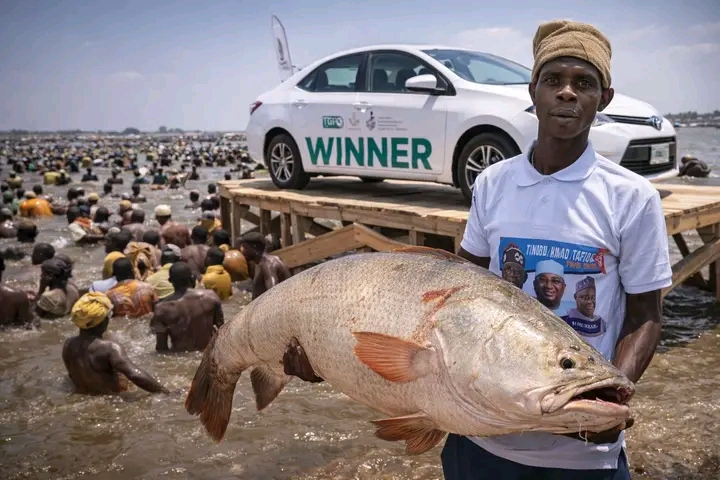
The Mala River side became a theatre of ancestral skill as thousands thronged the banks. The scene was a breathtaking display of cultural heritage: men and boys fishing with bare hands, two-man canoe races slicing through the water, and the gruelling swimming contests with clay pots.
Participants demonstrated remarkable agility, passing down techniques across myriad generations. The Water Relay Race, a true test of endurance, was among the most cheered. However, the celebration was tinged with tragedy. Despite the presence of emergency services, reports emerged of the death of two participants in the water relay competition after Red Cross officials gave emergency assistance.
As dusk fell, the majestic Kabi Durbar transformed the atmosphere. A magnificent procession of decorated horses and riders, reflecting the Emirate’s martial history and equestrian excellence, offered a spectacle of regal splendour.
The Grand Finale: A 59kg Triumph
The week-long celebration culminated in the main event on Saturday, February 14. Over 40,000 fishermen entered the Matan Fada River, a river of humanity awaiting the starter’s signal. The formal commencement was timed with the arrival of the Special Guest of Honour, President Bola Ahmed Tinubu, who was joined by a host of dignitaries from within and outside the country.
The result was historic. Abubakar Usman from Maiyama Local Government Area of Kebbi State emerged as the champion, landing the festival’s biggest fish, weighing 59 kilogrammes. His feat earned him two brand-new Toyota vehicles, generously donated by the Sokoto State Government, along with a N1 million cash prize.
Abdullahi Garba from Argungu secured second place with a 40kg fish, receiving a Toyota saloon car from WACOTT Rice Miles Limited and N1 million. The third position was jointly claimed by Danlansu Dankani from Jega and another contestant, who each caught fish weighing 34kg, going home with N1 million and a motorcycle apiece.
President Tinubu, in his address, encapsulated the festival’s essence, describing it as “a historic event and a powerful symbol of unity and resilience and peaceful coexistence amongst Nigerians. It reflects the richness of our culture, the strength of our tradition and the opportunities that lie in harnessing our natural resources for national development.”
Echoes from Argungu: A Look to the Future
The festival’s impact resonated deeply with local residents. For Shamsu Usman and Ishaka Kabir, among others, the event is more than a cultural showcase. They believe it is a vital economic driver, with income generated poised to be channelled into other productive activities, reinforcing the festival’s role in grassroots development.
The success of the 61st edition was also significantly amplified by the vital role of legacy media, news platforms, social media influencers, and content creators, whose coverage projected the images of Argungu to a global audience.
As the festival continues to attract tourists from every corner of the world, its position as a premier cultural tourism destination in Nigeria is firmly cemented. The collective vision now is for the Argungu Emirate Council, the Kebbi State Government, and the Federal Government to work in concert. By investing in modern strategies, infrastructure, and sustainable practices, they can further enhance the festival, ensuring it remains a powerful engine for socio-economic development in Argungu, Kebbi State, and the nation at large for generations to come.