By Uzair Adam
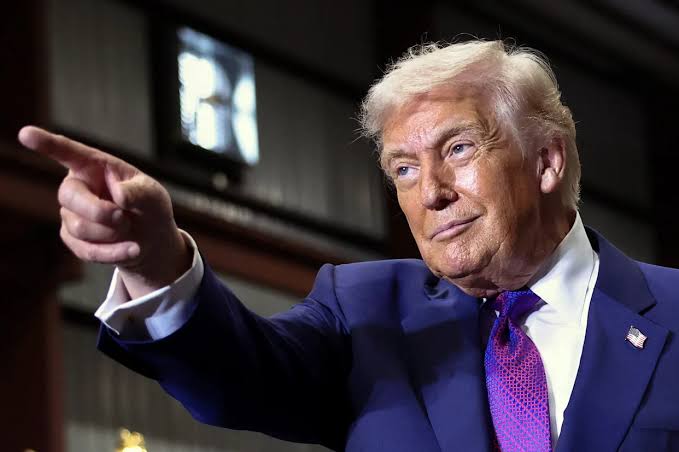
U.S. President Donald Trump on Sunday warned that Iran’s next supreme leader would not remain in power for long without Washington’s approval, as Tehran prepares to announce a successor to the late Ayatollah Ali Khamenei.
Nine days after joint U.S.–Israeli strikes on his compound killed Khamenei and triggered a wider Middle East conflict, Iran’s Assembly of Experts met behind closed doors and selected a new leader, members of the body said.
The clerics did not disclose the identity of the chosen candidate but indicated that an announcement would be made soon. Some members suggested that Khamenei’s 56-year-old son, Mojtaba Khamenei, could succeed his father.
Trump had earlier insisted that the United States should have a say in the decision and described Mojtaba Khamenei as an unacceptable “lightweight.”
“He’s going to have to get approval from us,” Trump said in an interview with ABC News. “If he doesn’t get approval from us, he’s not going to last long.”
However, Iran’s Foreign Minister Abbas Araghchi rejected the suggestion, saying the leadership decision was solely Iran’s internal matter.
Speaking on Meet the Press on NBC, Araghchi also called on Trump to “apologise to people of the region” over the escalating war.
Mojtaba Khamenei is widely viewed as a hardline conservative, partly because of his close ties with Iran’s Islamic Revolutionary Guard Corps.
Israel’s military has already issued a warning to any incoming Iranian leader, saying it would not hesitate to target them if necessary.
Israel demonstrated its military reach overnight with two new operations — air strikes on fuel depots in and around Tehran and an attack on a hotel in Beirut believed to house suspected Iranian commanders.
Warplanes hit five oil facilities near the Iranian capital, killing at least four people, according to a state oil executive, and sending thick smoke across the city.
Tehran’s governor told the state-run Islamic Republic News Agency that fuel distribution in the capital had been temporarily disrupted.
A dense haze covered the city of about 10 million people, blocking sunlight as the smell of burning fuel filled the air.
Authorities warned that the smoke could be toxic and advised residents to remain indoors, although many buildings had their windows shattered by the force of the explosions.
A 35-year-old resident said the fire had been burning for more than 12 hours and that the air had become difficult to breathe.
“At first, I supported this war. After Khamenei’s death, I celebrated with my friends,” she said in a message sent to Europe. “But since yesterday, people say there is no gasoline left at the stations.”
As the conflict entered its ninth day, Iran’s Revolutionary Guards said they had enough supplies to sustain missile and drone operations across the Middle East for up to six months.
Explosions were also reported over Israel’s commercial hub of Tel Aviv after the Israeli military detected a barrage of Iranian missiles. The emergency service Magen David Adom said six people were wounded in central Israel.
Trump again declined to rule out deploying U.S. ground troops in Iran but insisted the war was close to being won despite continued Iranian attacks.
The U.S. president also spoke with British Prime Minister Keir Starmer on Sunday, according to Downing Street, after previously criticising him over Britain’s involvement in the conflict.
Meanwhile, Iran’s Revolutionary Guards spokesman Ali Mohammad Naini said the country had so far used only first- and second-generation missiles but would soon deploy more advanced long-range weapons.
The conflict has also affected other countries in the region. Authorities in Saudi Arabia said a projectile killed two people and injured 12 in Al Kharj province after a wave of drones was intercepted near the capital Riyadh.
Kuwait reported damage to fuel tanks at its international airport, while Bahrain said a desalination plant had been hit.
Iran’s health ministry said at least 1,200 civilians had been killed and about 10,000 wounded in the war, although the figures could not be independently verified.
In Lebanon, the health ministry reported that at least 394 people had been killed in Israeli air strikes since the country was drawn into the conflict, including dozens of women and children.
Two Israeli soldiers were also killed during clashes in southern Lebanon, according to the Israeli military.
Analysts say there is still no clear path to ending the conflict, which U.S. and Israeli officials believe could last for several weeks.
Trump suggested Iran’s economy could be rebuilt if a leader acceptable to Washington replaces Khamenei.
Meanwhile, China’s top diplomat Wang Yi warned that the war should never have occurred, saying the world “cannot return to the law of the jungle.”
During his Sunday prayer, Pope Leo XIV also called for peace, urging that “the roar of the bombs may cease, the weapons may fall silent, and space for dialogue may open.”