By Uzair Adam
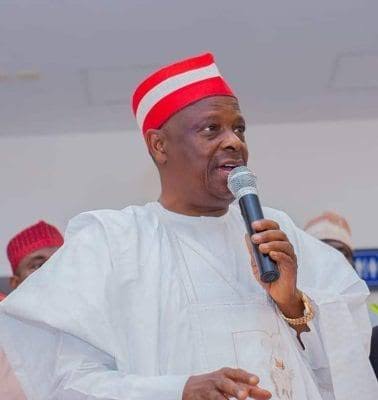
Professor Farooq Kperogi has explained why former Kano State Governor, Senator Rabiu Musa Kwankwaso, was singled out in a proposed United States congressional bill seeking visa bans and asset freezes against certain Nigerian officials over religious freedom concerns.
Kperogi, a Nigerian-American scholar and media commentator, disclosed this in a Facebook post on Wednesday while reacting to the proposed “Nigeria Religious Freedom and Accountability Act of 2026,” introduced by Republican Congressman Riley Moore and other lawmakers.
The bill reportedly seeks to hold Nigerian officials accountable over allegations of religious persecution, including actions connected to the implementation of Sharia law in some northern states.
Kwankwaso, who served as Kano governor from 1999 to 2003 and later from 2011 to 2015, and was the presidential candidate of the New Nigeria People’s Party (NNPP) in the 2023 general election, was mentioned in connection with Kano’s adoption of Sharia in 2000.
In his post, Kperogi said he was initially “surprised, shocked even” that Kwankwaso was singled out among northern Muslim politicians, arguing that the former governor is not, “by any stretch of the imagination, a religious fanatic.”
Drawing from his experience as Assistant News Editor of Weekly Trust at the time, Kperogi recalled that Kwankwaso was reluctant to declare Sharia in Kano in 2000.
He said the Sharia bill in Kano was a private member’s bill, not sponsored by the governor or the state executive, unlike in several other northern states.
According to him, Kwankwaso resisted pressure for months and found himself at odds with both the public and the Muslim clerical establishment.
He cited his June 30, 2000 report co-authored with Sulaiman Aliyu, in which he wrote: “The governor was trapped in a delicate cul-de-sac. And his escape route was the launching of Sharia on the 21st of June 2000.”
Kperogi added that the pressure on the governor became so intense that he temporarily avoided public events, with his deputy, Abdullahi Ganduje, often representing him.
On one occasion, Ganduje was reportedly stoned during a Maulud celebration while standing in for the governor.
He further quoted Kwankwaso’s remarks at the formal launch of Sharia in Kano: “Only the state government has the right to punish offenders. We should avoid taking the law into our hands. We should not intimidate those who are not Muslims,” arguing that such a statement did not reflect extremist rhetoric.
Kperogi maintained that Kwankwaso’s implementation of Sharia was widely perceived as lukewarm, which, he said, contributed significantly to his loss in the 2003 governorship election to Ibrahim Shekarau, who had strong backing from the clerical establishment.
Explaining why the U.S. lawmakers may have targeted Kwankwaso, Kperogi said the former governor was the only nationally prominent Nigerian politician who openly criticised the United States’ designation of Nigeria as a Country of Particular Concern (CPC) over religious freedom issues.
Kwankwaso had argued that the designation was unhelpful, reduced a complex problem to simplistic binaries, risked worsening interreligious tensions, and that cooperation would be more constructive than confrontation.
Kperogi noted that Congressman Moore reacted sharply on social media, accusing Kwankwaso of complicity in the deaths of Christians and referencing his role in instituting Sharia law in Kano. Kwankwaso did not respond publicly to the provocation.
According to Kperogi, the inclusion of Kwankwaso in the bill appears to be rooted less in his historical record and more in his public dissent from a particular U.S. policy stance.
He, however, pointed out that the bill remains at the introduction stage in the U.S. House of Representatives and must pass through several legislative processes before it can become law, noting that many Nigeria-specific standalone bills do not advance beyond preliminary stages.