
By Abdulhamid Abdullahi Aliyu
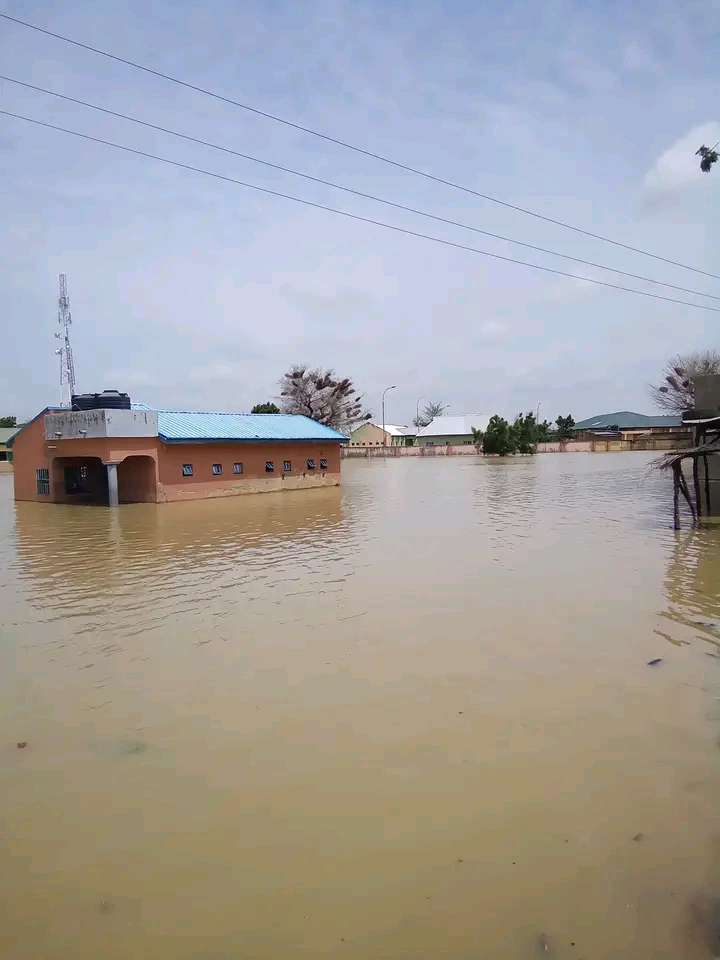
Every rainy season in Nigeria, when the skies darken and rivers swell, millions brace for the inevitable. In states like Kogi, Benue, and Bayelsa, families keep bags packed, ready to flee at the first sign of danger. Flood season has become a season of exile, not a question of if disaster will strike, but when.
The devastation of 2022 serves as a poignant reminder of what is at stake. That year, floods claimed more than 600 lives, displaced over 1.4 million people, and destroyed livelihoods on a massive scale. Croplands vanished under water, homes crumbled, and dreams were swept away. Three years later, communities still carry those scars, and the new flood alerts for 2025 have revived fears of a repeat.
It is against this grim backdrop that the National Emergency Management Agency (NEMA) is repositioning itself. For years, the agency was primarily seen as the responder of last resort, arriving with relief materials after lives and property had already been lost. Today, under the leadership of its Director General, Mrs Zubaida Umar, NEMA is making a deliberate shift: from being merely reactive to becoming a driver of foresight and prevention.
“Emergency management must no longer be about sympathy after the tragedy,” Mrs Umar insists. “It should be about preparedness that saves lives before the waters rise.”
That vision is beginning to take root. NEMA now works more closely with the Nigerian Meteorological Agency (NiMet) and the Nigerian Hydrological Services Agency (NIHSA), ensuring that seasonal forecasts and dam release alerts are translated into action at the grassroots level. Through community training, simulations, and sensitisation, the agency is attempting to close the gap between warnings and response, a gap that has cost too many lives in the past.
Yet the challenge remains daunting. Nigeria’s geography makes it naturally vulnerable, with the Niger and Benue rivers cutting across states where millions depend on farming. Poor urban planning compounds the danger, as blocked drainage and informal settlements in flood-prone areas turn cities into ticking time bombs. Climate change, with its unpredictable rainfall patterns, only worsens the threat.
In Lokoja, often referred to as the “confluence of suffering” during flood season, traders recall markets transformed into lakes, while fishermen lament the cruel irony of drowning in abundance. In Borno, families already displaced by insurgency were uprooted again when torrential rains washed away their shelters. These stories underscore a sobering truth: floods in Nigeria are not just natural disasters, but also humanitarian emergencies that exacerbate existing vulnerabilities.
Still, there are signs of progress. NEMA has strengthened partnerships with state governments and agencies, such as the Hydroelectric Power Producing Areas Development Commission (N-HYPPADEC), to broaden the response framework. The agency has also invested in early warning systems, ensuring that flood alerts do not remain stuck in Abuja press briefings but reach local leaders, town criers, and community radio stations.
For NEMA, the real battle is not only about deploying relief materials but about changing mindsets. Preparedness must become a culture. Farmers adjusting their planting calendars to forecasts, families relocating from high-risk flood plains, and local leaders treating disaster drills as seriously as security meetings. These are the shifts that make prevention real.
But as Mrs Umar acknowledges, transformation takes time. Resources remain limited, and relief supplies can only go so far in a country where millions are at risk. Disaster management will therefore continue to be a delicate balance between urgent response and long-term prevention.
What is clear, however, is that the old model of waiting until floods wreak havoc before acting is no longer sustainable. With new alerts already issued for 2025, the real task is ensuring that early warnings translate into early action. The coming seasons must not repeat the mistakes of the past.
Floods will always come. The question is whether they remain an annual tragedy or become a manageable threat. For NEMA, the answer lies in standing not just as a responder to disaster, but as a shield against it. For the millions who live in the shadow of swollen rivers, that shift could mean the difference between despair and survival.
Abdulhamid Abdullahi Aliyu writes on disaster management, humanitarian response, and national development.