
By Onumoh Abdulwaheed
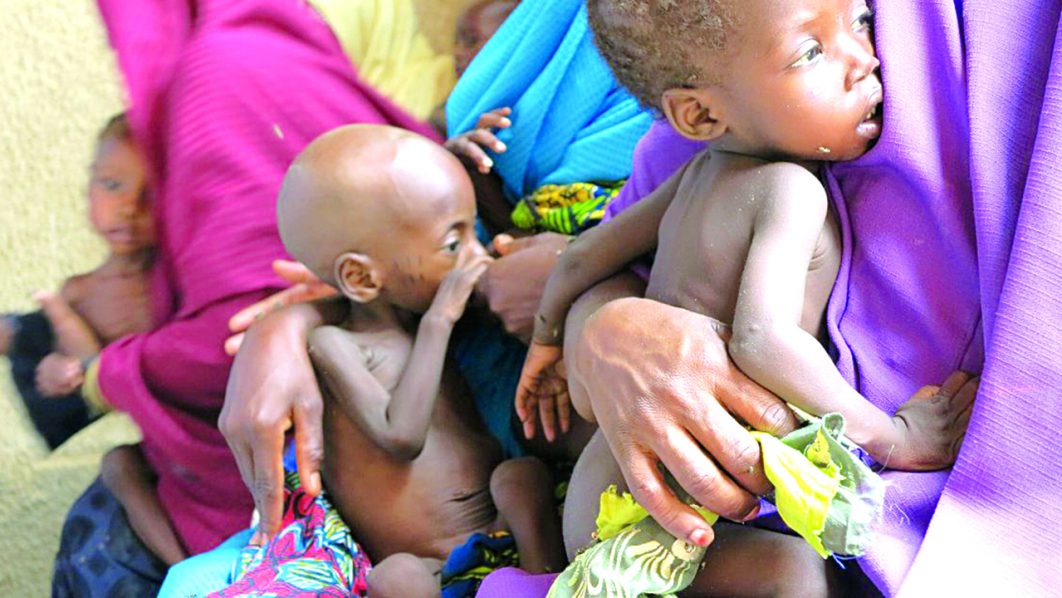
Northern Nigeria is facing an increasingly severe malnutrition crisis, with recent data revealing a stark escalation in cases. UNICEF reports that Nigeria has the second-highest burden of stunted children globally, with a 32% prevalence rate among children under five. An estimated 2 million children suffer from severe acute malnutrition (SAM), yet only 20% receive treatment.
According to Médecins Sans Frontières (MSF), the situation has worsened dramatically in 2024. Dr. Sanjana Tirima reports alarming increases across northern Nigeria. In Maiduguri, northeast Nigeria, MSF’s inpatient therapeutic feeding centre admitted 1,250 severely malnourished children with complications in April 2024, double the figure from April 2023. The centre has had to expand to 350 beds, far exceeding its initial 200-bed capacity.
Similar trends are seen elsewhere. In Bauchi state, MSF’s facility at Kafin Madaki Hospital saw a 188% increase in the first quarter of 2024 compared to 2023 in the admissions of severely malnourished children. Northwestern states like Zamfara, Kano, and Sokoto have reported increases in admissions to inpatient centres ranging from 20% to 100%.
Dr Christos Christou, MSF’s International President, previously highlighted the multiple challenges facing northern Nigeria, including “overwhelming levels of malnutrition, frequent outbreaks of vaccine-preventable diseases, lack of medical facilities and personnel, and continuous insecurity.” The crisis is further exacerbated by widespread flooding, which has devastated farmlands and displaced millions.
Despite the escalating crisis, the humanitarian response remains inadequate. In May, the United Nations and Nigerian authorities issued an urgent appeal for US$306.4 million to address nutrition needs in Borno, Adamawa, and Yobe states. However, MSF notes this is insufficient as it doesn’t cover other affected parts of northern Nigeria.
Dr Tirima emphasises the situation’s urgency: “Everyone needs to step in to save lives and allow the children of northern Nigeria to grow free from malnutrition and its disastrous long-term, if not fatal, consequences.” She calls for immediate action to diagnose and treat malnourished children and engage in sustained, long-term initiatives to address the root causes of the crisis.
MSF and other organisations stress the need for a comprehensive and urgent response as the situation worsens. “We can’t keep repeating these catastrophic scenarios year after year,” Dr. Tirima warns. “What will it take to make everyone take notice and act?” The crisis in northern Nigeria remains a critical humanitarian concern requiring immediate and sustained attention from national and international stakeholders.
Onumoh Abdulwaheed wrote via onumohabdulwaheed@gmail.com.