
By Zayyad I. Muhammad
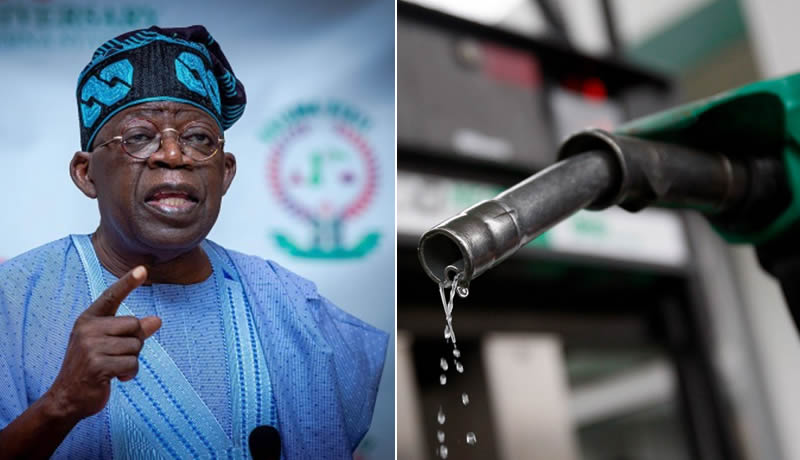
There is a massive call for President Bola Ahmed Tinubu to restore the petroleum subsidy. The ongoing 10-day “End Bad Governance” protest and the high prices of commodities and services are the result of the removal of fuel subsidies.
If President Ahmed Bola Tinubu does not plan to restore petroleum subsidies, the government must find another way to reduce the price of petroleum products, especially premium motor spirit (PMS), popularly called petrol. Petrol is the lifeblood of any nation. The social problems arising from the aftermath of petroleum subsidy removal are purely local issues that require theoretical and practical solutions.
Sometimes, the government relies solely on experts who understand the problem from a theoretical perspective, forgetting the real players in the petroleum industry who understand the problem from all its angles: importation, depot loading, haulage, retailing, and manpower management.
Apart from the subsidy, there are other ways to drastically reduce the price of petrol. Tinubu should critically consider restoring the Petroleum Equalisation Fund (PEF). Since it is a contributory fund, its source is principally the net surplus revenue recovered from oil marketing companies. The bridging claims paid to petroleum marketers automatically equalise petroleum prices throughout Nigeria while maintaining affordability.
Aquila’s innovative electronic business solution has eliminated any irregular distribution and claims of bridged regulated petroleum products. The Aquila project is an excellent electronic business solution designed to track the movement of petroleum products throughout Nigeria.
Though the Petroleum Industry Act (PIA), budgetary provisions, and some economic reasons were the guiding principles that led Tinubu to remove subsidies and float the naira, sometimes national interests—security, economic, and social order—must be paramount. It’s purely a local problem that requires purely home-grown solutions.
Some countries painstakingly control the prices of petrol for national security. These countries often have uniform prices for petrol across the entire country. For example, Saudi Arabia, the United Arab Emirates, India, Malaysia, Iran, and Venezuela. In most countries, national security overrides other considerations; the government has significant control over fuel pricing and distribution, often through subsidies or state-owned oil companies.
Take India, for instance. India controls petrol prices through market dynamics and government policies, such as daily price adjustments based on the international price of crude oil. The Indian government sometimes provides subsidies to control the prices of petroleum products. This helps keep the prices within a certain range and makes them more affordable for the general public.
The Indian government achieves this through the national oil companies Bharat Petroleum Corporation Limited (BPCL) and Hindustan Petroleum Corporation Limited (HPCL). Another mechanism India uses in the price control measures to address inflation concerns, freight, and logistics is that the government can intervene directly by adjusting excise duties or providing relief to the oil marketers.
The Tinubu government should critically consider reintroducing the Petroleum Equalisation Fund. It would sharply reduce petrol prices, bring uniformity in prices throughout Nigeria, bring the 21 NNPC depots to life, restore many lost jobs, and double-check product quality.
Zayyad I. Muhammad writes from Abuja via zaymohd@yahoo.com.