
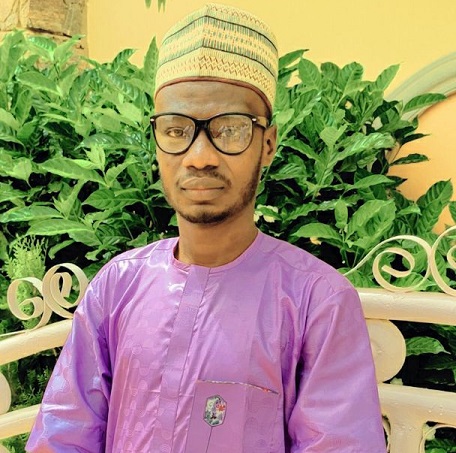
By Lawi Auwal Yusuf
Thinking of Nigeria’s future has left me swinging between apprehension at the prospect of some future doom and anxiety. However, I can see how the country can secure an imperium position in the comity of global superpowers considering its unique and extraordinary endowments that are rare for a country to possess. An idyllic realm where all Nigerians, regardless of their social background, have a smooth path to realise their dream world.
It is widely believed that the benefits of long-term planning last longer. And only beautiful destinations attract arduous treks of long distances full of hurdles and cruxes. But on the other hand, successful journeys are well-planned and adequately prepared for over a long period. Traditionally, farmers reap what they sow. Therefore, only those that planted beneficial seeds laugh at the harvesting period’s end.
It’s against this backdrop and considering other factors that drive national building in Africa, especially in Nigeria, always fail to see the lights of their desired destinations. As a result, Nigeria’s manifest destiny to inspire the global black race and lead Africa has remained in the doldrums despite its enormous human and material resources that could be judiciously utilised to translate such famed potentials into concrete aggregates for sustainable development.
Positive imaginations, futuristic political articulation and prescient abilities are imminent qualities and cardinal leadership principles. But, historically, the consistent absence of committed, transparent and future-oriented leadership has been a significant hindrance and unequivocal bane to Nigeria’s development.
Practical politicians are those whose political philosophy includes making the world a better place to live for their people and posterity. This is a core and thematic value of the politics of leaders who dedicate their lives canvassing for their country’s better future. This makes me recollect William Jennings Bryan’s food for thought that says, “Destiny is not a matter of chance, it is a matter of choice; it is not a thing to be waited for, it is a thing to be achieved.”
So, I ask you: have you ever bothered to ask yourself these questions, where is Nigeria heading to? What are we planning for the future? I asked again, have you ever thought of such critical questions? We must be curious enough about the country’s fate in the forthcoming decades, whether we are still alive or utterly forgotten. What would be the nation’s state then?
But the bigger question remains, do the country’s movers and shakers give a damn about its predestination and are busy strategising revolutionary, historical and ambitious deft policies geared towards defining Nigeria’s moment and securing the future? Unfortunately, the answer to this question is not in the affirmative.
In Nigeria’s contemporary context, where the gamut of formal and other traditional institutions has failed to generate vital mechanisms for efficient service delivery to Nigerians and the coming generations, coinciding with emerging trends of pervasive poverty and inequality amid burning acrimonious civic bond, political hooliganism and hollowed nationalism are particularly not a good look for the future.
I beg your pardon. I’m not a prophet of doom. But one is compelled to admit that the situation is entirely hopeless. From a cursory observation of the national scheme of things, there are explicit tales of troubles ahead. I don’t see fortune looming on the horizon from where I’m standing. And by all estimates, I don’t see a bright future for a nation whose kleptocracy deteriorated into kleptomania.
For all I know, there is no bright outlook for a country whose politicians are preoccupied with self-centred political hustles and busy making contacts to negotiate themselves for a place on the table of political spoils carrying along the baggage of selfish and vested interests, to wit, protection and advancement of these interests have become the defining nature of public office holding. On the contrary, I see a foggy future for a society whose bigwigs throw constitutional order and due process overboard under the suzerainty of selfish and vested interests, lest they consistently fall short of their public commitments.
In reality, we must come to terms with the fact that the destiny of a country can’t be secured while its bosses are absentminded about their public obligations and constantly engaged in party meetings, extravagant banquets and jetting over the country on chartered and private planes attending series of lavish occasions at its expense and detriment. A nation whose ‘spark plugs’ can’t put the nation’s interest above theirs, while its most favourable policies go awry when such interests are compromised.
Of course, this version of Nigeria we see today isn’t what its progenitors worked tirelessly for. This is reminiscent of the generational disconnection spawned by the egregiously rapacious leadership of their predecessors. However, people dogmatically believe history has an uncanny knack for repeating itself. I hope this unfortunate odyssey will not be repeated in the annals of Nigeria’s history.
So, now that we are here, I pray for a benevolent mother for all generations. A saviour to save us all.
Lawi Auwal Yusuf wrote from Kano via laymaikanawa@gmail.com.
The great