
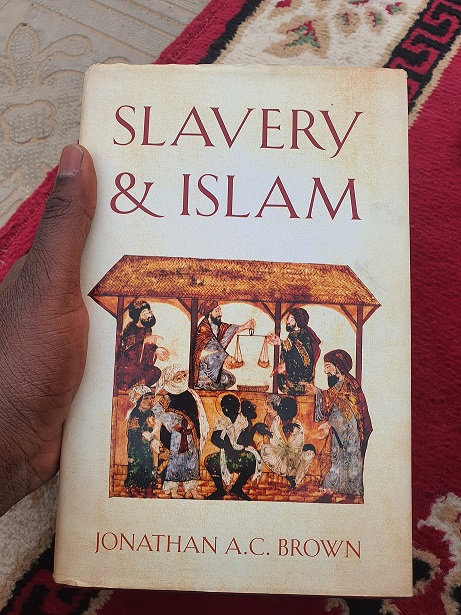
By Dr Shamsuddeen Sani
In a flurry of literary exploration, my daughter recently stumbled upon the book entitled Concubines and Power. Her curiosity was piqued as she asked me to explain the meaning of “concubine”. A seemingly simple inquiry prompted a deep and complex conversation encompassing a broad range of considerations about slavery, including its religious underpinnings and contemporary relevance.
That exchange reignited my intellectual curiosity, leading me to revisit the noteworthy insights presented in Jonathan AC Brown’s seminal work, Slavery and Islam. I was compelled to reflect on and share some of the most insightful revelations from this ground-breaking work.
The book meticulously examines the historical context and practice of slavery within the Islamic tradition, as well as the ways in which Islamic law and theology have addressed the institution of slavery. Brown argues that slavery was ubiquitous throughout much of human history and was not unique to Islam.
However, Brown also acknowledges that slavery played a significant role in the development of Islamic civilisation and that the Islamic legal tradition provided a framework for the regulation of slavery. He offers an insightful and nuanced perspective on this complex issue, providing valuable insights into the intersection of religion and human rights.
Brown’s book highlights a fundamental premise: the Islamic tradition’s nuanced and intricate approach to slavery. On the one hand, Islamic law allowed for the practice of slavery; on the other, it imposed stringent limitations on how slaves could be treated and offered opportunities for manumission. According to Brown, these regulations illustrate a deep-seated concern for the well-being of slaves and a profound appreciation of their inherent human dignity.
At the same time, Brown acknowledges that there were significant abuses of the institution of slavery within Islamic societies. For example, he notes that some Muslim scholars and rulers sought to justify and perpetuate the practice of slavery through a misinterpretation of Islamic teachings and that many slaves were subjected to inhumane treatment.
He argues that while there are certainly instances of slavery and human trafficking that occur in Muslim-majority countries, these practices are not inherently Islamic and are often the result of broader social and economic factors.