
By Sabiu Abdullahi
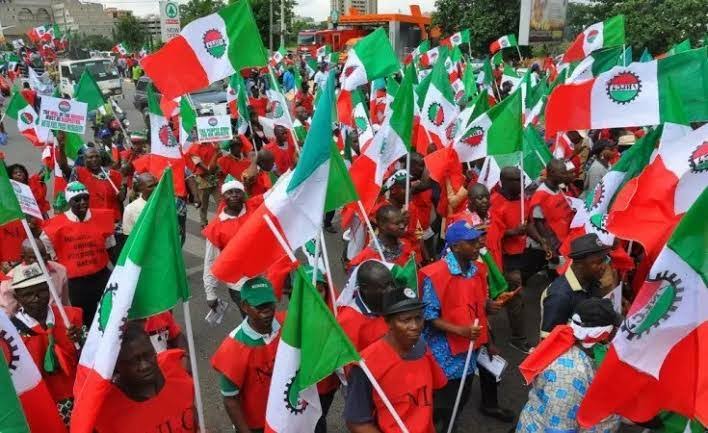
The Federal Government and organised labour are scheduled to resume negotiations on Tuesday amid growing tensions over petrol prices, workers’ welfare and demands for an early review of the national minimum wage.
The Nigeria Labour Congress (NLC) and the Trade Union Congress (TUC) are expected to decide their next course of action after the meeting, with the unions warning that nationwide industrial action remains an option if the government fails to make meaningful commitments.
The talks follow an inconclusive meeting on October 22, which ended without an agreement on several outstanding issues affecting workers.
NLC Assistant Secretary-General Chris Onyeka confirmed the planned meeting, saying labour expected the government to respond to demands already submitted rather than restart discussions without concrete proposals.
“We expect them to come with answers to our demands, so that the meeting will not be prolonged,” Onyeka said.
A source within organised labour also told The PUNCH that the government had requested additional time to prepare for the discussions, adding that the unions would determine their next steps after the meeting.
The Federal Ministry of Labour also confirmed that the meeting was scheduled to hold, subject to any changes.
Labour’s demands
The unions are seeking a reduction in petrol prices to levels prevailing when the current minimum wage was signed into law in 2024. They are also demanding tax relief for workers, immediate wage awards and the commencement of negotiations for a new national minimum wage.
Other outstanding issues include the implementation of agreements affecting health-sector employees and the resolution of allowances and other welfare concerns in the public service.
In a joint statement signed by NLC Acting General Secretary Benson Upah and TUC Secretary-General Nuhu Toro, the unions criticised the government delegation at the previous meeting for arriving without the authority to negotiate substantively.
The government subsequently requested an adjournment to allow relevant ministers and heads of departments and agencies to participate in the next session.
The NLC had issued a two-week ultimatum on October 8, which expired on October 22, before extending the deadline to October 27. It warned that its affiliates and state councils should prepare for possible nationwide action if the negotiations failed to produce meaningful results.
Disagreement over minimum wage review
A major point of contention is when negotiations should begin to replace the current ₦70,000 monthly minimum wage introduced in 2024.
The Federal Government maintains that the wage is due for review on June 1, 2027, citing the three-year review cycle provided for under the National Minimum Wage Act, 2019, as amended in 2024.
In a letter dated October 12, the Minister of Labour and Employment, Dr Muhammad Dingyadi, reportedly described an early review as premature and potentially disruptive to industrial relations.
The NLC, however, insists that preparations should begin immediately. In a letter dated October 13, its president, Joe Ajaero, argued that the timetable under the original legislation remained relevant despite the 2024 amendment.
The union has called for the nomination of representatives and the inauguration of a tripartite committee comprising the government, organised labour and employers to begin the process.
The current minimum wage was signed into law by President Bola Tinubu on July 29, 2024, raising the statutory minimum from ₦30,000 to ₦70,000 following prolonged negotiations.
While the government has highlighted the increase, labour argues that rising living costs and the depreciation of the naira have significantly eroded workers’ purchasing power.
Petrol prices and other unresolved issues
Petrol prices remain central to the dispute, with labour arguing that higher fuel costs have increased transportation expenses and contributed to rising prices of food and other essential goods.
The unions are also demanding the implementation of tax relief measures agreed with the government in 2023 and immediate wage awards to cushion workers against economic hardship.
Other concerns include outstanding agreements involving the Joint Health Sector Unions and the Assembly of Healthcare Professionals, as well as demands raised by the Joint Public Service Negotiating Council over peculiar allowances, wage awards and hazard allowances.
The outcome of Tuesday’s negotiations is expected to influence whether organised labour proceeds with industrial action or continues discussions with the government.
Pensioners demand outstanding benefits
Meanwhile, the Federal Parastatals and Private Sector Pensioners Association of Nigeria has called on the Federal Government to pay eligible retirees three months of outstanding fuel-subsidy-removal palliatives, amounting to ₦75,000 per beneficiary.
The association made the demand in a communiqué issued after its National Executive Council meeting in Abuja on October 22. The document was signed by its President-General, Benjamin Maisamari Amako, and General Secretary, Franklin Erinle.
The association also urged the Pension Transitional Arrangement Directorate (PTAD) to clarify the implementation of pension harmonisation, which took effect in January 2026, and make the relevant government circular available to retirees.
It called for a stakeholders’ meeting to address complaints, improve communication and resolve outstanding pension cases.
The association further urged PTAD to ensure that the planned relaunch of its ‘I Am Alive’ verification platform would not disrupt payments to elderly, sick or physically incapacitated pensioners.
It called for clear guidelines, adequate assistance and safeguards to ensure eligible retirees were not excluded because of difficulties with verification.
On healthcare, the association appealed to PTAD and the National Health Insurance Authority to simplify enrolment in the Pensioner Health Insurance Scheme by providing assisted registration, accessible enrolment centres and support for retirees unable to travel because of age, illness or disability.
“No eligible pensioner should be denied access to the scheme because of difficulties with registration, verification or other administrative procedures,” the association said.
It also urged the government to maintain regular pension payments and ensure that retirees received their entitlements without interruption.
The association said transparent pension administration and accessible healthcare were essential to protecting retirees’ dignity and financial security amid rising living costs.
The Daily Reality