By Uzair Adam
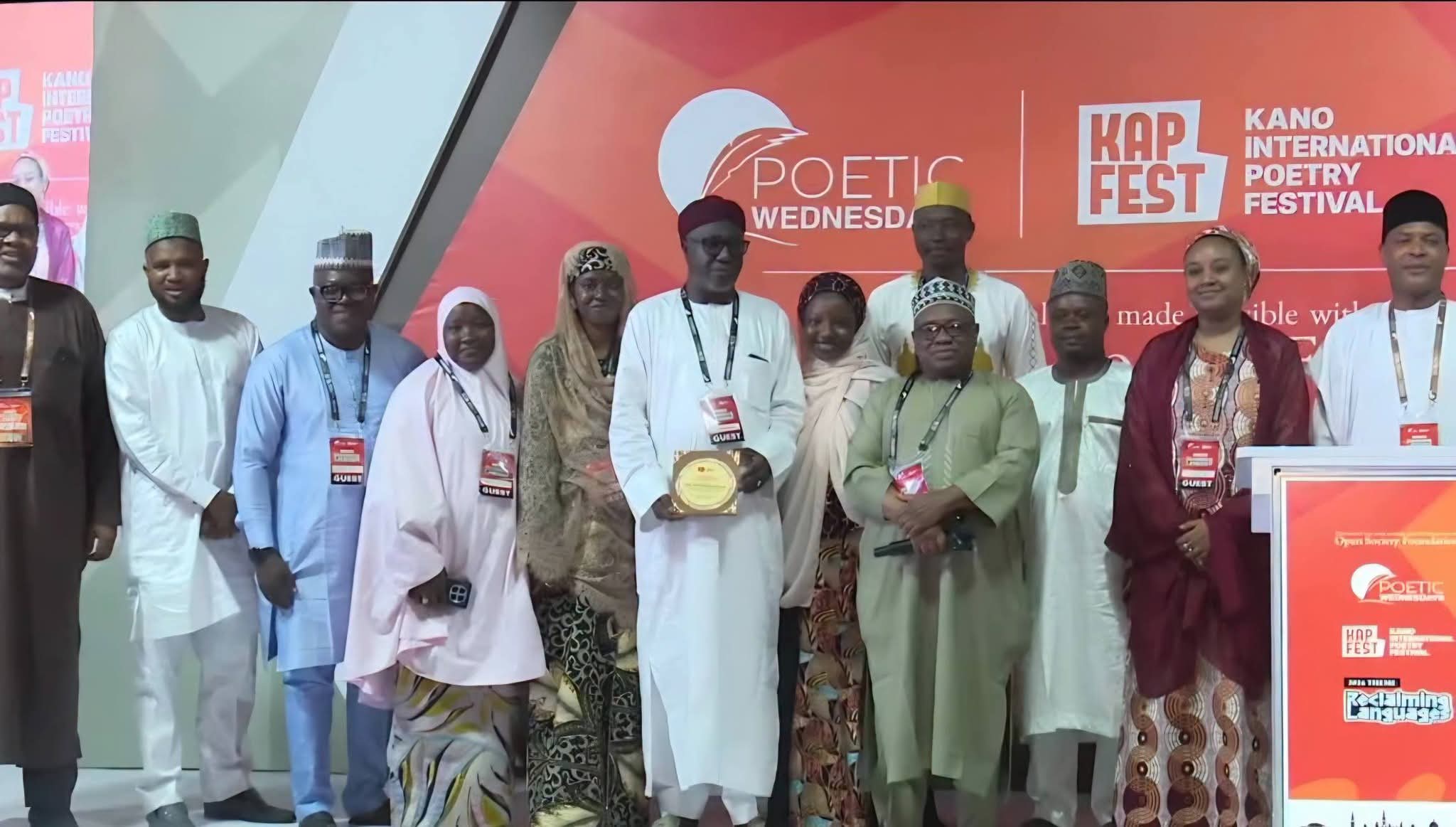
The third edition of the Kano International Poetry Festival (KAPFEST) brought together writers, poets, artists and cultural enthusiasts in Kano to promote indigenous languages, celebrate cultural diversity and create opportunities for young creatives.
The festival, organised by the Poetic Wednesdays Initiative, held from October 15 to 17, 2026, under the theme “Reclaiming Languages,” with activities aimed at encouraging literary expression, cultural exchange and the preservation of indigenous languages.
The main festival programme opened on Friday, October 16, at Amani Event Center, following a cultural showcase at Gidan Dan Hausa on Thursday.
The three-day event featured literary conversations, performances and exhibitions, culminating in a poetry slam competition with a N1 million prize for participants on the final day.
Speaking at the opening ceremony, the founder of Poetic Wednesdays Initiative, Salim Inusa, said the festival was established to provide young people with creative talent a platform to showcase their abilities, connect with artists from different parts of the world and improve their skills in writing, poetry and other artistic expressions.
Inusa said the initiative also sought to challenge perceptions that Northern Nigeria lacked young intellectuals and accomplished writers, noting that creatives from the region were often overlooked in national conversations about literary talent.
“Our aim is to change the narrative about the North that we do not have young people who think or writers. Whenever you see any list, you hardly find a writer from the region,” he said.
He added that KAPFEST was designed to promote Northern Nigerian creatives beyond the region and provide them with opportunities to engage with their international counterparts, rather than limiting their exposure to Southern Nigeria.
Inusa said the festival also sought to honour past generations of writers and cultural figures whose contributions had helped shape the region’s literary heritage, including Abubakar Imam and Bashir Tofa.
He said recognising their contributions to literature, history and culture was essential to sustaining the region’s creative legacy and inspiring emerging writers.
Also speaking, Anas Abba, an executive officer of the Kano State History and Culture Bureau, described poetry as an important component of Hausa literature and a longstanding means of communicating messages to different sections of society.
Abba said oral poetry had historically been used to convey messages to traditional rulers, Islamic scholars, wealthy individuals and ordinary members of the public, while also serving as a tool for educating young people.
According to him, Hausa poetry has addressed social issues, including idleness, while encouraging productive activities such as farming and promoting the Hausa language.
“Poetry is an important pillar of Hausa literature. We have different forms of oral poetry that have, for a long time, helped to communicate important messages to different people,” he said.
Abba said the festival’s growing acceptance demonstrated the potential of collaboration between cultural organisations and government institutions to promote literature and preserve indigenous traditions.
He added that the Kano State History and Culture Bureau would continue to support efforts to strengthen the festival and ensure that subsequent editions achieved even greater success.
One of the attendees, Abdurrazak Ibrahim from Kura Local Government Area of Kano State, said he was impressed by the participation of people from different ethnic backgrounds and their willingness to showcase their cultures in Kano, a city widely associated with Hausa heritage.
Ibrahim said the presence of participants from different communities, including Igbo, Yoruba and Ebira groups, demonstrated how cultural events could bring people together and encourage mutual understanding.
“I am really impressed by what I have seen because people from different ethnic groups are here in Kano, which you can call the headquarters of the Hausas, and everyone is showcasing their culture. It is a good thing,” he said.
He added that the festival could strengthen social relationships, promote cultural development and help preserve indigenous languages at risk of disappearing.
The festival featured literary conversations, panel discussions, performances and exhibitions involving artists working across Hausa, Fulfulde, Kanuri, Nupe, Shuwa Arab, Yoruba, Igbo, Ebira, Tiv, Igala and other languages, alongside Arabic, French, German and English.
The activities at Gidan Dan Hausa on Thursday featured a cultural showcase involving traditional music, poetry, drama and fashion, alongside workshops and literary sessions aimed at developing the skills of emerging writers.
The main programme on Friday also featured discussions on indigenous languages, translation, artist mobility and literary exchange, as well as Hausa literary and musical expression across generations.
A major highlight of the festival was the presentation of the KAPFEST Lifetime Achievement Award to Professor Ibrahim Malumfashi in recognition of his contributions to literature and culture.
The festival concluded on Saturday, October 17, with further conversations, performances and cultural exchanges, alongside a poetry slam competition in which participants competed for a N1 million prize.
The event also featured a closing performance by its headline act, Bash Amuneni.
The third edition coincided with the 10th anniversary of the Poetic Wednesdays Initiative, which began as an online hashtag before developing into a platform for poetry, literature, performance, cultural exchange and education.