By Sabiu Abdullahi
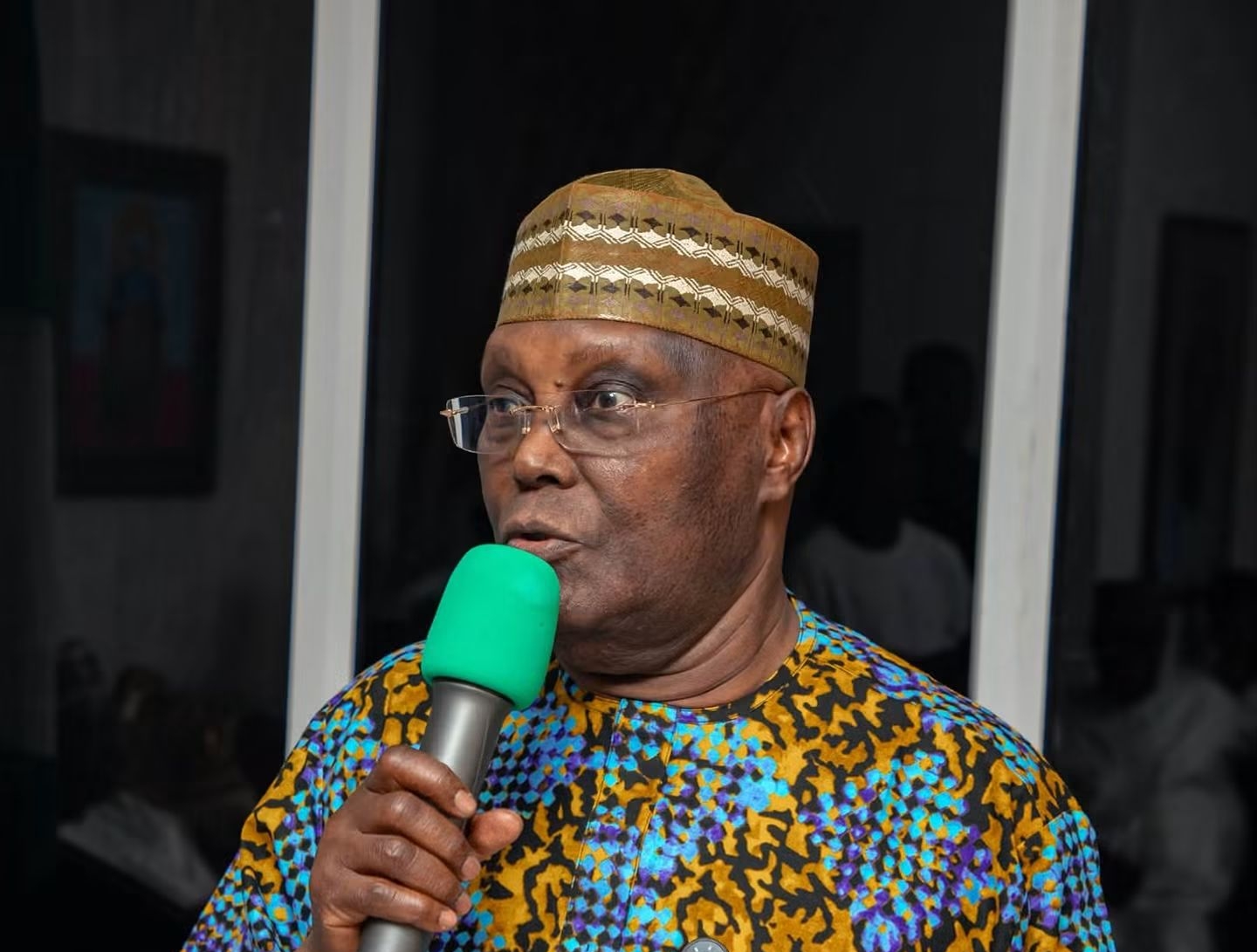
Former Vice-President and African Democratic Congress presidential candidate, Atiku Abubakar, has challenged President Bola Tinubu’s claim that Nigeria is moving towards widespread prosperity, saying the economic reality faced by many Nigerians remains difficult.
Atiku made the criticism in his Independence Day address on Thursday, October 1, 2026, after Tinubu told Nigerians that the country’s economic outlook had improved after three and a half years of his administration.
Tinubu said Nigeria’s economy had grown by more than four per cent in 2026, with both the oil and non-oil sectors contributing to what he described as a period of stable growth. He also declared that the government’s focus had shifted from economic stabilisation to “shared and widespread prosperity.”
Responding to the President’s position, Atiku questioned how Nigerians could experience prosperity while many households continue to struggle with the cost of food, healthcare, transportation and other basic necessities.
He also criticised the administration’s economic reforms, particularly the removal of fuel subsidy and its approach to taxation, arguing that the measures had increased pressure on households and businesses.
Atiku stated, “And beyond the market, our nation is bleeding. Armed groups have killed thousands and driven families from their communities. Farmers fear their fields. Parents fear for children in their classrooms. Families dread the call demanding ransom for someone they love.
“A government that cannot make life affordable and cannot protect life has failed the two tests that matter most to its people.
“This is not the Nigeria our founders struggled to set free. But I will not ask you to surrender to despair. Despair is not a strategy. We have a path to recovery, and we must take it.
“Bola, where is this prosperity? Bola says inflation has fallen. A slower rise in prices does not restore what families have lost. He cites growth and rising exports. Nigerian businesses deserve credit for what they have achieved. But growth must improve lives. It cannot be a certificate of success that government awards itself while citizens struggle to survive.
“Bola, you call Nigeria a patient with cancer. After three years of your treatment, why is it harder for Nigerians to buy food, pay for medicine or even get to work? Why does your government have more money while the people can afford less?”
The former Vice-President also questioned the benefits Nigerians have received from the removal of fuel subsidy. He said citizens were more concerned about when the savings from the policy would translate into lower living costs.
Atiku proposed a production subsidy tied to fuel refined within Nigeria as part of his alternative economic plan.
He said, “My fellow Nigerians, I will not ask you to accept another promise without asking how it would work. Working with my running mate and our partners in the African Democratic Congress, I will pursue a clear purpose: make life affordable again.
“We will introduce a capped, budgeted production subsidy tied to verified fuel refined in Nigeria, including fuel from modular refineries. Imported petrol will not qualify. The benefit must reach consumers through lower pump prices. We will publish the costs, independently audit the payments and cut government waste to help fund the programme.
“The principle is simple: produce here, refine here, create jobs here and pay less here. If Bola disagrees, he should answer the proposal on its merits. Calling relief an addiction will not lower the price of petrol.
“Bola, your speech is full of ‘we will.’ We will make farming cheaper. We will power factories. We will create jobs. We will bring down prices. You have been President for more than three years. Nigerians are entitled to ask what you have done with the time already given to you.”
Atiku also raised concerns about government loan schemes, saying young Nigerians needed decent-paying jobs rather than loans to cope with rising living and education costs. He asked the government to explain the results of such programmes, their beneficiaries and the repayment obligations attached to them.
On the management of the national budget, he said:
“The confusion extends to your budgets. You have just signed an extension keeping the 2025 budget in operation until the last day of 2026.
“The 2026 budget exists alongside it. Soon, your government will ask Nigerians to examine a 2027 budget. How many budgets must be open at once before you can tell the country what was funded, what was completed and what remains unpaid? A budget should be a timetable for delivery, not a ball passed from one year to the next.
“Bola says his government reforms have a human face. Nigerians have spent three years looking for that face in the market, at the hospital and on the road to work. What they have found is deepening poverty, healthcare they cannot afford, school fees they struggle to pay, food beyond their reach and electricity bills that consume what little they earn.
“In communities under attack, people fear for their lives. A government cannot claim a human face while making it harder for Nigerians to eat, learn, seek treatment and stay alive.”
Atiku further criticised the government’s claim that lower production costs would eventually reduce prices. He said farmers and manufacturers continued to face insecurity, high electricity costs and other challenges that raise the cost of production.
He also challenged the government’s claims about cheaper transportation and called for details of the routes and fares covered by the initiative.
Atiku said, “Bola, you have put the weight of Nigeria’s economic well-being on a skateboard. Families are struggling to keep their balance, businesses are falling, and you stand in Aso Rock declaring that the journey to prosperity is going smoothly.
“In your Independence Day speech, you found time to attack my plan to make life affordable. But you did not tell commuters which additional routes became cheaper today, what the fares were before, what they cost now, or how many people can use them. Lower fares on a few routes are welcome, but they do not solve the transport crisis facing the rest of the country.
“Bola, was this a Yahoo Yahoo promise or a hurried reply to my production subsidy proposal? You advertised cheaper transport from October 1. Today is October 1, and commuters are still asking where they can find the lower fares. Show them the routes and the prices. Nigerians cannot board an announcement.
“Bola, publish the routes, the fares and the number of people benefiting. Show Nigerians the cheaper journey you promised.”
The ADC candidate also addressed political rights and the rule of law. He called for due process in the cases of Sheikh Sani Khalifa Zaria, former Kaduna State Governor Nasir El-Rufai and Nnamdi Kanu.
He also renewed his call for the release of five young Nigerians arrested in Borno State over their alleged use of “Tinubu Must Go” T-shirts.
Atiku concluded his address with an appeal for Nigerians to demand accountability through democratic means.
He stated, “We have looked back. We have counted what fuel costs, what food costs and what a wage can still buy. We have seen families waiting for relief while government asks for more patience. We have heard promises of prosperity from a President who cannot show millions of Nigerians where to find it.
“Our founders did not win sovereignty so that a few could prosper while millions merely survive.
“Their promise lives in ordinary hopes: a meal a family can afford, a safe road home, a child free to learn, and work that offers a path to a better life. Those hopes are neither extravagant nor beyond Nigeria’s reach.
“Bola, the Promised Land is not in sight merely because you can see it from the villa. Nigerians must be able to reach it. We have chosen a different course, peacefully and together, through the power of our votes; the message is clear: Tinubu must go.”
Tinubu, in his Independence Day address, defended his administration’s economic policies and said the reforms had improved Nigeria’s economic outlook. He cited economic growth, lower inflation from its peak, improved foreign reserves and increased non-oil export revenue as indicators of progress.