By Salmanu Isah Darazo
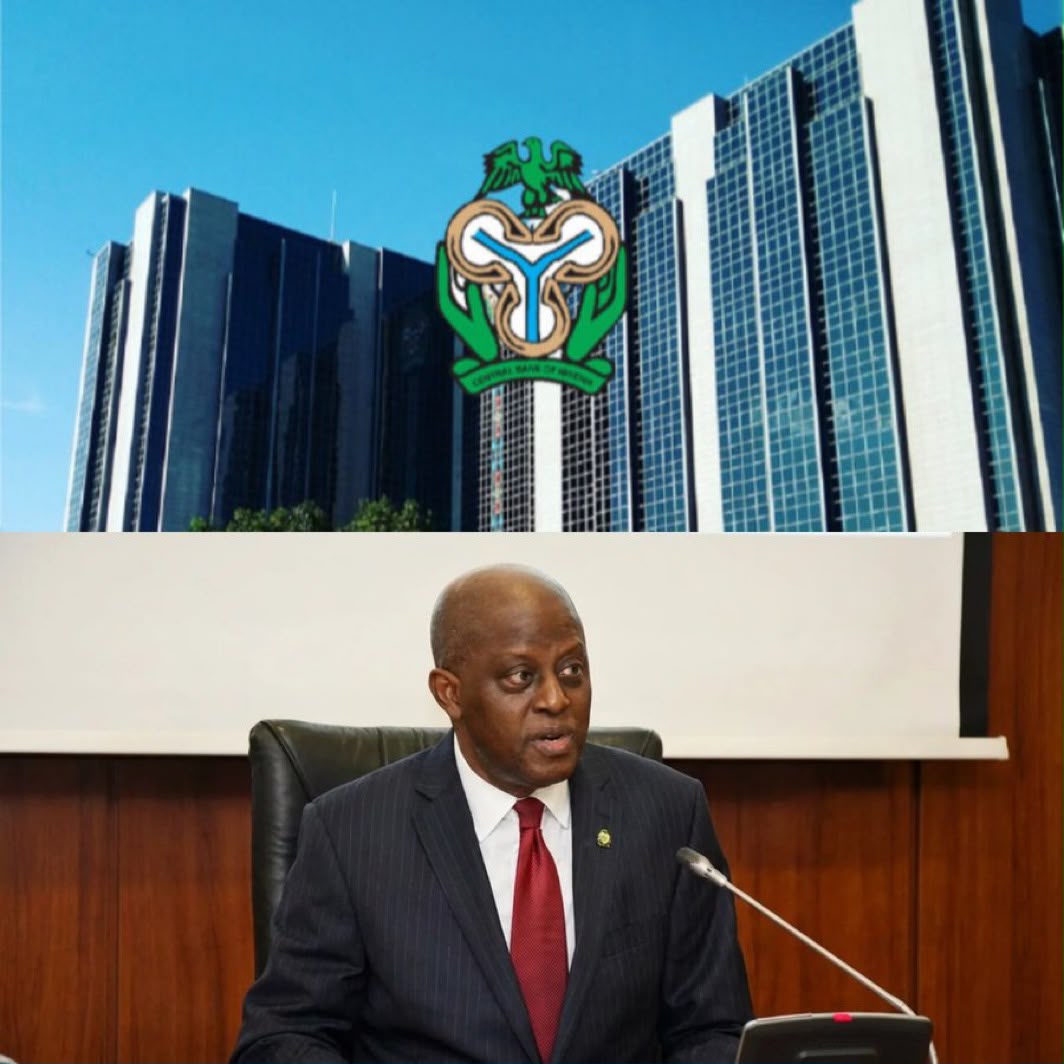
Three years after Olayemi Cardoso assumed office as Governor of the Central Bank of Nigeria (CBN), the apex bank has undergone a period of extensive institutional and policy reforms, with the emphasis increasingly placed on financial-system resilience, market transparency, stronger regulation and the modernisation of Nigeria’s financial architecture.
Mr. Cardoso assumed office on September 22, 2023, at a particularly demanding period for Nigeria’s monetary and financial system. His tenure has subsequently been marked by a succession of reforms designed to strengthen the banking sector, deepen the foreign-exchange market, modernise payment infrastructure and reinforce confidence in the financial system. The fact sheet documenting his tenure also notes commendation from President Bola Ahmed Tinubu and international recognition, including the Central Bank of the Year Award by Central Banking, London.
Perhaps the most consequential development has been the completion of the banking-sector recapitalisation exercise. By March 31, 2026, 33 banks had met the revised minimum capital requirements, collectively raising approximately ₦4.65 trillion in fresh capital. About 72.55 per cent of the funds were sourced domestically. Beyond the headline figure, the exercise represents an attempt to create a banking system with greater capacity to withstand shocks and provide stronger support for economic activity.
The reform agenda has also extended into corporate governance and financial inclusion. New succession requirements introduced for Domestic Systemically Important Banks were designed to strengthen leadership continuity and governance, while the CBN’s approval of the Bank of Industry’s Non-Interest Banking Window opened another channel for alternative and potentially more inclusive financing. These measures indicate that the reform programme is not limited to capital adequacy but also addresses institutional continuity and the diversity of financing options available within the economy.
On the foreign-exchange front, the CBN has pursued a more structured and transparent market framework. The fourth edition of the Foreign Exchange Manual, launched in May 2026, was designed to improve transparency, efficiency and credibility in FX operations while reinforcing market-driven principles. At the retail end, licensed Bureau de Change operators were given structured access to foreign exchange through authorised dealer banks, backed by an FX BDC Purchase Tracker intended to strengthen compliance and real-time oversight.
Other FX reforms have targeted the flow and monitoring of foreign exchange from major sources. International oil companies were permitted to repatriate 100 per cent of export proceeds through authorised dealer banks, while new settlement requirements for International Money Transfer Operators were introduced to improve the transparency and traceability of diaspora remittances. Additional crude-oil export terminals were also allocated to strengthen monitoring and compliance across the oil and gas export chain.
The payments ecosystem has equally become a major front in the CBN’s reform programme. The Payments System Vision 2028, launched in June 2026, provides a strategic roadmap built around interoperability, security, inclusion, innovation, trust and collaboration. Alongside this broader strategy, revised agent-banking guidelines, Point-of-Sale geo-fencing and dual-connectivity requirements, as well as enhanced instant-payment security measures, have sought to improve reliability, consumer protection and the security of Nigeria’s rapidly expanding digital-payment environment.
Consumer protection and the fight against financial fraud have also received greater regulatory attention. The revised cash policy introduced new withdrawal thresholds while removing restrictions and charges on cash deposits. Financial institutions were directed to withdraw misleading advertisements, while banks were required to strengthen rapid-response mechanisms against electronic fraud. The strengthened BVN and watch-list framework, the Cybersecurity Self-Assessment Tool and automated standards for monitoring money laundering, terrorist financing and proliferation financing further demonstrate the Bank’s attempt to move financial-system supervision toward more proactive and technology-driven enforcement.
Another important dimension is the modernisation of Nigeria’s financial markets. The introduction of the Nigerian Overnight Financing Rate in April 2026 created a transaction-based overnight benchmark intended to improve price discovery, market transparency, monetary-policy transmission and risk management. Reforms to fixed-income trading and settlement infrastructure, alongside changes to discount-window and liquidity-market arrangements, have similarly sought to make financial markets more efficient and strengthen the transmission of monetary policy.
The reserve position provides another significant marker in the reform story. In 2026, locally sourced gold refined to international LBMA Good Delivery standards was added to Nigeria’s external reserve assets, providing another layer of diversification. More significantly, external reserves crossed the US$50 billion threshold — described in the fact sheet as the highest level in approximately 17 years. The development represents a stronger external buffer and is presented as part of the broader improvement in foreign-exchange-market conditions.
Taken together, the reforms suggest that the Cardoso era at the CBN has been defined less by a single headline intervention than by an attempt to rebuild several interconnected parts of Nigeria’s financial architecture. Banking recapitalisation addresses institutional resilience; FX reforms target market transparency; payments reforms respond to digitalisation; cybersecurity and consumer-protection measures address emerging risks; while financial-market reforms seek to improve the machinery through which monetary policy operates.
The significance of the three-year milestone, therefore, lies not simply in the number of policies introduced but in whether these reforms can be sustained and translated into durable economic outcomes. A stronger banking system, deeper financial markets, more transparent FX operations, safer digital payments and larger external buffers provide important foundations. The next phase will ultimately be judged by how effectively those foundations support investment, credit, financial inclusion and broader economic stability.
Three years into Cardoso’s tenure, the reform agenda has clearly moved beyond crisis management toward institutional rebuilding. Its enduring test will be implementation: whether the new rules, systems and capital buffers become embedded strongly enough to make Nigeria’s financial system more resilient, transparent and capable of supporting long-term economic growth.
Salmanu Isah Darazo is a publisher, analyst and editor. He writes from Bauchi, and can be reached via Salmanudrz@gmail.com