By Sabiu Abdullahi
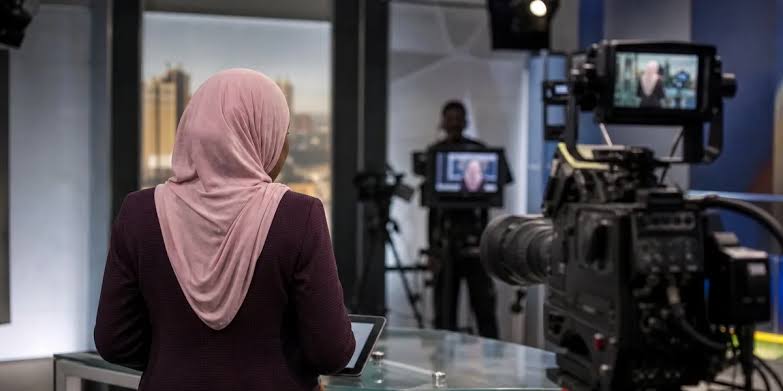
Award-winning Nigerian journalist Zainab Bala, a former presenter of GIST Nigeria, has recounted the difficulties she said she faced after wearing her hijab while presenting the current affairs programme jointly produced by BBC Africa and Channels Television.
Bala, who spent about nine months with the BBC, spoke about her experience during an appearance on the second episode of The HSM Tribe, a YouTube platform focused on Muslim women. The episode was aired on August 28, 2026.
According to Premium Times newspaper, she said the issue began after she was recruited in 2023. She said she wore her hijab during the recruitment interview and was asked whether she would continue to cover her head if she got the job.
“I said yes because this is how I dress,” she said.
Bala later moved from Abuja to Lagos after receiving an offer from the BBC. She underwent training and subsequently recorded her first episode at the Channels Television headquarters in Lagos.
She said the programme was not broadcast for several weeks, while episodes presented by another member of the team continued to air.
According to Bala, her editor later informed her that discussions had taken place with Channels Television over her appearance.
“The reason why my programme was not aired was that they had been having a back-and-forth with Channels, and that’s because Channels said they do not project a hijab-wearing person on their screens,” she said.
She said the situation made her feel “stereotyped” and demoralised.
Bala said she had expected the matter to have been resolved before her recruitment because she had already made her position clear during the interview.
“I don’t think this is something to debate about,” she said.
She said the BBC later sought an arrangement with Channels Television that would enable her to remain on the programme while wearing a head covering, although she alleged that certain restrictions were attached to her appearance.
Bala said she initially considered leaving the programme. She eventually decided to stay because she believed her continued presence could create opportunities for other Muslim women.
“I stayed because I realised that this was deeply rooted, and there hasn’t been any conversation around this,” she said.
During her time on the programme, she presented several editions and said her background as a Muslim woman from northern Nigeria influenced some of the subjects she brought to the show. She particularly highlighted stories involving women who challenged stereotypes associated with northern Nigeria.
Bala Cites Other Reasons For Leaving
The journalist said the disagreement over her hijab was not the only factor behind her departure from the BBC.
She alleged that she experienced what she described as “mental and emotional bullying” from her editor. Bala said the experience contributed to her decision to leave, despite her earlier intention to move between BBC teams and continue her career with the organisation.
“I just left for my peace of mind. It was the most depressing nine months of my life,” she said.
She also alleged that other members of the team had raised complaints about the editor’s conduct.
Channels Television Denies Discrimination Claim
Channels Television rejected the allegations through its Assistant General Manager, Operations, Kingsley Uranta.
“For clarity, Channels Television does not discriminate based on religion. We respect Nigeria’s religious diversity and are committed to the principles of fairness, inclusivity, and equality that underpin our journalism and organisational culture,” Mr Uranta noted
Uranta also disputed Bala’s account that Channels Television told the BBC it did not allow people who wore hijabs to appear on its screens.
He further rejected the allegation that Bala was asked to change her appearance so that she would not look “too Muslim”.
BBC Says Hijab-Wearing Presenters Appear On Its Programmes
The BBC also responded to questions about Bala’s account of her recruitment, the delay in airing her first programme and whether restrictions existed on presenters wearing hijabs.
Robin Miller, Head of Communications, BBC News, responded on behalf of the organisation.
Miller initially questioned the premise of the enquiry, pointing out that the BBC had evidence that Bala had appeared on GIST Nigeria wearing her hijab.
“This contradicts much of what you have put to us in your questions below,” he said.
The publication subsequently clarified that its questions concerned the form of hijab Bala wore, including the discussions surrounding her appearance and allegations that she was asked not to “look too Muslim”.
The BBC was also asked about Bala’s allegation of mental and emotional bullying by her editor.
On September 10, Miller provided a photograph of Bala wearing a hijab while presenting a report, alongside the BBC’s response.
“The BBC strives to be an inclusive workplace where every colleague feels respected, supported and able to do their best work.”
He said BBC presenters and correspondents regularly appear on television in hijabs, “and this includes whilst presenting GIST Nigeria.”
“We do not comment on individual HR matters; however, as a general principle, we take complaints about bullying very seriously, and where allegations are made, they are fully investigated,” he added.
Bala Disputes BBC’s Evidence
After receiving the photograph from the BBC, Bala told Premium Times that the image did not show her presenting GIST Nigeria.
“This is a report, not a presentation of the show,” she said.
She also said she did not believe footage existed that showed her presenting the programme in the full hijab she normally wore.
Bala acknowledged that other Muslim women had presented BBC programmes while wearing hijabs. She suggested, however, that her circumstances may have been different because GIST Nigeria was jointly produced with Channels Television.
“I am hoping other Muslim women who come to these platforms are allowed to present shows without making compromises,” she said.
‘They Said They Don’t Project Hijab-Wearing Person’, Journalist Recounts BBC-Channels TV Ordeal

ByAdmin
16 September 2026