By Maji Bappa Maina
Governments are often judged by what they build.
But the more important question is what they are able to sustain.
For Governor Mai Mala Buni, governance appears to extend beyond the boundaries of projects, institutions and even the state itself.
His recent engagement in Chad provides another dimension to a governance philosophy shaped by continuity, institutional strengthening, peacebuilding, post-conflict recovery, regional cooperation and inclusive development.
The report of his visit to Nigerian refugees in Kaya, Chad, may appear to be simply a humanitarian engagement. But viewed through the wider lens of governance, it represents something deeper.
Governance does not end where a political boundary begins when the problems themselves cross that boundary.
Insecurity does not recognise borders. Neither does displacement, climate pressure, trade or the movement of people.
The Lake Chad region therefore requires more than individual government interventions. It requires institutions that can cooperate across borders and leadership capable of seeing the region as an interconnected system.
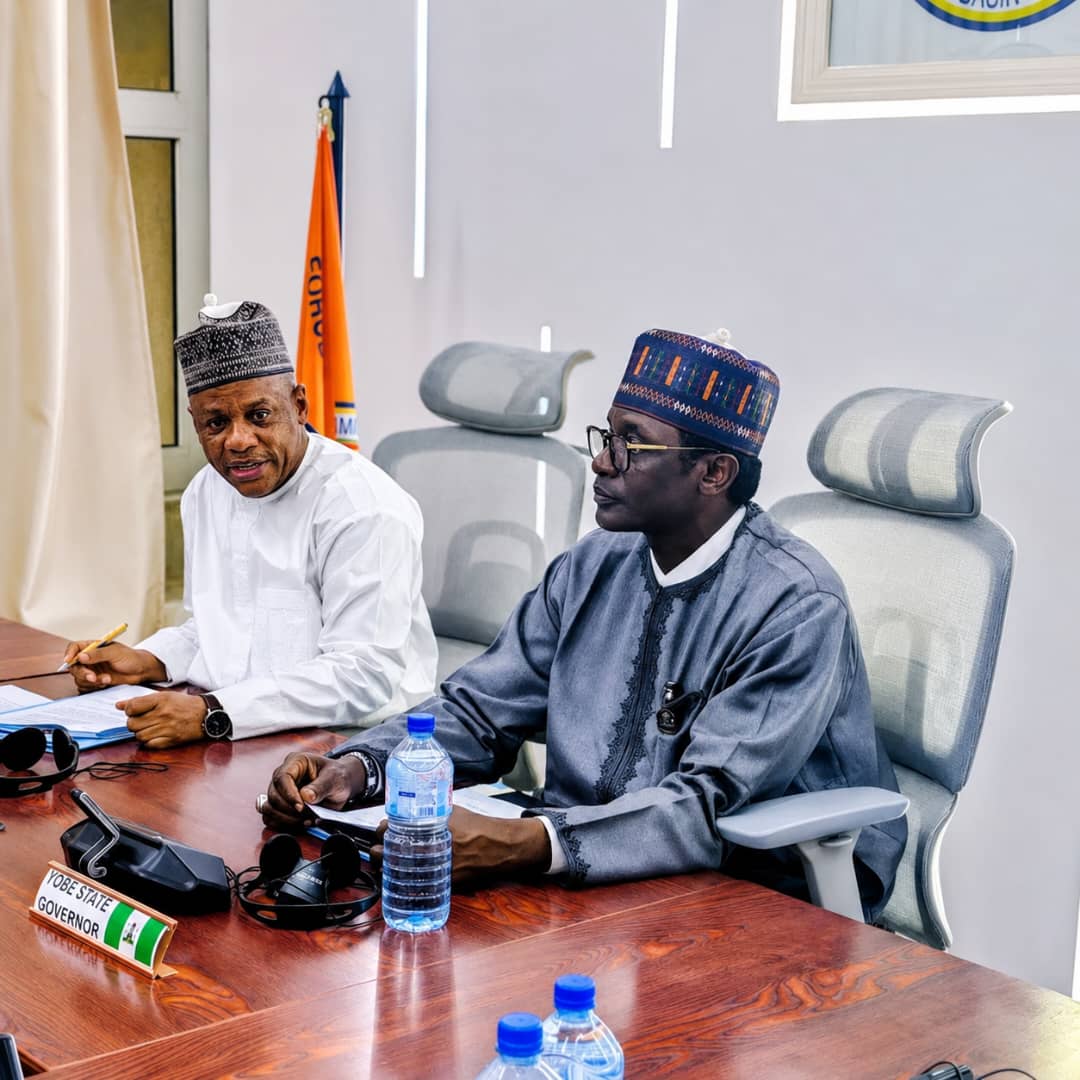
This is where Governor Buni’s role as Chairman of the Lake Chad Basin Governors’ Forum becomes significant.
His visit to the Nigerian refugees in Kaya was not merely about seeing displaced people. It was about listening to them, understanding their circumstances and discussing pathways towards sustainable solutions.
When the refugees described him as the first Nigerian government official to visit them, the significance went beyond protocol.
Presence itself became a form of governance.
But the engagement did not stop at sympathy. The discussion around livelihoods, peaceful coexistence and voluntary return demonstrates an important principle of humanitarian governance: support should not merely sustain vulnerability; it should help people move towards dignity, productivity and resilience.
The Governor’s engagement with the Chadian authorities and the Lake Chad Basin Commission further reinforces this approach.
The emphasis on sustainable security, economic growth, institutional partnership and opening waterways reflects an understanding that the future of the Lake Chad region cannot be secured through security measures alone.
Security creates the space for development.
Development strengthens stability.
Stability creates the conditions for peace to endure.
This connects directly with the broader governance philosophy of the Buni Administration.
A road is more than infrastructure when it connects communities and markets.
Agricultural support is more than an intervention when it enables people to become producers and employers.
And humanitarian assistance becomes more meaningful when it forms part of a pathway towards stability, livelihood and reintegration.
In each case, development becomes an ecosystem rather than a collection of projects.
Perhaps this is the deeper story behind the Buni Administration, not simply what has been constructed or commissioned, but the attempt to build systems capable of moving from recovery to stability, from stability to development, and from development to sustainability.
The journey is neither instant nor complete.
Governance is always a work in progress.
But when leadership begins to think beyond individual projects and toward institutions, systems, communities and generations, development acquires something more valuable than visibility.
It acquires continuity.
And perhaps the strongest measure of leadership is not how loudly achievements are announced, but how quietly the systems created continue to improve people’s lives long after the announcement has ended.
That is when governance becomes more than administration.
It becomes a philosophy.
Maji Bappa Maina is a Political Writer, PhD Researcher, Voice of Development, Leadership & Public Insight.