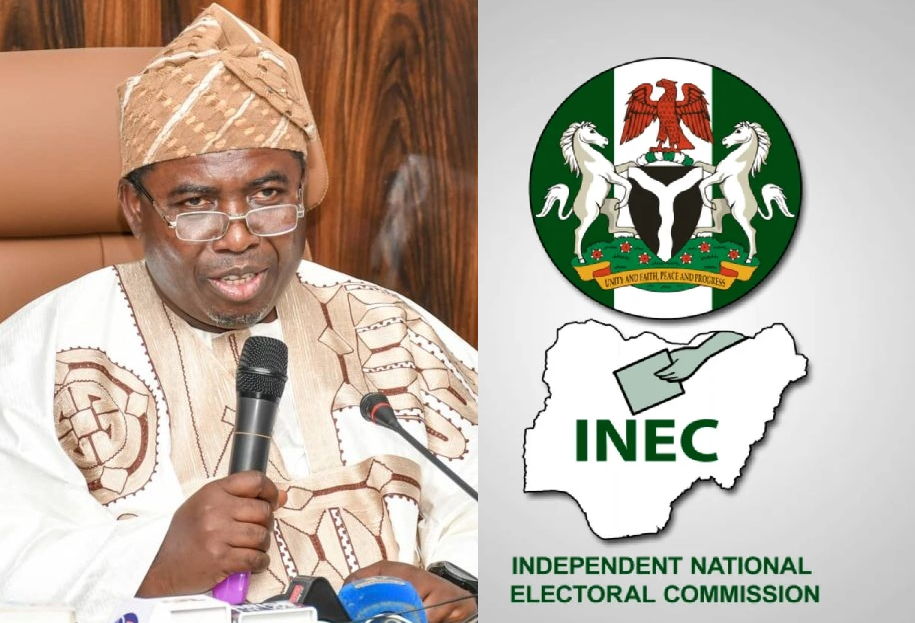
By Sabiu Abdullahi
The Chairman of the Independent National Electoral Commission (INEC), Joash Amupitan, has called for a review of the commission’s funding structure. He said direct funding from the federation account would strengthen INEC’s independence and improve the credibility of elections in Nigeria.
Amupitan made the call on Thursday in Abuja during the public presentation of Shadows: Protest Essays on Africa’s Most Consequential Country (1999–2023), a two-volume book written by THISDAY Managing Director, Eniola Bello.
He argued that although the Constitution places INEC on the first-line charge, the existing funding arrangement does not provide the commission with genuine financial autonomy because it still depends on the annual budget and appropriation process.
> “Experience over the years has shown that as long as INEC is still subject to the normal envelope system and the processes of appropriation, having to go to the national assembly, it is very difficult to operate in such a situation without wasting your time,” Amupitan said.
The INEC chairman explained that the commission’s responsibilities go beyond conducting presidential and National Assembly elections. He noted that it also conducts governorship and state assembly elections, registers and regulates political parties, and maintains the national register of voters.
According to him, governorship and state assembly elections are more expensive to conduct than presidential and National Assembly polls. He said this makes the current funding model inadequate.
> “It is for this reason we feel that although the Constitution tried to place INEC on the first-line charge, it is not strong enough,” the INEC chairman said.
> “INEC should come as part of the federation account so that we can have seamless operations and what we call operational efficiency.”
Amupitan also called for further amendments to the Electoral Act to strengthen INEC’s supervisory powers over political parties. He said greater authority would help ensure parties comply with their constitutions, the Nigerian Constitution, and the Electoral Act. He added that such reforms could reduce the number of pre-election court cases.
He disclosed that the commission is considering a mediation mechanism that would resolve internal party disputes within 3 months instead of lengthy litigation.
The INEC chairman further proposed that all disputes involving political parties should be concluded at least 1 year before a general election to prevent last-minute legal battles from affecting the electoral process.
The call comes months after President Bola Tinubu signed the Electoral Act 2026 (Amendment) Bill into law and amid ongoing legal and legislative developments aimed at reforming Nigeria’s electoral system.