By Uzair Adam
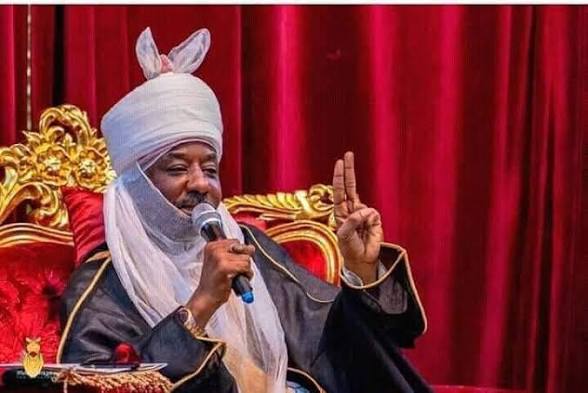
The 16th Fulani Emir of Kano, Muhammadu Sanusi II, has questioned the Federal Government’s continued reliance on borrowing despite the removal of the petrol subsidy.
Speaking in an interview aired by News Central TV on Friday, the former Governor of the Central Bank of Nigeria said that although the removal of fuel subsidy and the liberalisation of the exchange rate were necessary, poor timing and weak fiscal discipline risk eroding their benefits.
According to the monarch, Nigeria’s long-standing practice of supporting foreign refineries while domestic refining capacity remained underutilised reflected a systemic failure that required urgent correction.
“I have always said the subsidy regime was unsustainable. We cannot continue supporting foreign refineries. We’re an oil-producing country, yet we keep refineries open abroad while neglecting our own,” Sanusi said.
He, however, expressed optimism about recent developments in local production, noting a shift from heavy dependence on imported petroleum products to export capacity.
“Today, we have a situation where we have our own domestic refinery. We’re not importing petroleum products. We’re even exporting to Europe, and this is very good for the economy,” he added.
While supporting the policy direction, the former apex bank chief raised concerns over the sequencing and timing of the reforms, noting that critical supporting measures were not implemented alongside them.
“Artificial exchange rates, especially when you’re printing money, cannot work. There was always going to be a devaluation,” he said, adding that subsidy removal and exchange rate liberalisation were sound interventions but required proper coordination.
He argued that implementing exchange rate liberalisation within a loose monetary environment accelerated the naira’s depreciation.
“It’s not enough to say subsidy was removed. That had to happen, especially when all revenue was going into debt servicing.
“But if you remove subsidy and liberalise exchange rates before tightening money supply, the naira will fall sharply. That was a timing issue,” he explained.
Sanusi further challenged the government’s continued borrowing despite savings from subsidy removal.
“We’ve removed the subsidy, so we should begin to see fiscal consolidation. You cannot eliminate waste and still keep borrowing.
“If the subsidy is gone and the funds are available, why are we still borrowing? What exactly are we borrowing for?” he asked.
His remarks come amid plans by the administration of Bola Tinubu to increase borrowing, including a proposed N29.20 trillion total borrowing for 2026 after an upward revision of N11.31 trillion.
The president also recently sought Senate approval for a fresh $516 million loan to fund the Sokoto–Badagry Superhighway project.