By Sabiu Abdullahi
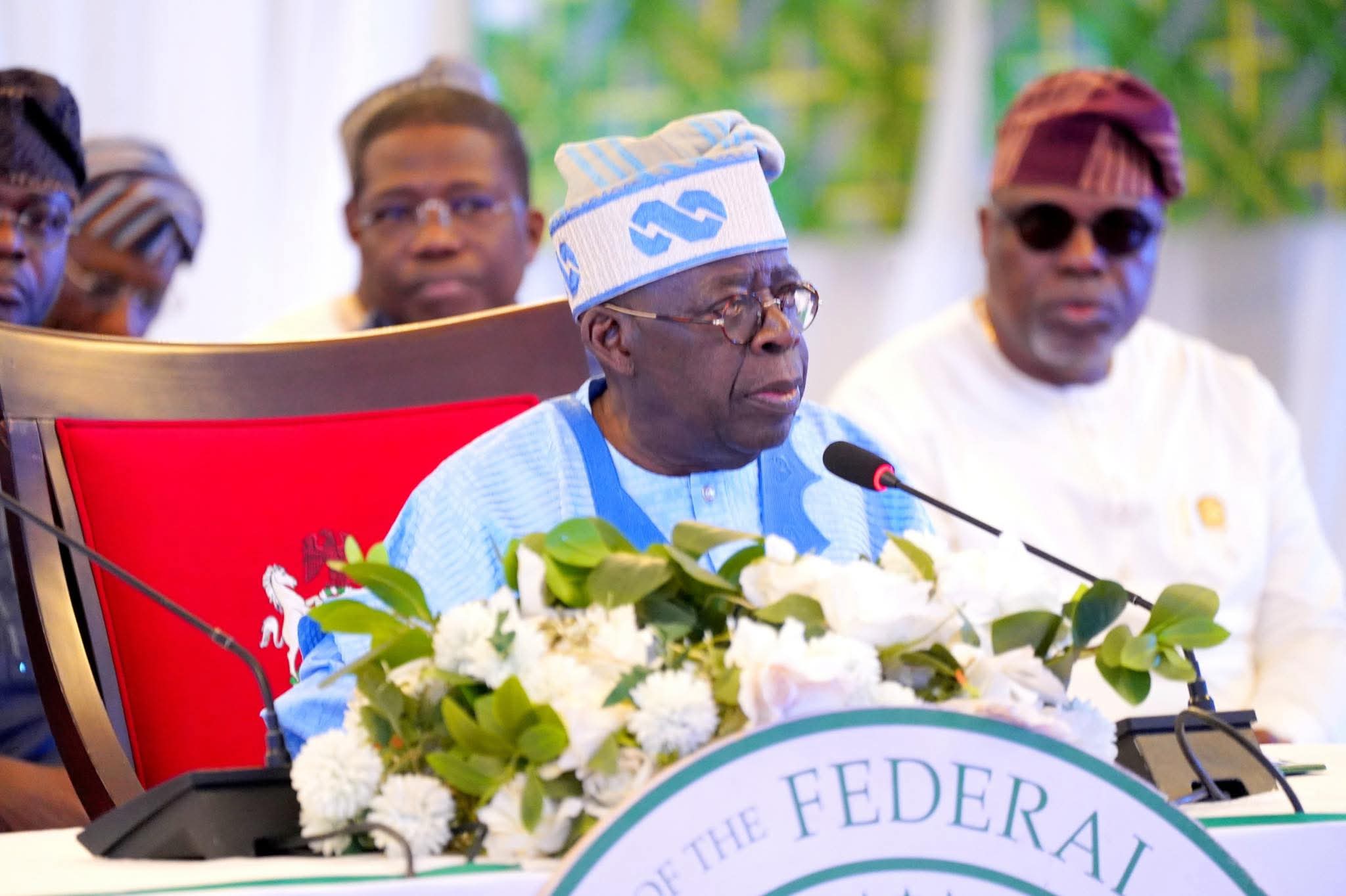
President Bola Tinubu has signed a new executive order directing the direct remittance of oil and gas revenues into the Federation Account, in a move aimed at protecting national earnings and improving fiscal transparency.
This is contained in a statement signed by Bayo Onanuga, Special Adviser to the President on Information and Strategy, today.
According to Onanuga, the directive, issued under Section 5 of the Constitution of the Federal Republic of Nigeria (as amended), is designed to block revenue leakages, cut wasteful spending, and dismantle overlapping structures within the petroleum sector. The administration said the policy will channel more resources toward national development priorities.
The order draws authority from Section 44(3) of the Constitution, which places ownership and control of all minerals, mineral oils, and natural gas in Nigeria under the Federal Government, including resources located in territorial waters and the Exclusive Economic Zone.
According to the State House, the measure seeks to restore constitutional revenue allocations due to federal, state, and local governments. Officials argued that the Petroleum Industry Act (PIA) of 2021 created fiscal and structural channels that reduced remittances through multiple deductions and charges.
Under the existing framework, NNPC Limited retains 30 percent of Federation oil revenue as a management fee from Profit Oil and Profit Gas derived from Production Sharing Contracts, Profit Sharing Contracts, and Risk Service Contracts. The company also keeps 20 percent of its profits for working capital and future investments.
Government officials maintained that the additional 30 percent management retention is unjustified because the 20 percent profit retention already supports operational needs.
The statement further explained that NNPC Limited deducts another 30 percent of profit oil and gas as the Frontier Exploration Fund under Sections 9(4) and (5) of the PIA. Authorities expressed concern that such a large allocation to exploratory activities could create idle cash reserves and encourage inefficient spending, especially when public funds are required for security, education, healthcare, and energy transition programmes.
The government also reviewed the Midstream and Downstream Gas Infrastructure Fund (MDGIF), financed through gas flaring penalties under Section 104 of the PIA. It noted that Section 103 of the same law had already established an Environmental Remediation Fund for host communities affected by petroleum operations. Officials described the dual funding structure as duplicative.
Authorities said these deductions collectively divert more than two-thirds of potential oil revenue away from the Federation Account. They linked declining net oil inflows to the present deduction regime and fragmented oversight system.
The executive order introduces reforms to remove overlapping deductions, particularly the 30 percent allocations tied to profit-sharing arrangements. The goal is to ensure that revenues due to the Federation are fully remitted to support national obligations across all tiers of government.
President Tinubu also raised structural concerns about NNPC Limited’s role as a concessionaire in Production Sharing Contracts. The government believes the present arrangement allows the company to influence operating costs while functioning as a commercial entity. Officials said this dual role creates competitive imbalances and weakens its transition into a fully commercial operator under the PIA.
The order therefore establishes measures to curb financial leakages, improve transparency, and reposition NNPC Limited strictly along commercial lines while protecting public revenue.
The President described the reforms as urgent due to their implications for national budgeting, debt management, economic stability, and citizens’ welfare. He added that his administration will conduct a comprehensive review of the Petroleum Industry Act in consultation with stakeholders to address fiscal and structural gaps.
Under the gazetted order, NNPC Limited will no longer manage the 30 percent Frontier Exploration Fund. All profit allocations previously assigned to the fund from production sharing and related contracts will now be transferred directly to the Federation Account.
The company will also cease collecting the 30 percent management fee on profit oil and gas meant for the Federation.
In addition, all oil and gas operators under production sharing arrangements must remit Royalty Oil, Tax Oil, Profit Oil, Profit Gas, and all other government-due revenues straight to the Federation Account with effect from February 13, 2026.
The President has also halted payments of gas flaring penalties into the MDGIF. Going forward, proceeds from such penalties will be paid into the Federation Account. Any spending from the MDGIF must comply with existing public procurement regulations.
Tinubu approved the creation of a joint project team to coordinate integrated petroleum operations. The designated commission will interface with license holders where upstream and midstream activities are combined.
An Implementation Committee has also been constituted to supervise execution of the order. Members include the Minister of Finance and Coordinating Minister of the Economy, the Attorney-General of the Federation and Minister of Justice, the Minister of Budget and National Planning, and the Minister of State for Petroleum Resources (Oil).
Other members are the Chairman of the Nigeria Revenue Service, a representative of the Ministry of Justice, the President’s Special Adviser on Energy, and the Director-General of the Budget Office of the Federation, who will serve as committee secretariat.
Tinubu signs order mandating direct remittance of oil, gas revenues to federation account

ByAdmin
18 February 2026