By Sabiu Abdullahi
The World Bank has described Nigeria as a country increasingly cited around the world as a model of steady and credible reform leadership.
This is contained in a statement signed by Bayo Onanuga, Special Adviser to the President on Information and Strategy, dated February 3, 2026.
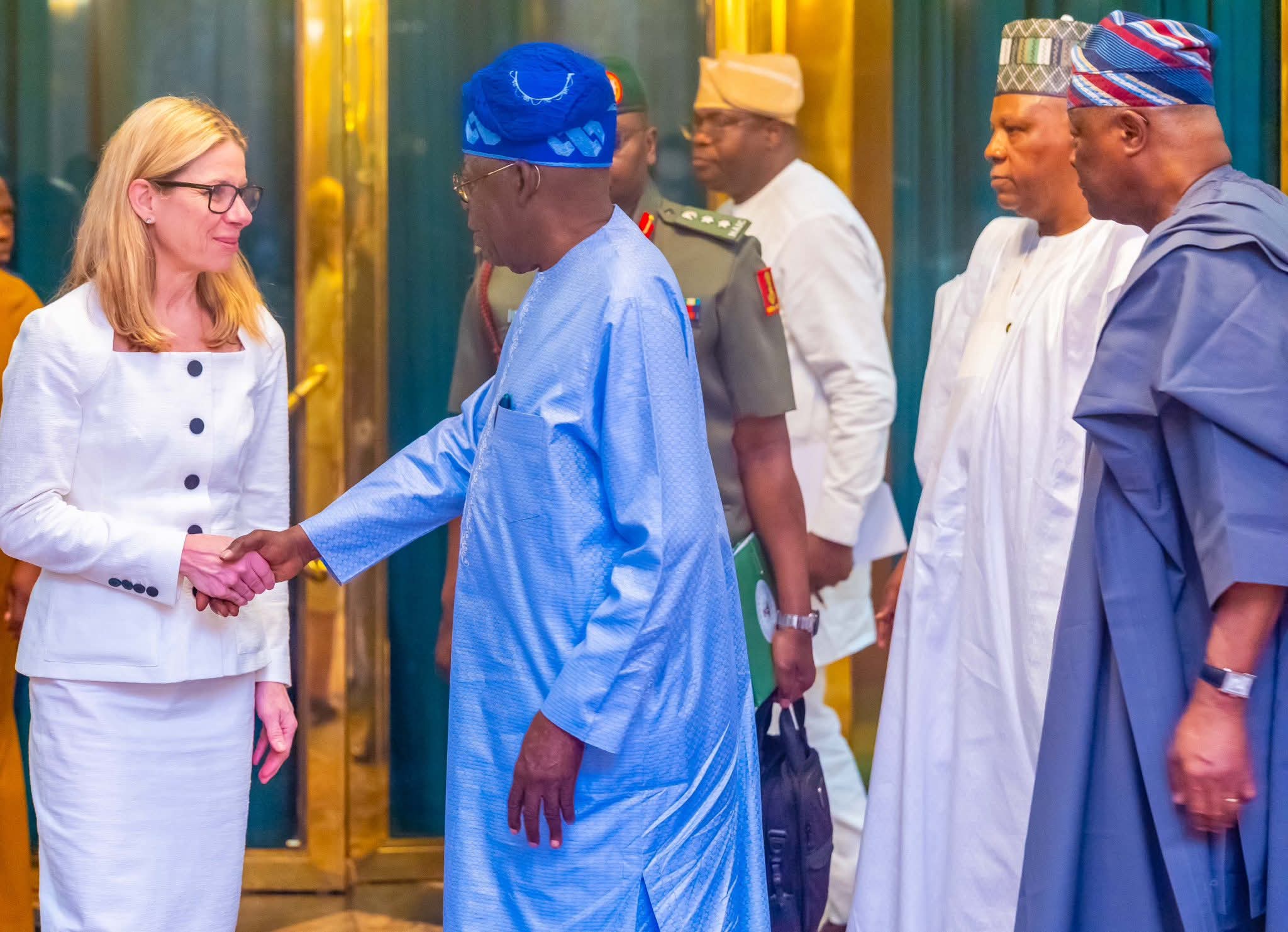
The remark came from the World Bank’s Managing Director of Operations, Anna Bjerde, during a meeting with President Bola Ahmed Tinubu and Vice President Kashim Shettima at the State House in Abuja on Tuesday. Other officials of the Bank accompanied her to the meeting.
Bjerde praised Nigeria’s reform efforts over the past two years, with emphasis on the government’s determination to remain consistent despite economic pressures. She said the approach and the visible outcomes had strengthened confidence among investors, policymakers and players in the private sector.
She also drew attention to the upcoming Country Partnership Framework, which she said aligns closely with Nigeria’s own development agenda, especially the target of achieving a $1 trillion Gross Domestic Product and 7 per cent economic growth.
President Tinubu reaffirmed his administration’s commitment to the reform agenda and acknowledged the difficulties that accompanied the process. He said “there will be no turning back.”
The President explained that although the removal of fuel subsidy and the unification of exchange rates initially pushed inflation upward, the situation has improved, with inflation easing and the naira showing signs of stability. He added that the developments have helped to boost investor confidence and improve the business environment.
According to President Tinubu, the reforms are built on transparency, accountability and policy stability.
He identified agriculture as a major focus of his administration and said investments have been directed toward the sector through the establishment of zonal mechanisation centres, improved seed development and better access to fertilisers. He noted that support from the expanding petrochemical industry has also helped to improve output and encourage farmers to form strong cooperatives.
“Nigeria is the heart of the continent, and we must do what’s necessary to strengthen the economy, particularly looking at the young population of this country, looking at the vast area of arable lands.
“How do we employ mechanisation and make agriculture easier? I have embarked upon that. We have created zonal mechanisation centres to help the farmers,” he said.
President Tinubu urged the World Bank to strengthen its partnership with Nigeria through faster financing, reduced bureaucracy, shared development models, effective risk management and improved capacity building to support inclusive growth.
In her remarks, Bjerde stressed the need to improve access to finance for small, medium and large enterprises, with special attention to mid-sized businesses, which she described as critical to job creation.
She also commended Nigeria’s emphasis on early childhood development and described it as vital to long-term productivity. She assured the country of the Bank’s continued support in that area.
“Many countries around the world, even middle-income and upper-middle-income countries, are suffering again with rising levels of stunting. And here, we’ve identified early childhood development as a strong entry point. So, all of this, to say we’re looking forward to a new country partnership framework,” she said.
Bjerde restated the World Bank Group’s commitment to a programme that reflects Nigeria’s priorities and combines public and private sector support. She added that the Bank, through the International Development Association, the International Bank for Reconstruction and Development and the International Finance Corporation, stands ready to sustain support for Nigeria’s reform agenda.
The Minister of Finance and Coordinating Minister of the Economy, Wale Edun, as well as the Deputy Chief of Staff to the President, Ibrahim Hassan Hadejia, attended the meeting.